Your Shopping Cart | Your Account Information | Catalog Quick Order | Customer Service | Order Status | Contact Us
RadioSpirits.com

HOMENEW RELEASESBESTSELLERSCLEARANCEBOOKSDVDsMUSICDOWNLOADS

AboutBlogOur Radio Show SEARCH   KEYWORD

The Secret of the Whistler (1946) – “…who have stepped into the shadows…”
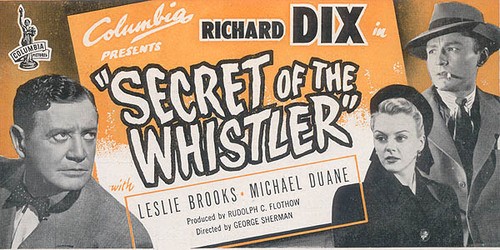
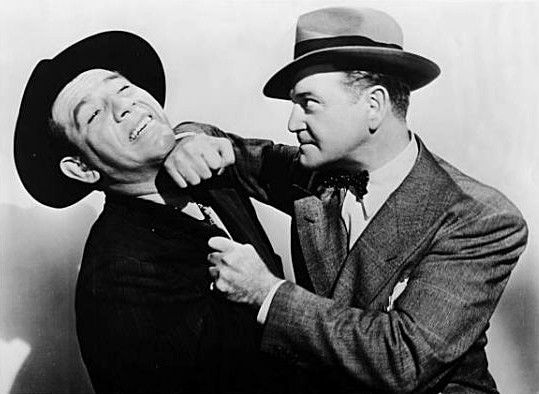
In the sixth entry of Columbia’s popular Whistler film franchise—based on the CBS West Coast mystery program sponsored by Signal Oil—series star Richard Dix essays the role of Ralph Harrison, a talentless artist disdained by most of his friends.  He is invariably the life of the party, however, on account of the lavish get-togethers he often throws (as one of his guests remarks: “Somebody’s got to drink his liquor and eat his food”). Harrison has the wherewithal to host such shindigs due to the largess from his wealthy wife Edith (Mary Currier), an invalid who suffers from a heart condition.  Ralph is summoned to her beside during one particularly raucous affair, which sort of scotches the progress he was making with a young model named Kay Morrell (Leslie Brooks).

Edith Marie’s physician, Dr. Winthrop (Charles Trowbridge), tells Ralph that his wife’s prognosis is not good…he only gives her a few months to live.  So Ralph decides to hook up with Kay—nothing serious, he just wants companionship, someone who’ll join him for dinner every once a while, and be a sounding board when he’s lonely.  Kay is warned away from Ralph by another artist, Jim Calhoun (Michael Duane), but she ignores him because she sees in Ralph a ride on a gravy train.  What starts off as a platonic relationship between the two turns serious as Ralph falls in love…though Kay holds him at arms length, knowing that he’s married.
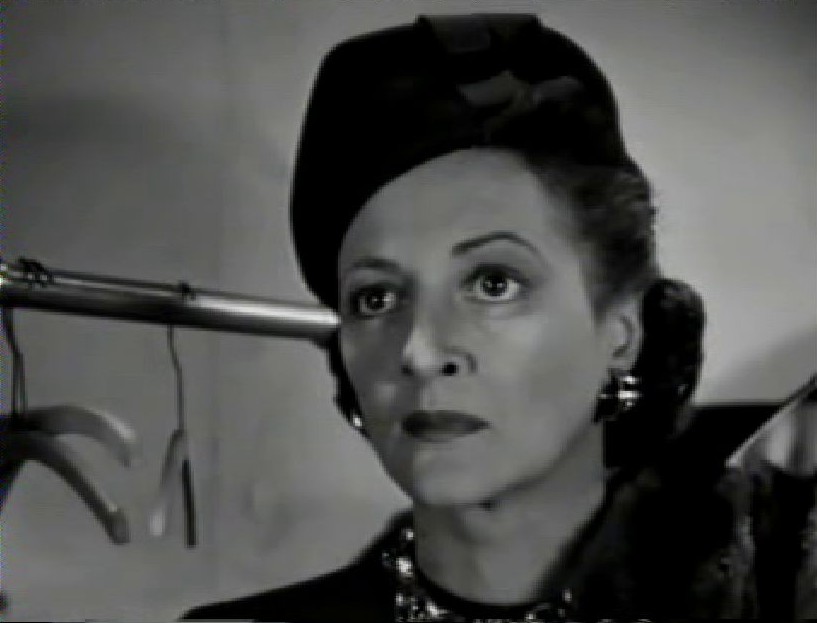
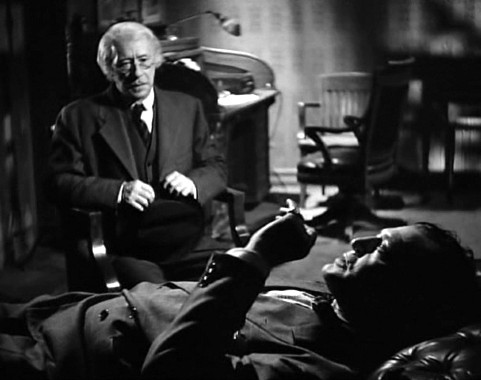
A cardiologist (Arthur Space) called in by Winthrop to treat Mrs. Harrison is just the tonic she needs; she starts to regain her strength and will to live, and one day decides to surprise her husband in his studio apartment.  Hiding in another room, Edith hears Ralph and Kay enter the studio…and is positively gobsmacked to hear Ralph not only declare his love for Kay, but that he plans to tie the knot with her as soon as Edith has passed on.  That night at home, Edith confronts Ralph with what she’s learned and informs him that any further communication with her should be directed through her attorney (Jack Davis)—she’s planning on divorcing Ralph, and he’ll be cut off without a penny.
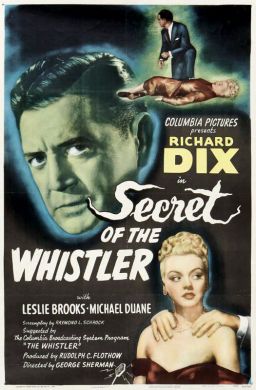
So put yourself in Ralph’s place…if you knew that the money that had been flowing freely would suddenly stop, wouldn’t your thoughts entertain…murder?

Richard Dix gives one of his finest performances in The Secret of the Whistler (1946), playing a protagonist who is sympathetic…even after committing the foul deed of killing his wife.  Dix’s Harrison, like most noir characters, makes the mistake of falling head over heels for a beautiful-but-mercenary dame who’s “just a bit cold around the heart,” to quote another famous noir.  Kay is a real trophy; when the light hits her just right she’s strikingly beautiful, and she strings Ralph along so she can reap the benefits of his attention and the occasional bauble he throws her way.  Without giving away the trademark ironic ending of the Whistler films, suffice it to say that she’ll be asked to pay the fiddler when his tune is finished.
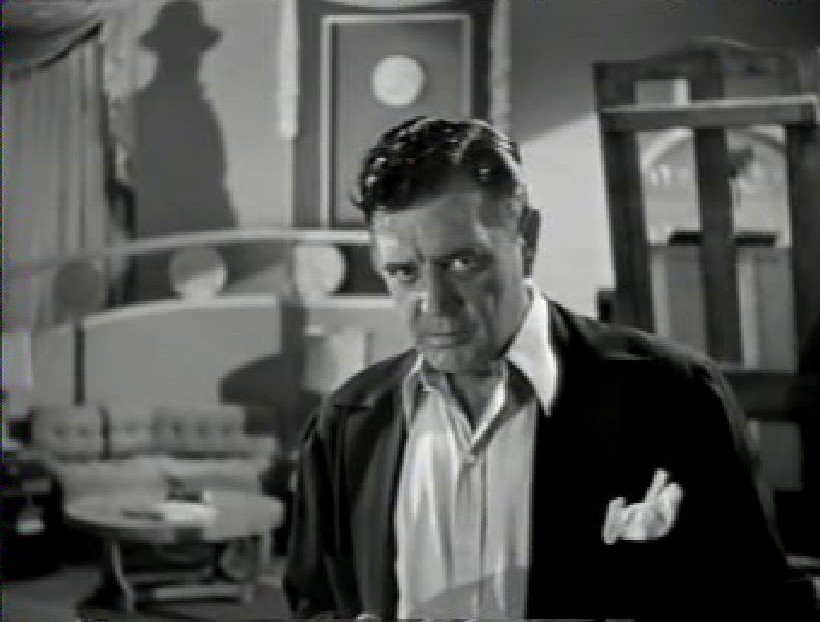
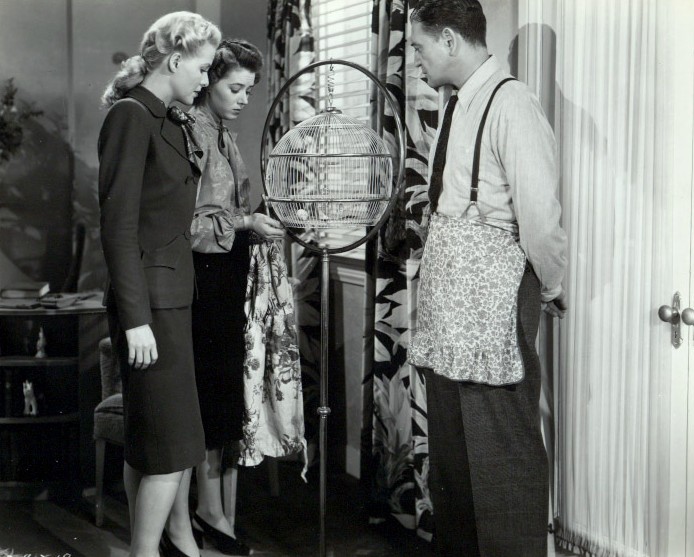
A taut, suspenseful screenplay propels Secret beyond its B-picture origins thanks to screenwriters Richard H. Landau and Raymond L. Schrock.  The cast is tops, with wonderful contributions from Dix, Brooks, Currier, and first-rate character actors like Ray Walker, Mona Barrie, Byron Foulger (in the early sequences as a mortuary director who sells Currier a tombstone that later comes back to haunt Dix), John Hamilton (from TV’s The Adventures of Superman) and as always, Otto Forest as the omnipresent narrator.  Special mention should be made of Claire Du Brey’s sinister performance as Currier’s devoted housekeeper Laura…the chilling “justice is done” satisfaction on her face just before the closing credits will stay with the viewer long after the film is finished.
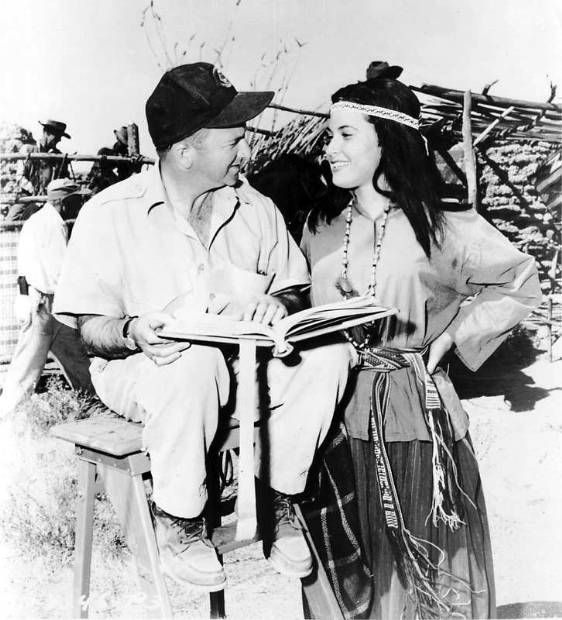
Journeyman George Sherman held the reins on this Whistler entry. Sherman was a Hollywood veteran whose forte was B-westerns, but occasionally broke out of his comfort zone with underrated pictures like The Sleeping City (1950) and Count Three and Pray (1955).  His long friendship with John Wayne, which began when he directed the Duke in the Three Mesquiteers oaters at Republic, put him in good stead to be the producer of the actor’s 1961 The Comancheros and director of Wayne’s Big Jake (1971).  George also dabbled quite a bit in television, serving as producer on such series as Daniel Boone and Gentle Ben.

The Secret of the Whistler will air this September 29th at 10:45am on Turner Classic Movies as part of the channel’s month-long scheduling of these classic programmers based on The Whistler radio program.  The following Saturday (October 6th), TCM will show the final film in the Whistler series, The Return of the Whistler (1948)—an entry that does not feature Richard Dix (who retired in 1947), but does include his Secret co-star Michael Duane.  (Radio Spirits will have a review next Wednesday.)

Mysterious Intruder (1946) – “…hidden in the hearts of men and women…”

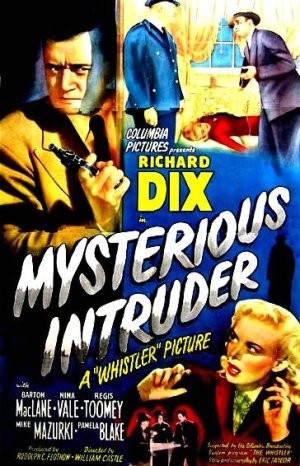
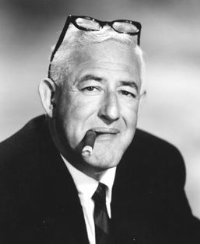
Mysterious Intruder (1946), the fifth entry in Columbia Pictures’ highly successful Whistler franchise, would be the last film of that series directed by William Castle, who had kicked off the first of eight Whistler B-films with The Whistler (1944).  During his sojourn at the studio, Castle would alternate between Whistler movies and Crime Doctor vehicles, often directing some of the most entertaining and innovative entries in each series…before leaving in 1947 to venture out as an independent director-producer.  Though he did return to Columbia for a brief period from 1953 to 1956, Castle is best known to film fans for his gimmicky horror films that still entertain audiences today, from House on Haunted Hill (1958) to The Tingler (1959) to Homicidal (1961).  He was also the producer of the 1968 horror film classic Rosemary’s Baby.

Intruder finds series star Richard Dix playing a private-eye named Don Gale this time around.  An elderly music shop owner named Edward Stillwell (Paul E. Burns) stops by Gale’s office after hours to enlist the detective’s help in locating a missing girl named Elora Lund.  Many years ago, when Elora was only fourteen, her mother left some knick-knacks and other odds ‘n’ ends with Stillwell to sell…but the old man was too kind-hearted to part with the possessions.  Among Mrs. Lund’s effects is a treasure so priceless that Gale agrees to take the case even though Stillwell can only pay him a $100.  Gale is assured that, once located, Elora will be able to reward him far more handsomely.

Three nights later, a young woman (Helen Mowery) pays Stillwell a visit, and claims to be Elora.  Ecstatic that she’s returned, Stillwell calls Gale to let him know…but, when he returns to where he left the woman, he finds himself up against a goon named Harry Pontos (Mike Mazurki), who croaks the old man and kidnaps Miss Lund.  But “Lund” is really a woman named Freda Hanson, planted by Gale to find out just what Stillwell has that’s so valuable.  Don soon learns that the real Elora (Pamela Blake) stands to inherit a pair of rare recordings from “The Swedish Nightingale” herself, Jenny Lind…worth $200,000.

Many fans of the Whistler movies consider Mysterious Intruder to be one of the best in the series.  While I’d still argue that it’s a toss-up between the first Whistler and The Mark of the Whistler (1944), Intruder does have an intriguing plot and, of course, that surprising twist ending that we’ve now come to expect from the franchise.  Dix has one of his best roles as a seedy shamus who’d probably sell his grandmother for change, and he’s working with a better-than-average cast of great character actors.  The film is, in many ways, a bargain basement version of noirs like The Maltese Falcon — with Dix the somewhat unethical private eye, Nina Vale his loyal secretary, Mowery the mystery woman who’s not what she appears to be, and Regis Toomey as the manager of the apartment building in which Mowery lives…and who can’t be eliminated from the list of suspects, either.

Barton MacLane, who appeared in Falcon as the hard-nosed Lt. Dundy, is on hand here as one of the detectives investigating the case.  He played both cops and bad guys in many of the Warner Bros. films of the 1930s and 1940s, and is probably recognizable for his roles on TV series like Outlaws and I Dream of Jeannie.  He’s partnered with another TV vet, Charles Lane (The Lucy Show, Petticoat Junction), who plays against type here (Lane usually played weaselly bureaucrats and other officious roles).  Mike Mazurki, who was just starting to attract notice in films like Murder, My Sweet (1944), plays the doomed Pontos and gives Intruder solid noir credibility.  Other familiar faces in the film include Stanley Blystone, Edith Evanson, Kathleen Howard, Arthur Space…and as always, Otto Forrest as the omnipresent narrator.

Mysterious Intruder will air this September 22nd at 10:45am on Turner Classic Movies as part of the channel’s month-long scheduling of these classic programmers based on the popular radio program.  Next week at Radio Spirits: The Secret of the Whistler!

Voice of the Whistler (1945): “I know many strange tales…”

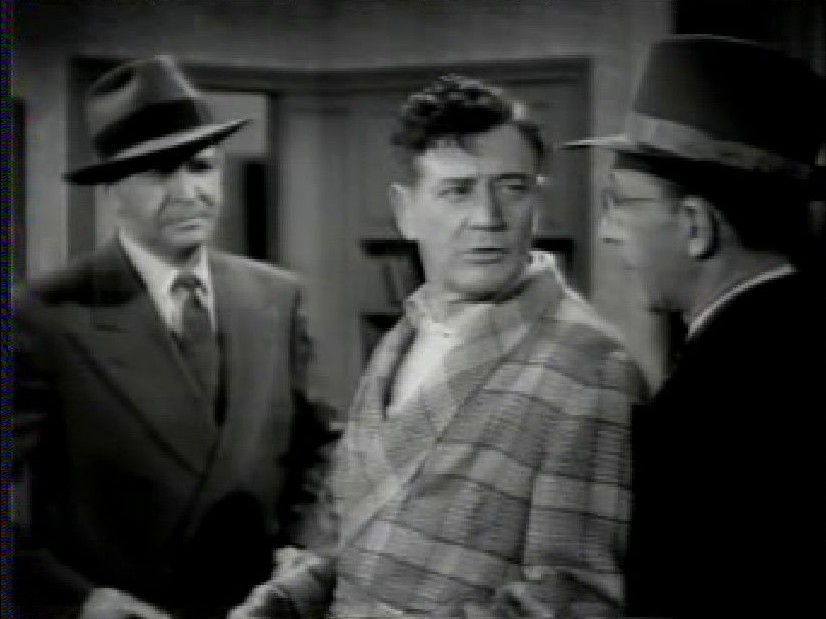
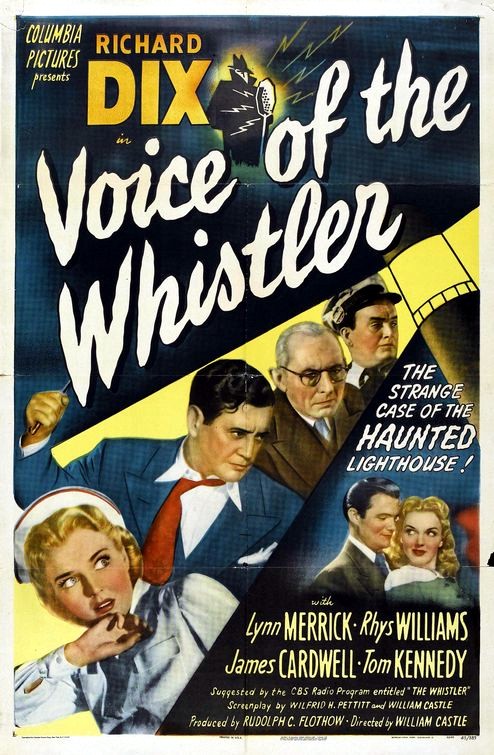
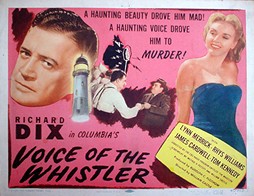
Voice of the Whistler (1945), the fourth entry in Columbia’s popular B-movie series based on the CBS West Coast radio show, marked the return of future schlock director William Castle to the franchise; Castle directed the first two Whistler films before handing over the reins to Lew Landers for The Power of the Whistler (1945), and he would also helm the fifth film of the series, Mysterious Intruder, the following year.  (Castle also co-wrote Voice with Wilfred H. Petitt, based on a story by Allan Rader.)
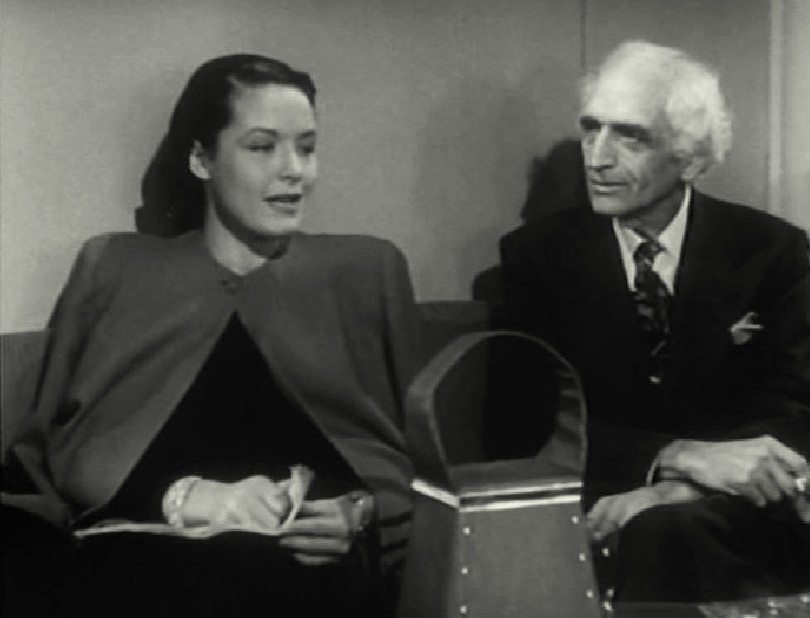
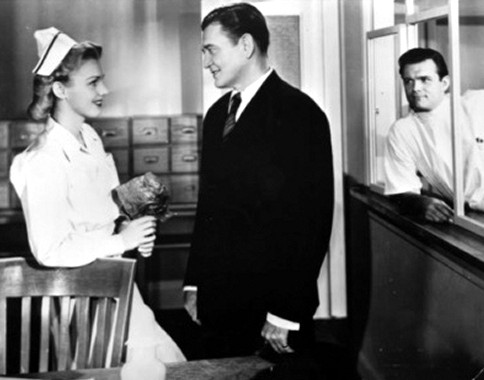
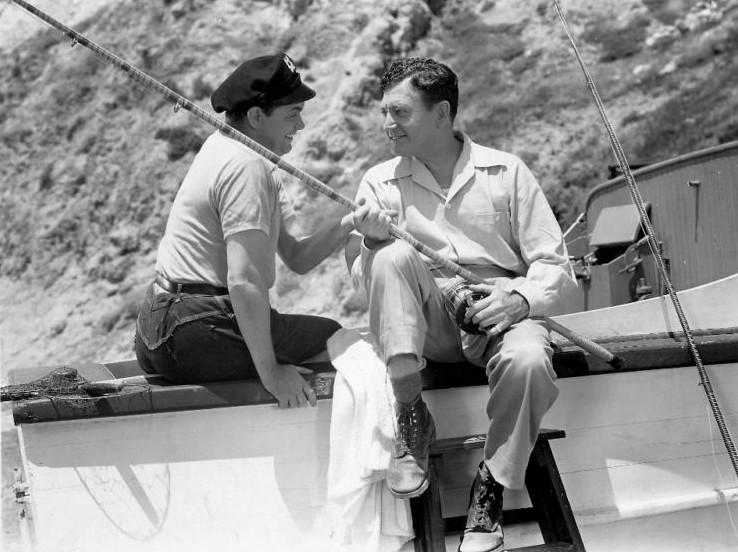
Series star Richard Dix plays wealthy industrialist John Sinclair, whose quest for money and power has left him in precarious health and prone to collapsing spells.  While in Chicago to board a ship that will take him on a cruise to recuperate, he succumbs to one of these spells…and if weren’t for the quick thinking of Cockney cabbie Ernie Sparrow (Rhys Williams), Sinclair might not be long for this world.  Sparrow, an ex-pugilist, takes Sinclair (who has adopted the name “John Carter” though he’s never been to Mars) to a neighborhood clinic so that a doctor can examine him.  While waiting to be seen, Sinclair/Carter also meets a young intern named Fred Graham (James Cardwell) and the clinic’s nurse-receptionist, Joan Martin (Lynn Merrick).

Dr. Rose (Frank Reicher), the clinic’s head physician, diagnoses Sinclair’s medical troubles as loneliness—Rose suggests that rather than undergo a sea trip it would be better for Sinclair to relocate to Maine, where he can avail himself of both sea air and the company of people.  A grateful Sinclair asks Sparrow to join him, but Sinclair also asks Joan along as well in the form of a business proposition.  Revealing his true identity to her, he suggests that if she agrees to marry him, he’ll leave her his entire fortune when he passes on…and after all, he’s only been given six months to live.  This news doesn’t sit particularly well with Doc Graham, who also happens to be Joan’s fiancé…but Joan possesses a selfish streak, one that has left her tired waiting for Graham’s ship to come in (she also thinks him too pliable and “soft”) and so she’s going to have a grab at the carousel’s brass ring.

Complications soon develop when Sinclair’s death does not arrive on schedule…the experience of living in Maine (in a reconstituted lighthouse) has proved invigorating and made him a new man—one that’s also fallen in love with Joan.  But, Joan finds her isolated existence with Sinclair and Sparrow stifling…and things only get worse when ex-fiancé Graham shows up for a visit.

Though Voice of the Whistler doesn’t quite contain the suspense that’s the hallmark of many of the Whistler movies, it’s still a first-rate vehicle for the franchise.  The ending of the film is poignant and haunting (even if Castle does kind of telegraph it a bit at the beginning), and the only real weakness in the movie is that it’s sort of a poky little puppy through the first two acts before getting down to brass tacks in the third.  Fittingly, Voice’s plot—which hinges a lot on both coincidence and the selfish motives of the three main characters—is very much in keeping with the tone of the classic radio program.  There are also one or two scenes of Castle-scripted levity, particular a sequence at the beginning that slyly ribs the “News on the March” newsreel from Citizen Kane.

Tom Kennedy, a stock player at Columbia who worked in the studio’s comedy short subjects with funsters like El Brendel and Shemp Howard, is included in the main credits for a brief appearance as an ex-wrestler-turned-flower merchant named “Hammerhead” Ferdinand.  Kennedy does an amusing bit of business with a couple interested in purchasing his wares, played by character favorites Minerva Urecal and Byron Foulger.  Other familiar faces in the film include Martin Garralaga, John “Perry White” Hamilton, Gigi Perreau…and Otto Forrest as the omnipresent narrator.

Voice of the Whistler will air this September 15th at 10:45am on Turner Classic Movies as part of the channel’s month-long scheduling of these classic B-noirs.  Next week at Radio Spirits: William Castle’s Whistler swan song—Mysterious Intruder!

The Power of the Whistler (1945): “…I know many things, for I walk by night…”

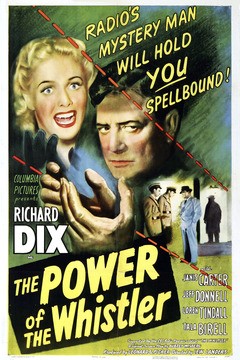
The omnipresent narrator (Otto Forrest) known as The Whistler introduces us to a “strange man” (Richard Dix) identified as “William Everest” as the third film in Columbia’s Whistler series unspools.  Everest, an individual seemingly on a mission, narrowly misses being hit by an automobile and, stumbling back to the curb for safety, hits his head on a lamppost.  He tells concerned passersby that he’s fine…though he seems a little dazed by his experience.

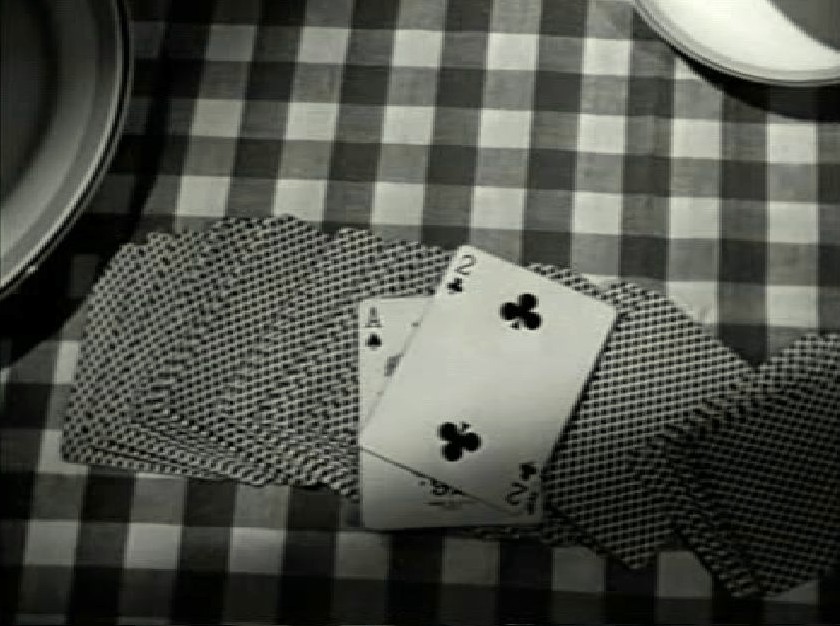
Everest, however, is not fine.  He makes his way into a joint called The Salt Shaker, a restaurant/bar where sisters Jean (Janis Carter) and Francis Lang (Jeff Donnell) are patrons—“Francie” is accompanied by her fiancé, Charlie Kent (Loren Tindall).  Showing off with some playing cards, Jean announces that she’s going to tell the fortune of Everest, who’s standing at the bar.  On two separate occasions, Jean reveals both the ace of spades (aka the death card) and the two of clubs…and nervously announces to sis and future bro-in-law that great harm will come to Everest within the next twenty-four hours.

Jean is compelled to warn Everest what’s in store for him, and she decides to confront him outside the bar despite warnings from Francie and Charlie.  When she catches up to Everest, she explains what she’s done…but he doesn’t seem to show any concern.  The reason for this is that bump on his head has given him amnesia—“noir’s version of the common cold,” as a critic once mused.  Checking the contents of his pockets, Jean agrees to help Everest (whom she’s renamed “George,” since she doesn’t know his real name) try to figure out who he is.  Using items like a lighter, a florist’s receipt, a doctor’s prescription and a railroad schedule, Jean and “George” embark on an odyssey to piece it all together—meeting a cast of characters that include a ballerina (Tala Birell) and book store owner (John Abbott) in the process.  “George”/Everest seems to be an ingratiating chap…but he’s also got a slightly sinister side.  Why else would kittens, canaries and park squirrels suddenly end up dead when he’s around?

Though The Power of the Whistler (1945) takes a slight dip in quality when compared to previous entries The Whistler (1944) and The Mark of the Whistler (1944), it still remains an entertaining little B-mystery…directed by the prolific Lew Landers, whose memorable films include the 1935 Boris Karloff-Bela Lugosi teaming The Raven and The Boogie Man Will Get You (1942—also with Karloff, and Peter Lorre).  Star Richard Dix’s performance is an unusual turn for him (and whose intentions will keep viewers guessing throughout the film), and he’s ably assisted by B-movie queen Carter (also in the cast of Mark of the Whistler), Donnell (later George Gobel’s wife on his comedy-variety TV show) and Abbott, not to mention B-programmer faves like Murray Alper, Cy Kendall, Nina Mae McKinney and Stanley Price.

Screenwriter Aubrey Wisberg pads the narrative a tad, but the noir cinematography by L. William O’Connell is appropriately atmospheric considering its low budget…plus the film also wraps things up with a memorably suspenseful barn climax.  OTR fans will certainly want to catch it when Turner Classic Movies airs it this Saturday morning (September 8th) at 10:45am, one of five Whistler movies scheduled for the month.  Next Wednesday at Radio Spirits: Voice of the Whistler (1945)!

The Whistler (1944): “I…am the Whistler…”

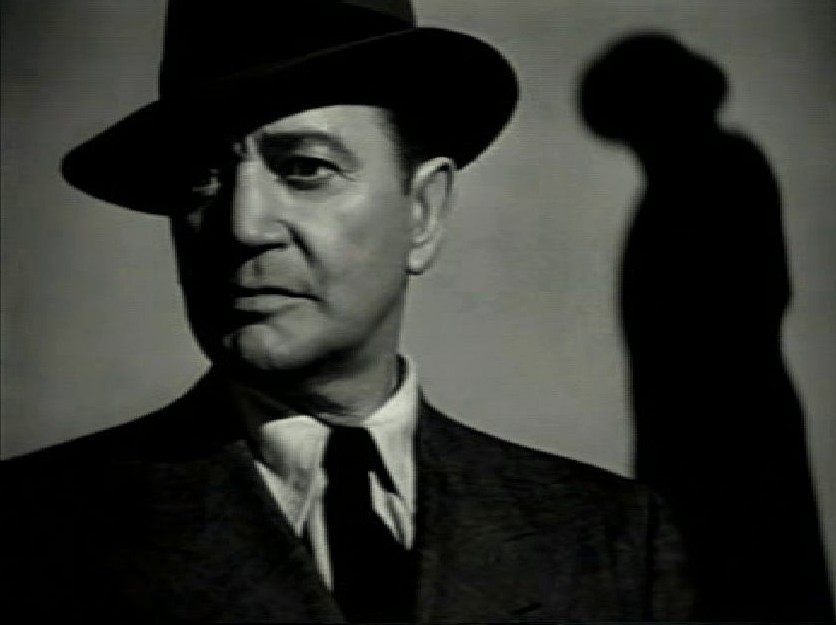
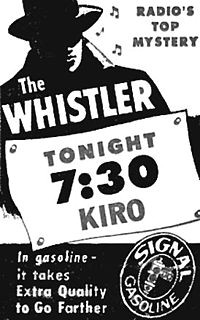
It would be no small exaggeration to suggest that more old-time radio fans listen to The Whistler today than did audiences during the series’ original CBS network radio run from May 16, 1942 to September 22, 1955.  It wasn’t because the mystery drama lacked for popularity—it’s just that with just one or two exceptions, the program was broadcast mainly to audiences on the West Coast.  And yet the series expanded beyond that limited listenership in a number of ways—no more so than when Columbia Pictures kicked off a movie series based on the anthology beginning in 1944.  The Whistler series consisted of eight B-programmers…the first seven of which starred former silent screen idol Richard Dix, who would play either hero or villain depending on the script.  Dix retired from the movie business by the time the final film in the series, The Return of the Whistler (1948), went before the cameras…and he was replaced in the lead by Michael Duane.

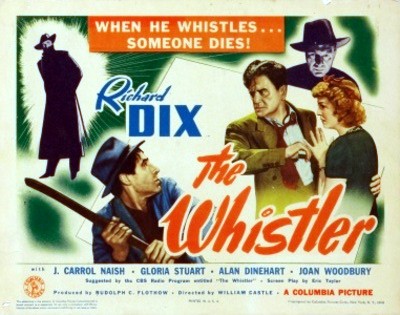
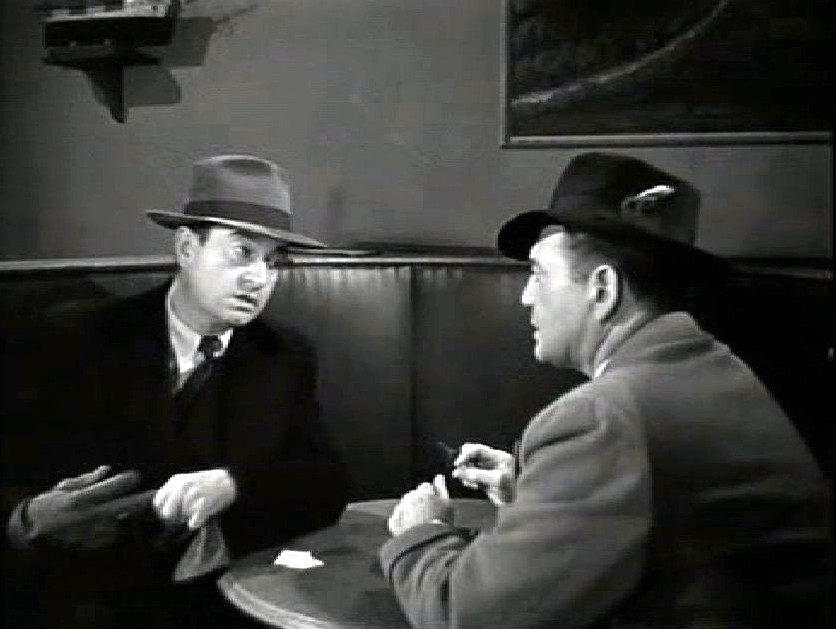
In the first film, appropriately entitled The Whistler (1944), Dix is a businessman who schedules a clandestine meeting at a waterfront dive with a hood (Don Costello) named Lefty Vigran.  Vigran is the man to get in touch with when you need a hit man, and Dix’s character gives Vigran ten large for a contract on one “Earl C. Conrad.”  With the help of a deaf-mute played by Bowery Boy William “Billy” Benedict, the assassin (J. Carrol Naish)—identified only as “Smith”—receives his instructions and proceeds to carry out the hit.

The twist is that “Earl C. Conrad”…is the name of Dix’s character.  Distraught after losing his wife in a shipwreck, he wants to end it all, but doesn’t have the nerve to do it by his lonesome—which is where Smith comes in.  Complications occur when Conrad learns that his wife is very much alive…but calling off the hit is going to be a bit tricky, since Mr. Vigran met his end by a pair of police detectives minutes after he completed the transaction…and the identity of Conrad’s would-be killer went with him.

Before William Castle made his reputation with gimmicky horror films like House on Haunted Hill (1958) and The Tingler (1959), he was employed as a dialogue director.  He worked for Columbia in the 1940s until he got his big break in 1943 helming The Chance of a Lifetime, one of the studio’s Boston Blackie films.  Despite Lifetime tanking at the box office (the reviewers weren’t kind to the movie), Columbia saw that Castle had promise…and budgeted $75,000 for the debut film that would inaugurate the popular Whistler movie series.  Bill pulled out all the stops, utilizing low-key lighting and wide angle lenses to give the proceedings a tense, eerie feeling…and after insisting that star Dix lose a few pounds, guided him into a splendid performance despite the film’s B-pedigree.  Castle noted years later, “When I finally used him [Dix] in a scene, I’d make him do it over and over again until he was ready to explode. It achieved the desired effect—that of a man haunted by fear and trying to keep from being murdered.”  The end result was that Castle was put in the charge of the follow-up feature later that same year, The Mark of the Whistler, and held the reins on both Voice of the Whistler (1946) and Mysterious Intruder (1946).

Matching Dix in his first-rate performance is character great J. Carrol Naish, who many OTR fans should recognize as the titular Italian immigrant of the radio sitcom Life with Luigi.  Naish makes the killer an interesting character, imbuing him with quirks and eccentricities to keep the assassin from simply being a one-note thug.  The supporting cast in The Whistler also deserves a round of applause, with familiar faces like Gloria Stuart (Old Rose from Titanic) as Dix’s secretary, not to mention pros like Alan Dinehart, Trevor Bardette, Byron Foulger, Robert Emmett Keane and Joan Woodbury (the actress who brought comic strip reporter Brenda Starr to movie screens in a 1945 Columbia serial).  And, the voice of the omnipresent Whistler is Bill Forman sound-a-like Otto Forrest.

Donald J. Wilson, the creator of radio’s The Whistler, co-wrote the screenplay for this initial entry along with Eric Taylor.  It’s a taut, suspenseful little noir that’s also short and sweet, running just 59 minutes.  Turner Classic Movies channel subscribers should keep an eye peeled for it when it’s shown this Saturday (September 1) at 10:45am…and next week in this space, Radio Spirits will review The Power of the Whistler (1945), the third film in the series which will be shown on TCM on September 8 (and was helmed by Inner Sanctum director Lew Landers).

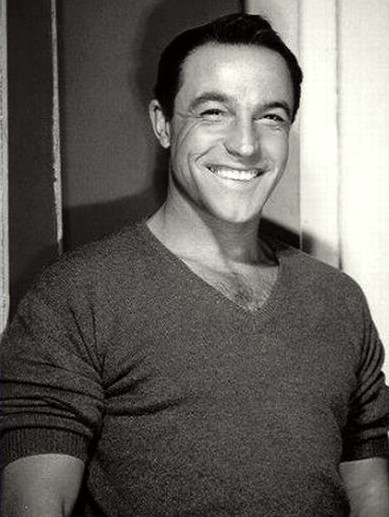
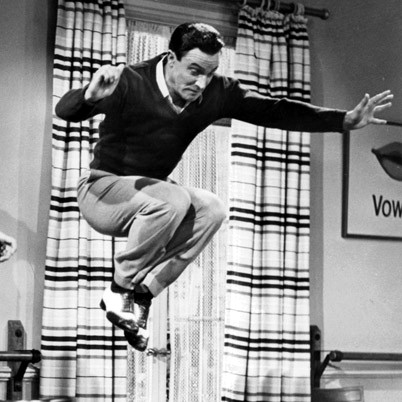
Happy birthday, Gene Kelly! (Gotta dance!)

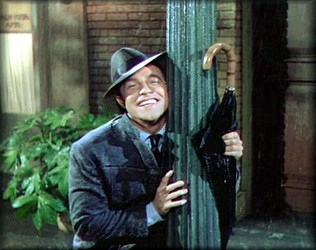
Eugene Curran “Gene” Kelly was born 100 years ago on this date—a Pittsburgh, PA native from the Highland Hills section of that American city.  The man who would later establish himself as one of the most talented and innovative practitioners of the terpsichorean art began his dancing career at the age of eight, when his mother enrolled him in classes along with his brother James.  Both Kelly boys thought dancing was for “sissies” (and so did their peers, who routinely engaged the brothers in fistfights) and instantly rebelled…but Gene was persuaded to take up dancing again when he turned fifteen, reasoning it might be a surefire way to get girls.

Though he graduated from high school (Peabody High) in 1929, the realities of the economic crash put off his college studies until 1931—where, having enrolled at the University of Pennsylvania, he found his love for dancing much in demand in the school’s many Cap and Gown theatrical productions and outside school, where his family started a small dance studio in a nearby Pittsburgh neighborhood (it was renamed The Gene Kelly Studio of the Dance in 1932, with a second studio established in Jamestown the following year).  Dancing for Gene was originally a sideline; he had set his sights on a career in law, but two months after enrolling in law school Kelly made the decision to stick with dancing, traveling to New York by 1937 seeking work as a choreographer.

Locating a job in the Big Apple wasn’t as easy as Gene had hoped—he returned to Pittsburgh in 1938 to work as a choreographer at the Pittsburgh Playhouse.  When dancer-choreographer Robert Alton observed Kelly’s teaching skills while Alton was staging a show at the Playhouse, Gene was hired to be a dancer in the Cole Porter musical Leave It to Me!—the production that featured Mary Martin’s rendition of “My Heart Belongs to Daddy”.  A plum assignment in another Alton-choreographed show, One for the Money, followed…and then Kelly hit the big time, appearing in the Pulitzer Prize-winning The Time of Your Life in 1939.  Gene also worked as a choreographer on Billy Rose’s Diamond Horseshoe, where he met future wife Betsy Blair, and by 1940 with the lead role in the musical Pal Joey, Hollywood came calling.

Kelly had signed a contract with mogul David O. Selznick…but Selznick sold half of his contract with Gene to M-G-M for his motion picture debut in 1942, Me and My Gal.  The picture (in which Kelly co-starred with Judy Garland) did extremely well, and against the advice of the studio, M-G-M unit producer Arthur Freed picked up the other half of Kelly’s contract, securing the performer’s movie stardom.  Before serving a hitch in the U.S. Naval Service in 1944, Gene appeared in such pictures as Du Barry Was a LadyThousands Cheer and The Cross of Lorraine; upon his release in 1946 he could be seen in The PirateThe Three Musketeers and Take Me Out to the Ball Game.  This last film convinced producer Freed to allow Gene to try his hand at directing, which he did with the movie musical classic On the Town.  A string of hit films followed after that, many of them considered textbook examples of the American movie musical including Summer StockAn American in ParisSingin’ in the RainBrigadoonIt’s Always Fair Weather and Les Girls.  Even with the decline of the musical in the late 50s, Gene continued to appear in popular films such as Marjorie Morningstar and Inherit the Wind while directing movies as varied as The Tunnel of LoveGigot and A Guide for the Married Man.

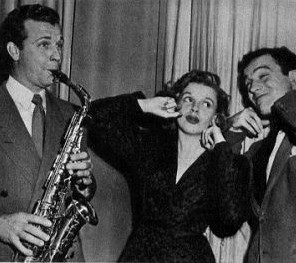
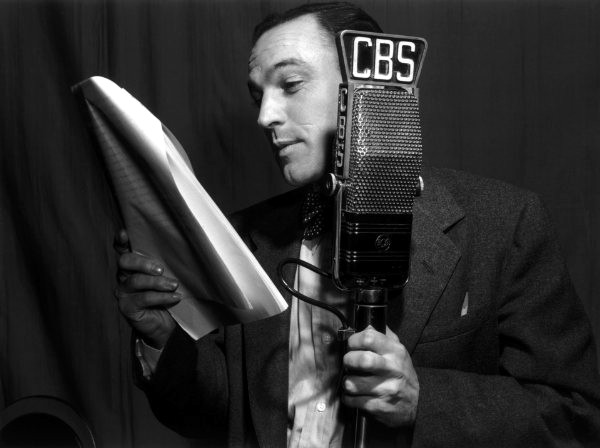
During his Hollywood musical heyday, Gene was in demand on many of the aural medium’s popular programs: he did radio versions of his films on series like The Lady Esther Screen Guild Theatre (Me and My Gal in 1943) and The Lux Radio Theatre (Anchors Aweigh in 1947), and stretched his singing and dramatic talents on the likes of The Theatre Guild on the AirThe Cresta Blanca Hollywood PlayersStudio OneFamily TheatreThe Sealtest Variety Theatre and The Railroad Hour.  He joked along with Jack Benny and George Burns & Gracie Allen, and sang along with Bing Crosby, Frank Sinatra and Dinah Shore.  He was also a favorite of “radio’s outstanding theater of thrills,” Suspense—a show on which he made four appearances between 1943 and 1949.

Radio Spirits wants to wish him the happiest of centennial birthdays.

The Punch and Benny Show: Love Thy Neighbor (1940)

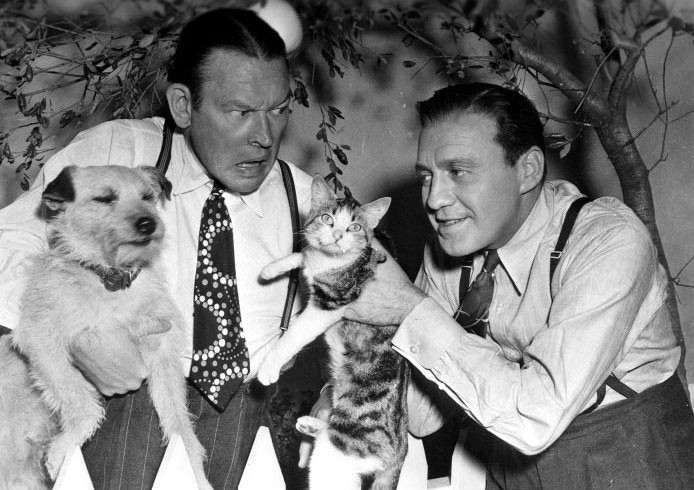
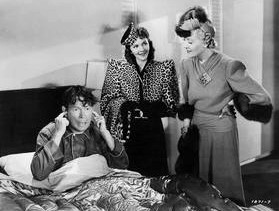
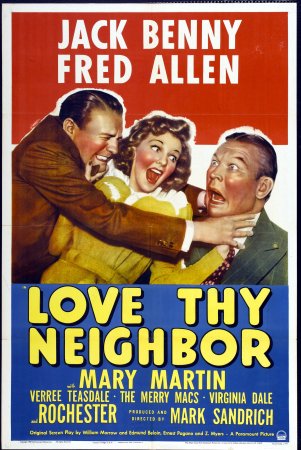
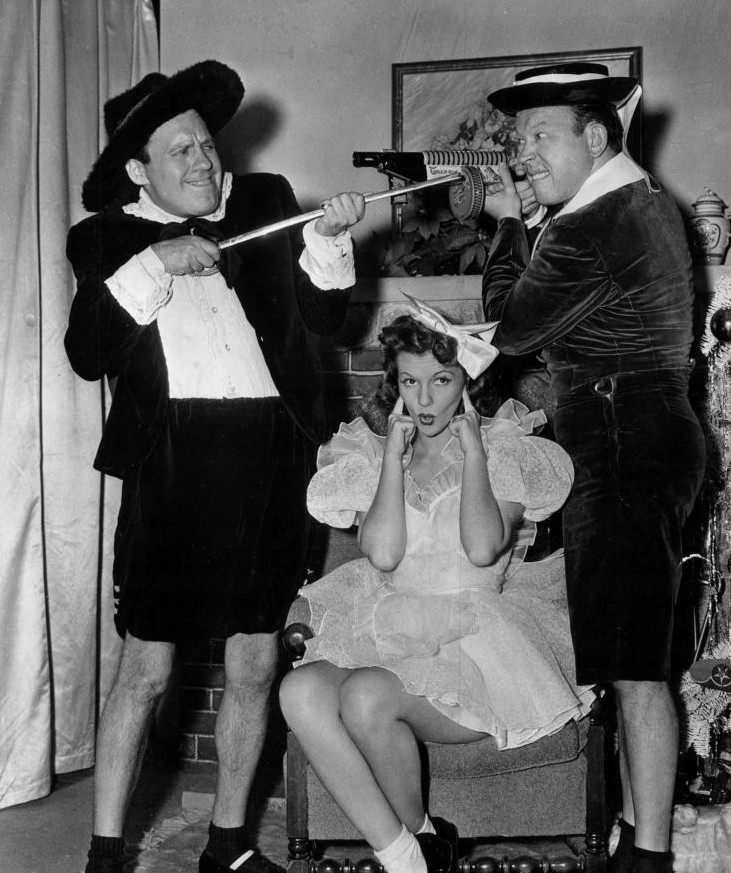
Four years after the celebrated radio “feud” between comedians Jack Benny and Fred Allen got underway, Paramount Pictures decided to cash in on the fun with a film starring Jack and Fred entitled Love Thy Neighbor, which also co-starred Broadway sensation Mary Martin.  The studio had every reason to believe that the movie would do well at the box office—20th Century Fox had scored big with a 1937 musical, Wake Up and Live, that showcased the well-known animosity between bandleader Ben Bernie and newspaper columnist Walter Winchell.  In fact, audiences would get a preview of the antics in Love Thy Neighbor in a film Benny made for Paramount that same year, Buck Benny Rides Again (1940), which uses the bad blood between him and Allen as a minor plot point (Jack is shamed into taking a trip out West)…and even features Fred in a voice cameo.

But in Neighbor, you get both comedians in the flesh.  It’s New Year’s Eve, and Jack intercepts a telegram that’s actually for his valet, Rochester Van Jones (Eddie Anderson).  Rochester has been asked by his girlfriend Josephine (Theresa Harris, playing the same character from Buck Benny) to pick her up at the docks, and when Jack helps him out by giving him a lift he runs into Fred on the way.  Insults are exchanged, cars are smashed—Jack’s beloved Maxwell ends up knocked through the wall of a shipping office, and a beat cop (Wade Boteler, aka Michael Axford from The Green Hornet serial) hauls Fred into the pokey.

It doesn’t take Jack long to join Fred—he makes the acquaintance of a young woman named Mary Allen (Mary Martin), and when a mishap causes her to lose her dress, his attempts to find her new clothes gets him pinched by another cop (Jack Carson!).  And before you ask if Mary is any relation to…yes, she is—she’s Fred’s niece, the daughter of his sister Barbara (Verree Teasdale), who explains to Mary that the feud with Benny has made “Uncle Fred” a nervous wreck.  So Mary vows to fix things by getting a part in a stage show starring Jack (and also featuring the Merry Macs and the Merriel Abbott Dancers) by impersonating singer Virginia Astor (played by Virginia Dale).  From that moment on, Neighbor features a running game of hilarious one-upmanship between Jack and Fred until the final fadeout.

Love Thy Neighbor remains a curio for Benny and Allen fans (their famous encounter in Allen’s It’s in the Bag! is much more successful); a mildly entertaining musical comedy whose whole is greater than the sum of its parts.  It lacks the style and panache of the Crosby-Hope Road films (though in its defense, that series took three films before it found its stride), and takes a major stumble by casting Fred as the “Daffy Duck” of the twosome (Fred is gobbling down sleeping pills in one scene, unable to sleep because of the feud) when he works much better as the “Bugs Bunny” (Jack was a master at comic insecurity, which he has to sacrifice here so he can be the romantic interest).  The exchanges between Jack and Rochester are amusing, and there are one or two scenes that will provide some true belly-laughs; my favorite is a sequence in which Jack is convinced into thinking he saved Fred from drowning after a wild speedboat chase, making the two of them temporary buddies.  (The two comedians also generate a few guffaws in a nightclub scene where they are asked by the maitre’d to hold it down…so they start quietly insulting one another.  Fred’s got a great line after an autograph hound wants Benny’s “John Hancock” for her collection: “It doesn’t take that long to make an ‘X’!”)

Neighbor was directed by Mark Sandrich, who was at the helm of the previous Buck Benny Rides Again…and while Sandrich was a deft hand at comedy-musicals (like Top Hat and Follow the Fleet), the songs in Neighbor aren’t quite as well-integrated as they are in Buck Benny.  The movie does feature Martin doing her signature smash, the Cole Porter-penned My Heart Belongs to Daddy, and Rochester and Harris have a nice duet in Dearest, Dearest (one of three songs contributed by Johnny Burke and Jimmy Van Heusen).  Benny’s rotund announcer Don Wilson donates a voice cameo, and there are also choice supporting performances from Russell Hicks, Chester Clute and Mary Kelley—the latter playing a chambermaid who repeatedly calls Jack “kid.”  Neighbor doesn’t turn up on TV too often, so locating it might be a bit of a chore…but if you do manage to track it down, it’s a pleasant little diversion.  Of course, you can always enjoy listening to Jack and Fred at the peak of their comedic powers through the magic of radio…the Radio Spirits collection Jack Benny vs. Fred Allen: The Feud is a perfect place to start.

Yours Truly, Harold Dunlap: Inner Sanctum (1948)

Some time back, a PR representative was nice enough to send me a promotional copy of a DVD box set entitled Dark Crimes: a collection of fifty films and television episodes centering on the subject of mystery and murder—many of which might be described by film buffs as “film noir.”  A few of the titles are no doubt recognizable to classic film aficionados: The Strange Love of Martha Ivers, D.O.A., The Naked Kiss, etc. but by and large the bulk of the set’s content consists of B-picture programmers.

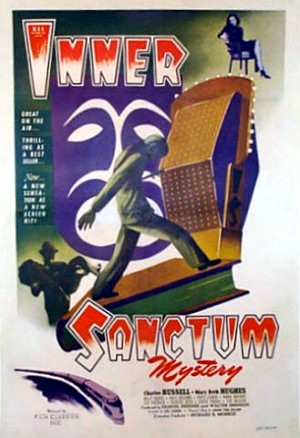
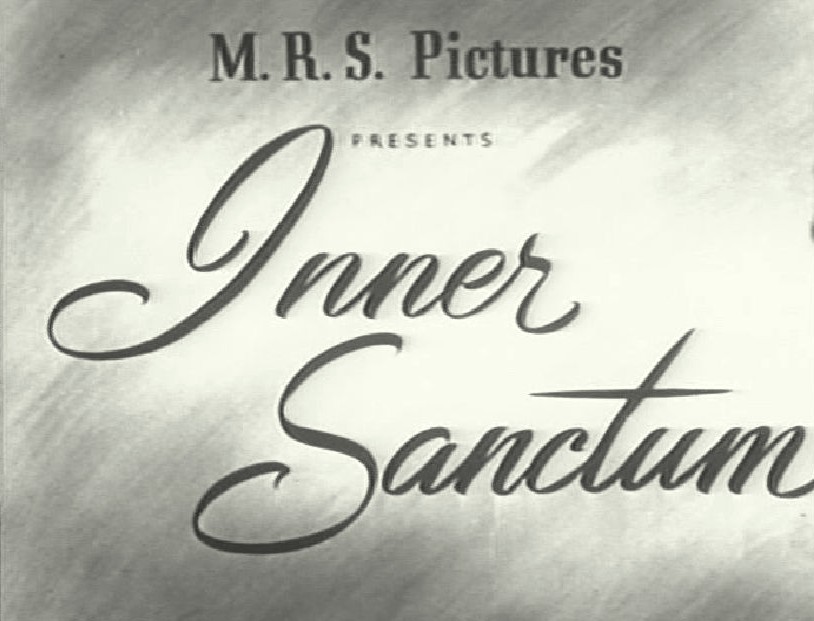
Not that this is necessarily a bad thing.  One of the movies is an independent release from 1948 (produced by M.R.S. Pictures, released by “Film Classics”) entitled Inner Sanctum—and though the film isn’t really connected to the popular radio horror show (Inner Sanctum Mysteries) you can tell by the above poster that they didn’t think suggesting it might be would hurt ticket sales any.  There is a credit in Sanctum’s opening titles that does acknowledge the film’s title is used by special arrangement with publishers Simon & Schuster, whose Inner Sanctum paperback novels were the inspiration for the weekly radio program produced by Himan Brown.

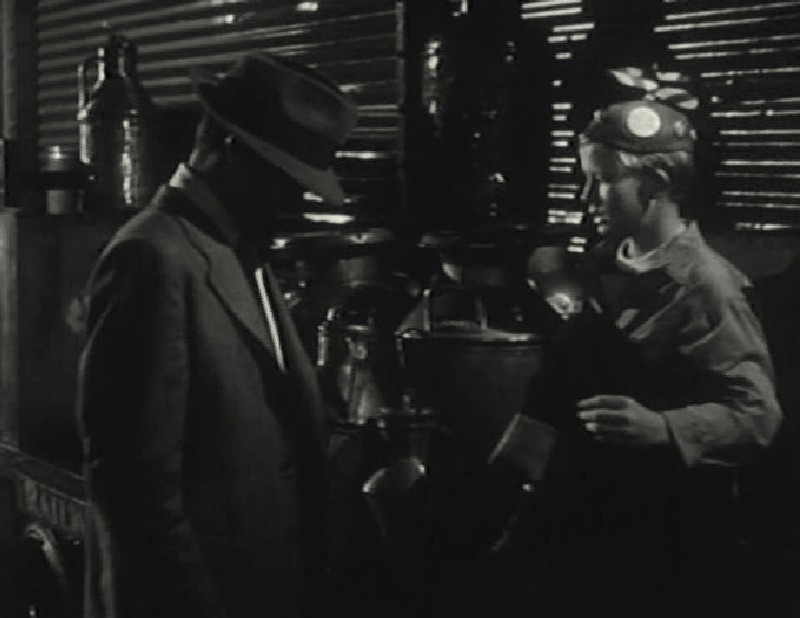
The plot of the 1948 film seems more appropriate for a broadcast of The Whistler: a man named Harold Dunlap (Charles Russell) has just croaked his fiancée at a train stop, and as he’s dumping her body on the back of the locomotive, he’s spotted by a young boy (Dale Belding) who thinks Dunlap’s just loading some baggage.  Wanting to eliminate the only witness to his crime, Harold plans to introduce his young friend to a crowbar upside his cranium…but the kid’s life is saved in the nick of time by the calls of his mother (Lee Patrick), angry at her son for being out so late.

On the run, Dunlap is picked up by a garrulous motorist named McFee (Billy House) who informs him that he won’t get far in the direction he’s traveling because a storm has washed out a local bridge.  He offers to take him by an alternate route…but soon Harold is forced to take the wheel when McFee decides to catch a few Z’s in the back seat.  His unfamiliarity with the roads gets him lost, and once awake, McFee drops him off at a boarding house where Dunlap can stay until the bridge is repaired.  Inside the house, owner Thelma Mitchell (Nana Bryant) tells Harold that space is tight and that he’ll have to room with the son of one of her tenants…the same boy who spotted him at the train platform!  It looks as if Dunlap is going to get a second chance to finish what he started…

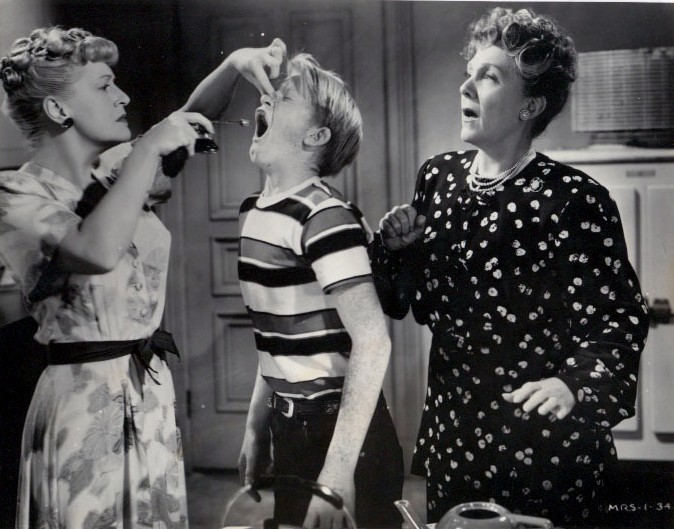
Despite its low-budget and economic (cheap) production values, Inner Sanctum isn’t a bad little noir, as far as programmers go.  Its cast is better-than-average: the star of the film, Charles Russell, might be recognizable to old-time radio fans as the first actor (after Dick Powell in a 1948 audition) to play “America’s fabulous freelance investigator,” Johnny Dollar…and Russell is quite effective here as a man who’s having to sweat out being trapped in a small town with no means of escape.  Actress Mary Beth Hughes—who had roles in films like The Women and The Ox-Bow Incident, but is probably remembered by legions of cult movie fans as the star of 1944’s I Accuse My Parents—plays a hard-boiled dame named Jean Maxwell who falls for Russell even after she finds out about his foul deed.  The presence of old pros like Bryant, Patrick, House (the wily checkers-playing storekeeper in Orson Welles’ The Stranger) and cowboy sidekick Roscoe Ates is also a plus.  Ates provides a lot of the lighter moments in the film, particularly one amusing sequence when House is relating the discovery of Russell’s fiancée on the train to the other boarding house tenants, mentioning that the murdered woman was found with a nail file “right through her heart.”

“Somebody do her in?” asks a tenant played by Eddie Parks.  “They weren’t cleanin’ her nails,” cracks Ates.

In his book Inner Sanctum Mysteries: Behind the Creaking Door, author Martin Grams, Jr. mentions that the producers of this film, Samuel Rheiner and Walter Shenson, trimmed their movie by about a reel when they sold it to syndicated TV markets in the 1950s.  This shortened 52-minute version is one you’ll want to avoid, because it eliminates the framing device of the narrative (a young woman is told Dunlap’s story by a mysterious man played by Fritz Leiber, Sr., father of the famed science fiction/fantasy writer) and will render the film’s twist ending a bit incomprehensible.  The movie is also in the public domain, so it should be available in a variety of VHS and DVD formats—don’t forget that you can also listen to classic Inner Sanctum Mysteries broadcasts on such Radio Spirits sets as Inner Sanctum and No Rest for the Dead.  Until next time…pleasant dreeeeeeams?