Your Shopping Cart | Your Account Information | Catalog Quick Order | Customer Service | Order Status | Contact Us
RadioSpirits.com

HOMENEW RELEASESBESTSELLERSCLEARANCEBOOKSDVDsMUSICDOWNLOADS

AboutBlogOur Radio Show SEARCH   KEYWORD

The Men From Laramie
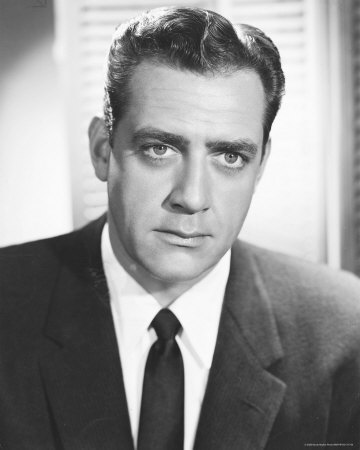
Before actor Raymond Burr stepped into his first courtroom in the fall of 1957 as TV’s Perry Mason, he was known primarily as a movie heavy (if you’ll pardon the obvious pun).  He practiced villainy in films noir such as Pitfall (1948), His Kind of Woman (1951) and The Blue Gardenia (1953).  He also had high-profile cinematic showcases in both A Place in the Sun (1951) (as the fiery District Attorney out to convict Montgomery Clift) and Alfred Hitchcock’s Rear Window (1954) (as the suspected killer peered at by invalid James Stewart).

Burr was also making a name for himself on radio.  As a close friend of future Dragnet creator Jack Webb, he worked alongside his friend in the hard-boiled detective drama Pat Novak for Hire (as Inspector Helmann)…and appeared briefly on Webb’s famous police procedural as Ed Backstrand, Chief of Detectives.  Other radio programs on which Burr was heard include Suspense, Yours Truly, Johnny Dollar, The Whistler, The Line-Up and The CBS Radio Workshop.

Fifty-seven years ago on this date, Raymond Burr began his best-known radio gig—that of stern-but-sympathetic Lee Quince, “Captain of Cavalry,” on CBS Radio’s Fort Laramie.  The western series, created by Gunsmoke’s Norman Macdonnell, bore many stylistic similarities to its “adult western” cousin.  The “sound patterns” on the program were supplied courtesy of Bill James and Ray Kemper, and many of Laramie’s scripts were written by people who did double-duty on Gunsmoke: John Meston, John Dunkel, Les Crutchfield and Kathleen Hite (the show’s head writer).
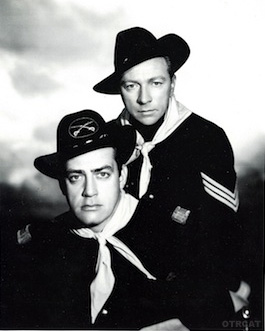
Many members of Gunsmoke’s “stock company” also added their rich characterizations to Fort Laramie—Vic Perrin portrayed the laid-back sergeant Ken Gorce, and Harry Bartell (who was 42 at the time, older than both Burr and Perrin) was completely convincing as Lieutenant Richard Siberts, a greenhorn junior officer.  The fourth member of Laramie’s quartet, and Captain Quince’s superior, was Major Daggett, played by Jack Moyles (best remembered by radio fans as the titular hero on Rocky Jordan).  Other Gunsmoke regulars heard on Fort Laramie included Sam Edwards, Howard McNear, Jeanette Nolan, Howard Culver, Ben Wright, Lawrence Dobkin, Jeanne Bates, Virginia Gregg, Parley Baer and John Dehner (who appeared as Quince on the show’s audition record in 1955).

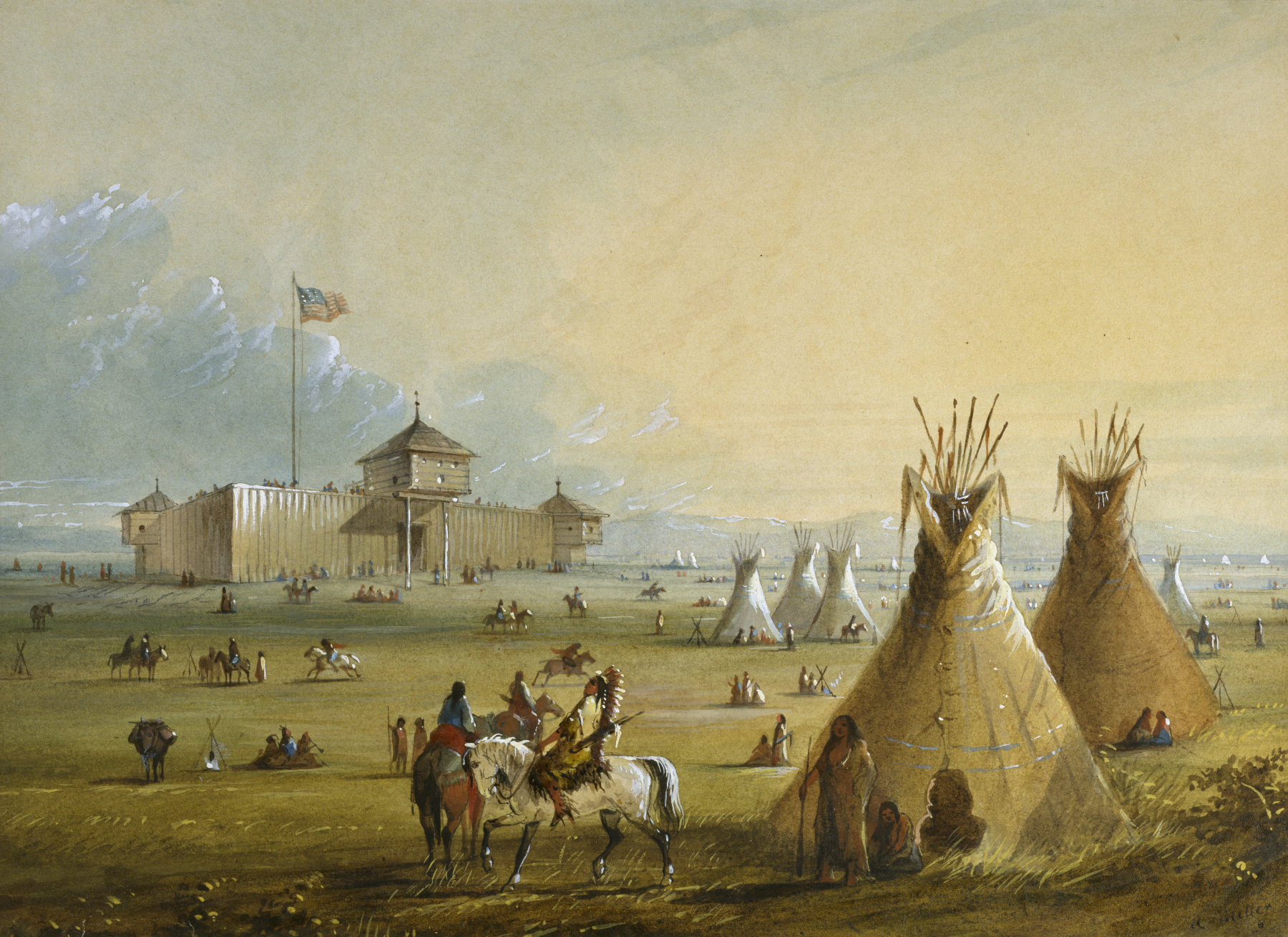
Fort Laramie depicted the harsh and often challenging experiences of soldiers on a U.S. Army post in the 1880’s, “the saga of fighting men who rode the rim of empire.”  It was remarkably devoted to authenticity and realism.  It was also groundbreaking in that it depicted both female and Native American characters in bracingly positive ways, and moved radio’s barriers by being fearless enough to tackle the themes of death, repentance and betrayal in many of its stories.  But, it could also present lighter moments, poking gentle fun at the ways men sought to combat the humdrum rigors of cavalry life.
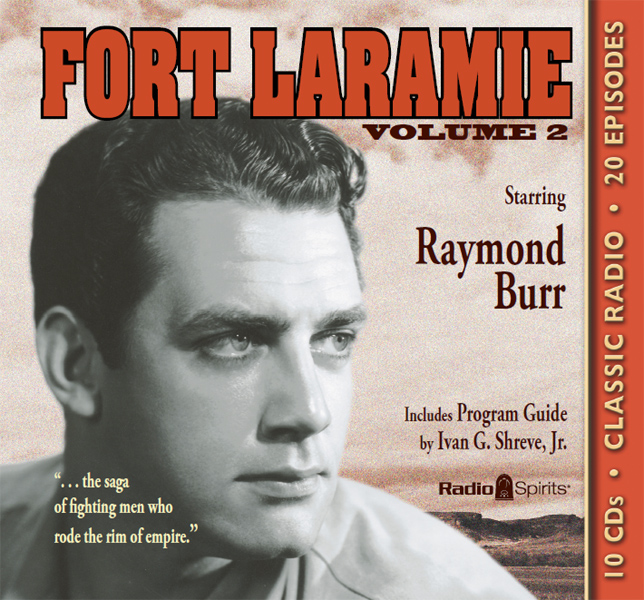
Fort Laramie spent its entire radio run as a sustaining program on CBS, but its swift cancellation on October 28, 1956 wasn’t due to its inability to attract a sponsor.  By that September, Raymond Burr had received word that he was going to be starring as Erle Stanley Gardner’s famed literary creation, Perry Mason, on a primetime series for the network.  The question as to whether or not the program could have (again, excuse the pun) soldiered on is best left to OTR fans to discuss when they’re not listening to the show…but as a series, it’s one of radio’s finest.  The complete run of forty episodes is available in two collections (Volume 1 and 2) from Radio Spirits.  On a list of the best old-time radio westerns of all time—Gunsmoke would inarguably rank as Number 1…but I’d personally fight for the inclusion of Fort Laramie in second place.  “At the gallop…full!”
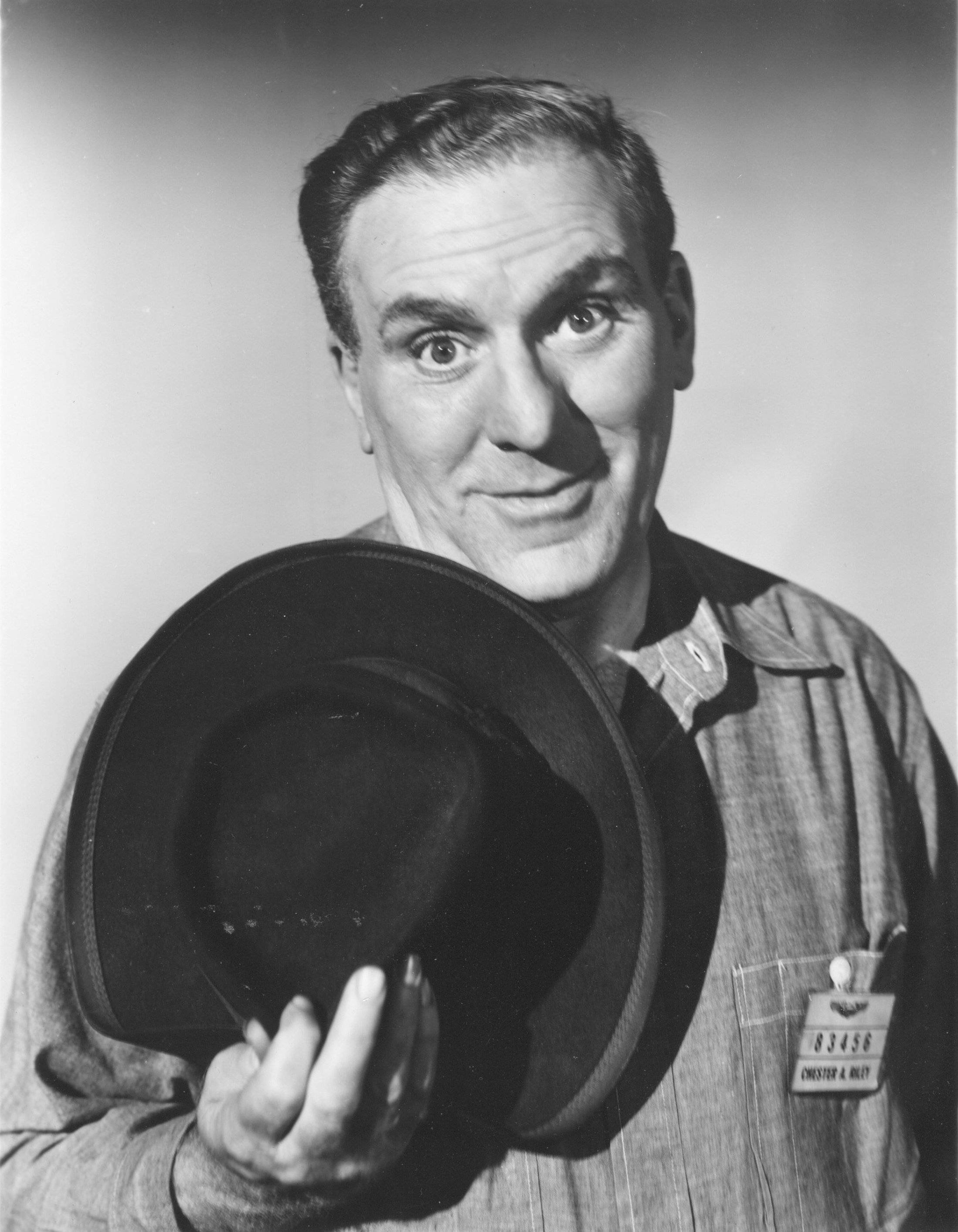
What a revoltin’ anniversary this is!

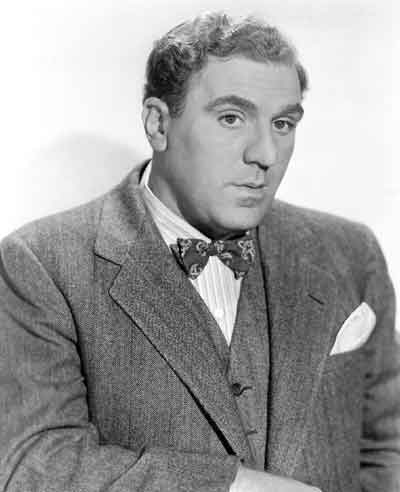
This past Monday, January 14th, marked the 107th birthday of actor William Bendix…who graced the silver screen during the 1940s/1950s in such movie classics as Wake Island (1942), Lifeboat (1944) and Detective Story (1951).  Tomorrow, January 17th, is the 99th birthday of writer-director-producer Irving Brecher.  Brecher wrote such screenplays as Shadow of the Thin Man (1941) and Meet Me in St. Louis (1944), and later in his career directed films like Somebody Loves Me (1952) and Sail a Crooked Ship (1961).

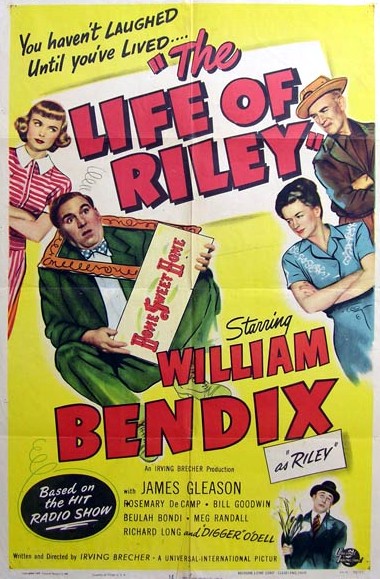
It’s only fitting, then, that the collaboration between these two men chalks up its 69th anniversary today—a situation comedy that debuted on radio, but saw its popularity launch both a successful film and two different versions on television.  You know it as The Life of Riley.

Irving Brecher was very good friends with comedian Groucho Marx—in fact, Brecher is the only screenwriter to receive sole credits on two of the films starring Groucho and his brothers: At the Circus (1939) and Go West (1940).  Groucho approached Irving one day and asked if the writer might have a radio property available that he could tailor to the acerbic comedian’s talents.  Brecher dusted off a pilot he had written entitled The Flotsam Family.  Groucho would play a husband and father whose work habits dictated that he would have to find a new job every week.  An audition record for the show was created, but although the audience liked the “pilot” (because “they liked Groucho,” Brecher later reminisced), the prospective sponsor wisely took a pass on the show on the basis that he just didn’t think Groucho was believable as a family patriarch.

Groucho would have to wait until 1947 before finding solo radio success with You Bet Your Life.  In the meantime, Brecher made a fateful trip to the movies one evening.  On the bill was a Hal Roach “streamliner” (the producer’s nickname for films that ran between 40-50 minutes) entitled The McGuerins of Brooklyn (1942).  Irving thought the star of that film, William Bendix, would be ideal for the role of his “Flotsam,” and in contacting Bendix’s agent learned that the actor was interested in doing a radio series.  A few changes to the script were made by Brecher, another audition record was recorded, and then…nothing.  It wasn’t until six months later that a representative from the American Meat Institute contacted Brecher and expressed an interest in putting what was now called The Life of Riley on the air.  The program then debuted over the Blue network (later known as ABC) on January 16, 1944.

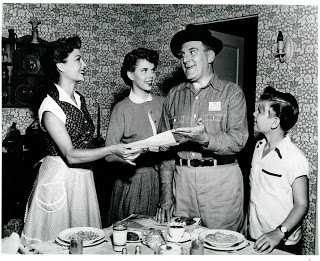
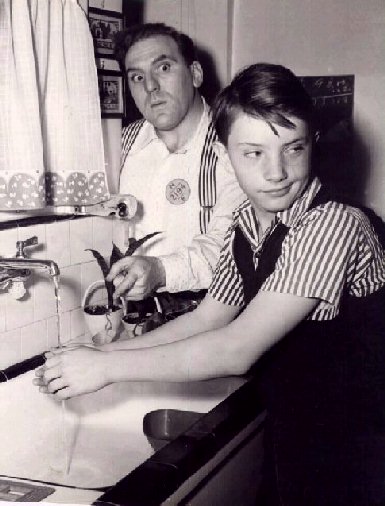
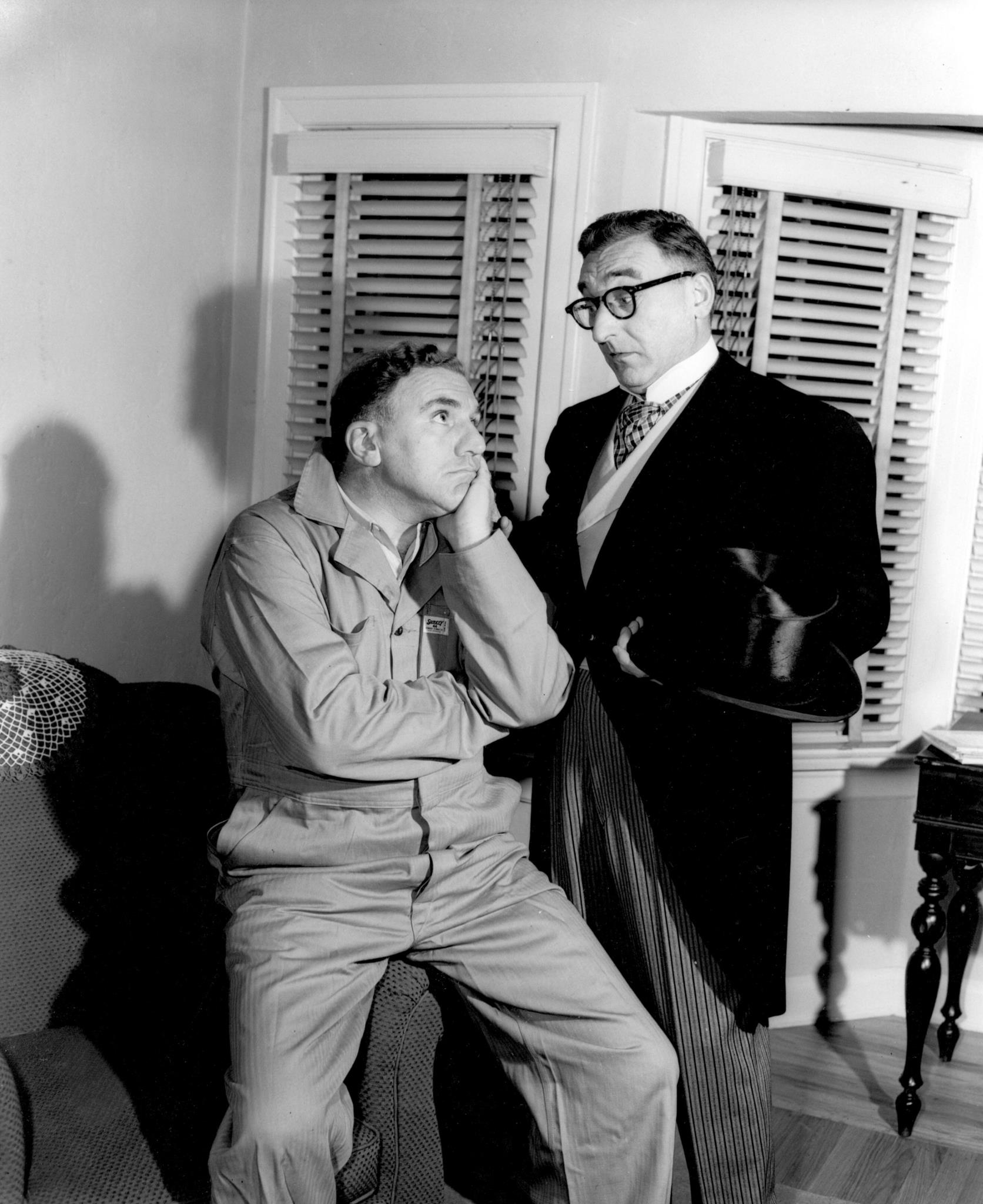
Bendix played the title role—a Brooklyn expatriate named Chester A. Riley who had migrated west to Los Angeles with his wife Peg, daughter Barbara (affectionately known as “Babs”) and son Chester, Jr (“Junior” to family and friends).  Riley was a beefy, good-hearted slob who was employed at an aircraft plant as a welder.  More often than not, the plots concentrated on his home life, where he had a rare talent for taking the simplest of situations and transforming them into unmitigated disaster.  Impossible to dissuade once he had determined a certain course (“My head is made up!”), Riley would invariably be rescued by the down-to-earth, level-headed Peg—played through the entire run of the series (1944-51) by actress Paula Winslowe.  Once things had morphed into complete catastrophe, Riley would throw up his hands and utter those plaintive words that became a national catchphrase: “What a revoltin’ development this is!”

Riley’s children, Babs and Junior, were played by a number of young actors and actresses through the program’s run.  Sharon Douglas, Barbara Eiler and Louise Erickson were heard as Babs.  Conrad Binyon, Scotty Beckett, Jack Grimes, Tommy Cook, Bobby Ellis and Alan Reed, Jr. all took turns as the younger Riley.  Most of the memorable characters on the program were played by radio veterans, however.  Hans Conried made appearances in the early shows as Uncle Baxter, a sponging relative who lived with the Rileys, and Francis “Dink” Trout was Waldo Binney, a nebbishly creampuff who was one of Riley’s neighbors.  Other performers heard from time to time include Alan Reed (as Riley’s boss at the plant), Charlie Cantor, Elvia Allman, Ken Christy, Sid Tomack, Jim Backus, Mary Jane Croft, Herb Vigran and Shirley Mitchell.

But the best-remembered of them all was actor John Brown, who did double duty on the program.  First, he was Jim Gillis, Riley’s best friend and neighbor whose “advice” to his pal more often than not landed him in deeper trouble than he was already in.  Brown’s breakout character, however, was born one day when writer Irving Brecher, stuck with a small hole to fill in the week’s show, created an undertaker character named Digby “Digger” O’Dell for a one-shot appearance…and was surprised when he became popular with the radio audience.  Though the company sponsoring the show asked him to get rid of “Digger,” Brecher decided to beef up his presence on the show with each passing week—and later credited his creation with saving the series.  O’Dell would encounter Riley in various venues on each broadcast and greet him somberly: “You’re looking fine, Riley—very natural!”  The dialogue exchange between Riley and “Digger” always consisted of hilarious macabre puns on the undertaker’s part…and when they had conducted their business, O’Dell would always tell his chum: “Cheerio—I’d better be shoveling off.”
With the success of the radio series, Brecher brought a version of The Life of Riley (which he wrote and directed) to the silver screen in 1949…and its popularity led to a television adaptation that had to function without its main star, William Bendix, because the actor couldn’t contractually appear on TV.  So, Brecher went with an unknown Jackie Gleason as his welder and family man—and though the show would win an Emmy Award as Best Comedy Series, Riley’s sponsor dropped the program shortly afterward.  When Bendix was finally able to make the leap to the cathode ray tube, a second version of The Life of Riley premiered over NBC-TV in the winter of 1953, and the Bendix incarnation was a solid hit for five seasons.

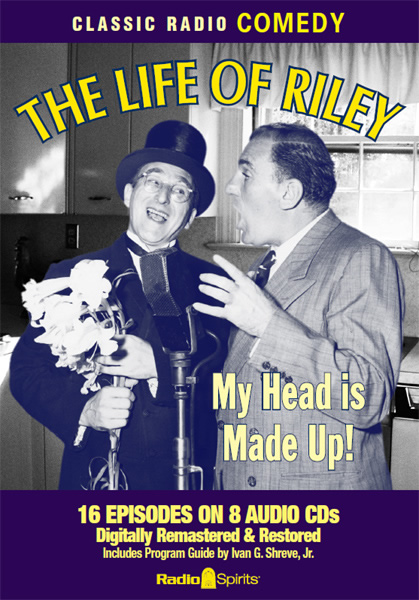
The Life of Riley remains one of the most popular radio sitcoms still in demand with OTR listeners today—partly because of the good-natured charm of William Bendix, the lovable lug you just can’t help wanting to protect…especially from himself.  And, the sharp black humor of “Digger” O’Dell is a draw for many fans as well.  If you haven’t made your acquaintance with this comedy classic from the Golden Age of Radio, we suggest that the collections What a Revoltin’ Development and My Head is Made Up! are as good as any place to start.

Happy Birthday to the Chairman of the Board!

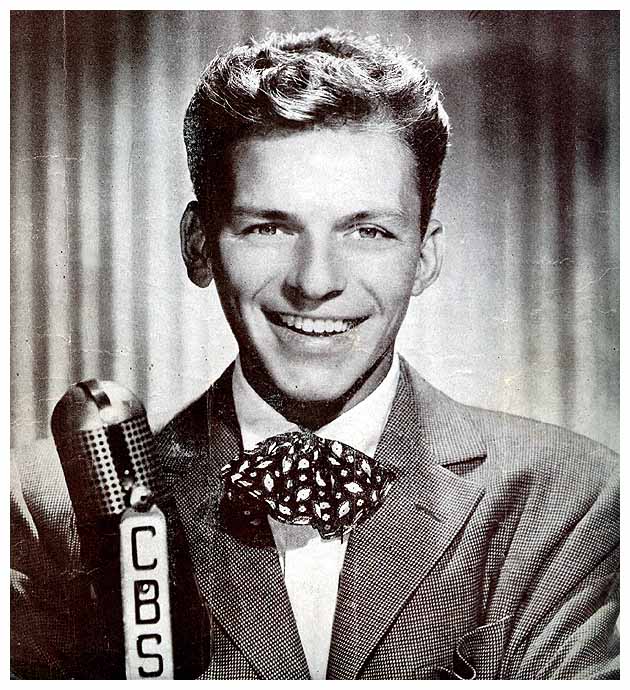
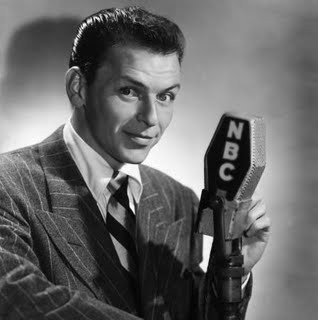
Francis Albert Sinatra—Oscar-winning actor, Grammy-winning recording artist, and star of the Emmy Award-winning television special Frank Sinatra: A Man and His Music (1965)—would have celebrated his 97th birthday today.  A retrospective of his amazing career would eat up more than the allotted bandwidth of the Internet…so Radio Spirits thought a focus on Ol’ Blue Eyes’ relationship with radio would be in perfect keeping with the cake and ice cream.

Sinatra’s longtime love affair with music began at an early age: from the time he was eight he was singing in nightclubs in his birthplace of Hoboken, NJ (on top of the bar, sure—but you take whatever gigs you can get) and he gravitated toward a serious music career in his teens after stints as a delivery boy and riveter.  His mother, Natalie (friends called her “Dolly”), convinced a local trio known as The Three Flashes to let her son join their group…which afterward became The Hoboken Four.  The aggregation was fortunate to not only get an audition with Major Bowes, but to win first place on his Original Amateur Hour in 1935.  Their prize was a six-month contract to perform on both stage and radio across the country…but while on the road, Frank decided to leave the group and go out on his own.  His radio appearances continued sporadically, though they were usually on local stations.

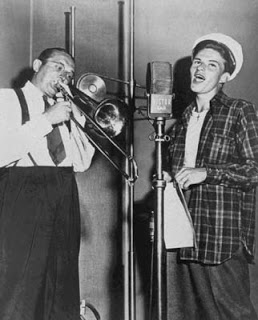
Mama Dolly used her connections once again to land Frank a job as a singing waiter and emcee with the Rustic Cabin in Englewood Cliffs.  A hotbed of big band activity, it was there that Sinatra would cross paths with bandleader Harry James, who hired the young singer in June of 1939 to be the vocalist in his band at $75 a week.  The Voice’s tenure with James’ band didn’t last long…but, he wasn’t fired.  Frank left because Tommy Dorsey had approached him in November of that same year to come and work for him—a golden opportunity for Sinatra, since Dorsey’s band was one of the hottest in the nation.  Although he had signed a contract with Harry James’ band for one year, the bandleader graciously allowed him out of it to sign with Dorsey.  Soon, Frank started making national radio (via band remotes) and public appearances with the Dorsey Orchestra.

The 1940s ushered in what could very well be called “Sinatramania.”  Through his recordings with the Dorsey band, Frank became one of the most popular vocalists of the decade—his young female fans packed the auditoriums.  Frank severed his ties with Tommy Dorsey in late 1942, but his popularity continued to grow.  His very first starring radio series, Songs by Sinatra, debuted over CBS Radio on October 27, 1942 as a quarter-hour series.  In January of 1944, the program expanded to a half-hour on Wednesday nights at 9:00 p.m., sponsored by Lever Brothers (and later Max Factor and Old Gold).  Sinatra also joined the cast of Your Hit Parade in February of 1943, and stayed with that program for two years—but his tenure on that series (in which the songs were the star, NOT the singer) was a rocky one.

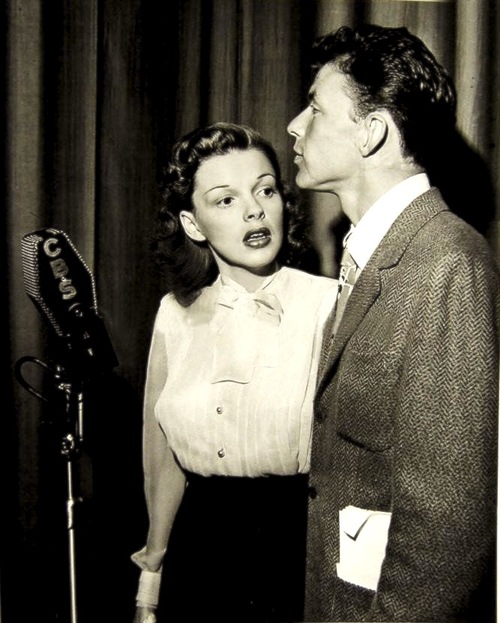
Frank Sinatra’s movie career also took off in the 1940s.  He had appeared in films like Las Vegas Nights and Ship Ahoy as a member of the Dorsey band, but films such as Higher and Higher and Step Lively gave him much greater exposure, and vehicles like Anchors Aweigh and On the Town (both of which co-starred Gene Kelly) made him a musical comedy star.  Sinatra was often asked to recreate both his own roles and the star turns of others on the likes of Lux Radio Theatre and Lady Esther Screen Guild Theatre.  Frank joked with all of the major radio comedians—Jack Benny, Fred Allen, Bob Hope, Edgar Bergen & Charlie McCarthy—but he also made appearances on shows headlined by his “rivals” Bing Crosby, Dinah Shore and the Andrews Sisters.  He also turned up in such unlikely places as A Date with Judy and Life with Luigi…and kept listening audiences in Suspense (a January 18, 1945 broadcast with Ethel Barrymore entitled “To Find Help”).

As the decade came to a close, Frank Sinatra was still a fixture on radio—he had returned to Your Hit Parade in the fall of 1947 and stayed for another two years before that show’s sponsor, Lucky Strike, started signing the checks on Light Up Time: a five-day-a-week quarter-hour that paired him with Metropolitan Opera star Dorothy Kirsten.  But “Sinatramania” had started to cool: a television venture that started in the fall of 1950, The Frank Sinatra Show, lasted just two seasons on CBS, and films like Double Dynamite and Meet Danny Wilson were duds at the box office.  Because a man’s gotta eat, Frank agreed to star in an NBC Radio series in the fall of 1953 entitled Rocky Fortune, which cast him as a jack-of-all-trades named Rocko Fortunato who was thrust into detective situations on a weekly basis.  Frank’s “comeback” role—his sensational turn as the pathetic Private Angelo Maggio in the Best Picture winner From Here to Eternity—provided the impetus he needed to bring Mr. Fortune’s escapades to a close shortly after collecting his trophy.  (If you’re curious about Rocky Fortune—a series that has both its defenders and detractors—a Christmas themed episode, “The Plot to Murder Santa Claus,” from December 22, 1953 can be found on the latest Radio Spirits release, The Voices of Christmas Past.)

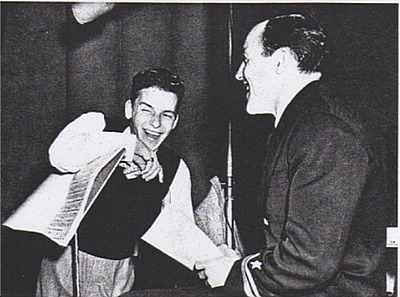
Frank Sinatra continued broadcasting on radio until 1955 (he was doing a twice-a-week quarter hour on NBC about the same time as his stint on Rocky Fortune), but with his movie career resurrected, and at the peak of his recording powers, he concentrated solely on those pursuits.  But, if you’re fortunate to listen to The Voice at the height of his “bobby soxer” fame through archival recordings, you can’t deny the electricity that the actor-singer brought before a microphone.  Radio made Frank Sinatra’s career and, on the occasion of his birthday, we’re awfully glad that it did.

Happy birthday, Arch Oboler!

My introduction to the man who would have been celebrating his 103rd birthday today goes all the way back to 1982.  In listening to a local public radio station while attending college at Huntington, West Virginia’s Marshall University, I happened upon a dramatic excerpt in which two men encounter a mysterious fog…that turns people inside out!  At the conclusion, the program’s host interviewed Arch Oboler, the playwright and novelist, who went on to talk about his theories about horror in general…and radio horror in particular.  (This exposure to Oboler was supplemented by a segment that I later learned was called “A Day at the Dentist’s”—both it and the fog piece [“The Dark”] were culled from an LP that Oboler had produced for Capitol Records in 1962: Drop Dead! An Exercise in Horror.)

Oboler, who was not only a respected name in radio, but also dabbled in films, TV and theater, was born in Chicago, Illinois on this date in 1909.  Infused with a literary spark practically from day one, he was a voracious reader and even sold his first short story when he was but ten years old.  He was accepted into the University of Chicago upon graduating from high school…but his collegiate career was a short one.  The school expelled him because of his confrontational nature, something that would both help and hinder him in his future career endeavors.

Oboler then went into writing pulp fiction full-time, but in 1933 he wrote his first radio play.  The National Broadcasting Company bought that script, presenting it as part of a program honoring the network’s new headquarters at Radio City in New York.  Disgusted that the content of the radio medium seemed to consist of nothing but soap operas, Oboler’s “Futuristics” was a satirical science-fiction drama that examined the past through the eyes of the citizens of the future.  (“Futuristics” was a huge success, but it foretold of the future clashes Oboler would experience with sponsors—the American Tobacco Company wasn’t happy about one of the characters poking fun at their slogan in Arch’s play.)

In a wry definition of irony, Oboler’s hiring by NBC meant turning in scripts for soap opera-style shows like Grand Hotel and Dear John (aka The Irene Rich Show).  But, Arch moved up in the network ranks by 1936, when a short playlet that he wrote (“Rich Kid”) was used by Rudy Vallee on the entertainer’s The Royal Gelatin Hour.  Vallee asked Oboler to continue contributing dramatic sketches to the program, and Arch landed stints on The Magic Key of RCA and, beginning in May of 1937, The Chase and Sanborn Hour.  Oboler’s career caught fire in 1936 when he replaced Wyllis Cooper (who had left for Hollywood) as the creative force behind NBC’s late-night horror program Lights Out.  Arch wasn’t particularly wild about the horror genre, but he saw that doing the show (which aired in a late night time slot) would allow him greater autonomy and freedom from sponsor interference.  At the risk of making a bad pun: he should have lived so long.  Oboler’s first script for the series, “Burial Services,” told a chilling tale of a little paralyzed girl who had been buried alive…and was not going to be rescued.  NBC received a blanket snowfall of complaint letters (around 50,000) about the production…and though Oboler agreed to tone down some of Lights Out’s material in the future, his penchant for controversy was just beginning.

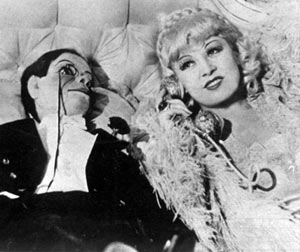
Oboler wrote an “Adam and Eve” sketch during his stint on The Chase and Sanborn Hour that featured show regular Don Ameche and guest star Mae West in the title roles…and though it seems rather tame listening to it today, West’s delivery of some of the lines (and a comedy bit that followed in which she interacted with Edgar Bergen & Charlie McCarthy) enraged listeners and high-minded civic types to the point where NBC not only banned West from any future network appearances…the very mention of her name was verboten for fifteen years after that.  By 1938, having contributed such memorable plays as “Cat Wife,” “Chicken Heart,” and “Revolt of the Worms” to Lights Out, Oboler decided that none of his fictional terrors could match the real horror that was Adolf Hitler, and he left the program to concentrate on his Arch Oboler’s Plays series that began the following year in 1939.  (A sustained series, Plays later acquired a sponsor in Procter & Gamble; it was then re-titled Everyman’s Theater and lasted until 1941.)

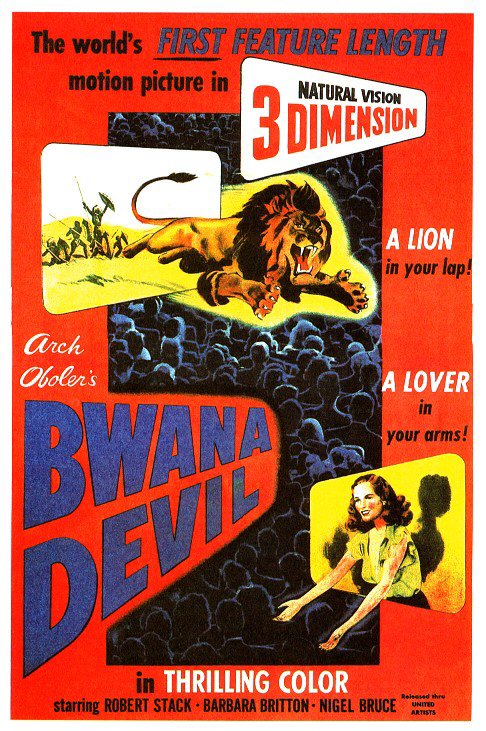
Throughout the 1940s, Oboler concentrated on writing plays dedicated to publicizing the war effort, which were featured in such shows as Plays for Americans, To the President, Free World Theatre and Everything for the Boys.  But because propaganda doesn’t necessarily guarantee groceries on the table, Arch also agreed to revive Lights Out in 1942 for CBS in a half-hour series sponsored by Ironized Yeast.  It is this series from which most of the surviving episodes of the famed horror program are listened to today.  Many of them were revised versions of scripts from the 1930s, and included such Oboler classics as “Poltergeist” and “Oxychloride X.”  It was also at this time that Oboler tried his luck at a Hollywood screenwriting career, penning the screenplays for such films as Escape (1940) and Gangway for Tomorrow (1943), and became an auteur (writer-director-producer) with productions like Strange Holiday (1945) and cult classes like Five (1951), The Twonky (1953) and the first 3-D film, Bwana Devil (1952).

Arch later dipped a big toe in television (the 1949 anthology series Oboler’s Comedy Theatre) and on Broadway (Night of the Auk, based on his radio play “Rocket from Manhattan”).  He even continued writing short stories and novels—his 1969 fantasy House on Fire was adapted as a production on the Mutual Radio Theater in 1980.  But even after tasting success in other fields, Oboler’s true love was radio, and he contributed several more scripts to Mutual Radio Theater, including “Lion Hunt” (which is available in a new Radio Spirits collection).  A man who had almost as many detractors as admirers, Arch Oboler is nevertheless one of the most important names in the history of the medium.  We wish him a happy birthday, and pass along a reminder that Radio Spirits offers an outstanding 10-CD set entitled Arch Oboler: Retrospective with broadcasts from many of the above mentioned shows that he wrote, directed and produced.

“The secret word is anniversary…”

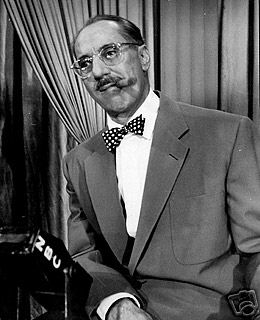
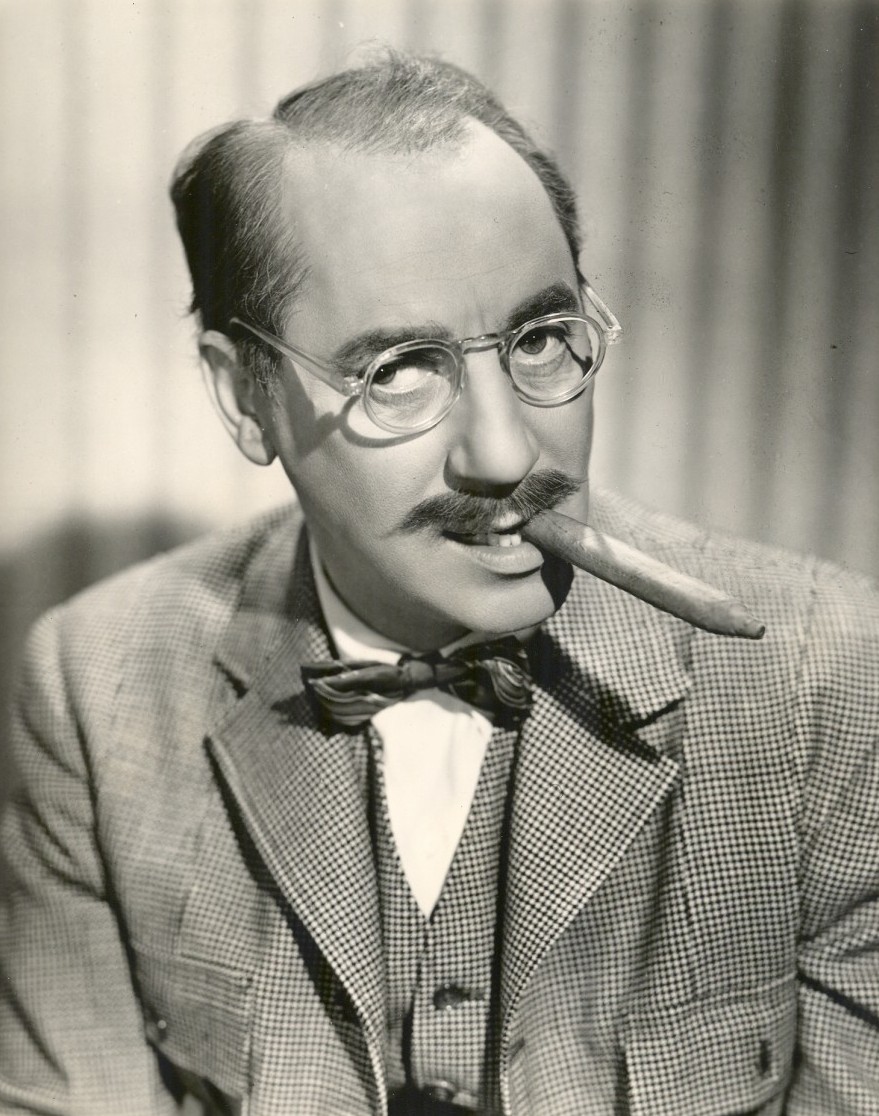
Sixty-five years ago today, the program that finally found a way to make good use of the one-of-a-kind comic talent of Julius “Groucho” Marx premiered: You Bet Your Life.  A “quiz show” that really served as mere window dressing for Groucho’s rapier wit, its debut over ABC Radio was originally met with a bit of trepidation by the press—Newsweek observed that featuring Groucho as a quizmaster was the equivalent of “selling Citation to a glue factory.”  But, it didn’t take long before the fourth estate was in agreement that You Bet Your Life was the perfect vehicle for the comedian’s talents—it would spend roughly the next fifteen years as a radio and TV staple, even winning a Peabody Award in 1949.

Groucho had been looking for success in radio as far back as 1932 when, despite the impressive ratings of the program Flywheel, Shyster and Flywheel (a series that also co-starred brother Leonard “Chico” Marx), it was yanked from the airwaves after one season at the whim of its oil company sponsor.  And, his 1943-44 series Blue Ribbon Town suffered a similar fate.  But, despite these setbacks, Groucho was in high demand as a guest star, making any number of appearances on such shows as Birds’ Eye Open House (with Dinah Shore).  Producers were often reluctant to use Marx because he wasn’t a fan of scripted material…but it was Groucho’s ad-libbing that eventually started him on the road to radio’s Top Ten.

The story goes that Bob Hope accidentally dropped his script during a rehearsal for a radio special in 1947, prompting Groucho to follow suit…and what resulted was a wild, freewheeling ad-lib session between the two comic greats.  Witnessing this spectacle was producer John Guedel, who was responsible for bringing to radio such hits as People are Funny and House Party (he also convinced a bandleader named Ozzie Nelson that he should think about starting his own program with wife Harriet after their stint on Red Skelton’s program ended).  Guedel started to formulate what eventually became You Bet Your Life, which would allow the comedian to interact with members of the audience.  “When people were being funny, Groucho could be the perfect straight man,” he later observed. “When the people played it straight, Groucho couldn’t miss with his own comedy.”

Though hesitant at first, Groucho eventually adopted a “what-do-I-have-to-lose?” attitude about the venture, and You Bet Your Life’s audition record sold quickly, securing a sponsor in Elgin-American watches and a berth on ABC’s schedule.  It was tough sledding at first: the show was broadcast live in its early days, which often resulted in many uncomfortable slow spots and tepid exchanges between Groucho and the contestants.  So Guedel decided to take a page out of the playbook from one of the network’s other hits, Bing Crosby’s Philco Radio Time: they started to record the program.  The proceedings would run for a full hour, but would be edited it in half, retaining only the funniest stuff.

During its lengthy radio and television runs, You Bet Your Life’s “quiz” format underwent many changes, but it always involved Groucho interviewing two to three couples during the broadcast, followed by a series of questions that allowed each couple to win a little spending money.  (The couple who won the most dough was allowed to play a “bonus round” for even more cash.)  If the couple ended up winning no money, quizmaster Marx would give them a little consolation question for a few dollars on the order of “What color is an orange?”  (As Groucho would often say, “Nobody leaves here broke.”)

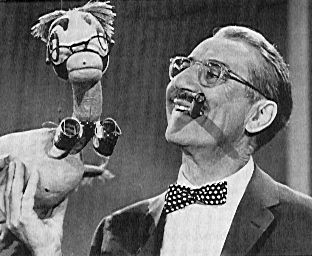
It was also possible to snag a C-note by saying the “secret word.” This word—something common, like “name” or “chair”—would be revealed to the studio and listening audience at the beginning of the show. When it was uttered, the band would strike up a fanfare. (Selected members of the band were “hired” to listen for the secret word, receiving a nice kickback as a result.) When You Bet Your Life came to television, viewers would also see a Groucho-like duck descend from the ceiling.

In the early days of You Bet Your Life, Jack Slattery handled the announcing chores…but it wouldn’t be long before Groucho would find his perfect foil in George Fenneman, an actor-announcer whom his boss would later describe as “the male Margaret Dumont.” (This comparison was a tribute to the wonderful character actress who graced so many of the Marx Brothers movies, usually as a stuffy dowager.)  George would open each broadcast by sharing that evening’s secret word with the audience.  Groucho would then ask, “Really?”  “You bet your life!” would be the enthusiastic reply of Fenneman, who would then introduce “the one, the only…GROUCHO!”  The band would then strike up Groucho’s theme song, Hooray for Captain Spaulding (from the film Animal Crackers), signaling the start of half an hour of hilarity.
You Bet Your Life ran on ABC for two seasons, and moved to CBS in the fall of 1949 (as one of the shows plundered by chairman William S. Paley in his “talent raids”). But, NBC would get the last laugh—the show moved to that network in the fall of 1950, and remained a radio staple until 1956. At the same time, the program began its debut on television, and found a home there for eleven seasons, finally giving up the ghost in 1961. It was also on NBC that the show’s best remembered sponsor, DeSoto Motors, paid the bills.  For a while, the commercial tagline—“Tell ‘em Groucho sent you”—became a pop culture catchphrase.

“Anniversary, my dear Watson…anniversary.”

Eighty-two years ago on this date, the world’s greatest detective made his debut over the airwaves…and let’s make one thing clear—it’s the world’s greatest consulting detective, in case you were expecting to hear about Sam Spade.

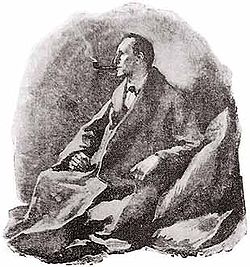
Arthur Conan Doyle’s legendary literary sleuth, Sherlock Holmes, saw the last of his adventures published in 1927…and three years later, Holmes and his biographer, Dr. John Watson, started broadcasting on October 20, 1930 over NBC’s Red network for George Washington Coffee.  “Baker Street Irregulars” have Edith Meiser to thank for putting the Holmes radio series in motion; a longtime fan of Conan Doyle’s deductive dick, she was motivated (as an actress and playwright) to write a couple of scripts based on stories from the Holmes “canon” and pitch them to the National Broadcasting Company as a potential series.  NBC was interested, but would only greenlight the project if a sponsor could be persuaded…and once she secured her “angel,” she stayed on to write most of the scripts for the series until the 1940s, using both the Arthur Conan Doyle originals and stories she crafted herself.  Later, the writing would be handled by the likes of Saint author Leslie Charteris and the team of Denis Green & Anthony Boucher (the legendary science fiction author who also created The Casebook of Gregory Hood).

In the early years of Sherlock Holmes, there would be almost as many time slots as there were actors to play the tenant at 221-B Baker Street. William Gillette, who played Holmes in a justly famous 1899 stage production (and also in a 1916 silent film that, sadly, is lost), reprised his role in the first broadcast, “The Adventures of the Speckled Band.” The part was then turned over to Clive Brook (1930-31), Richard Gordon (1931-33) and Louis Hector (1934-35), who also played Holmes’ nemesis, Professor Moriarty, at various times.  The role of Watson was played by Leigh Lovel, but after Lovel’s death it was assigned to Harry West, who joined Richard Gordon in another Holmes series in 1936 heard over Mutual and NBC for Household Finance.

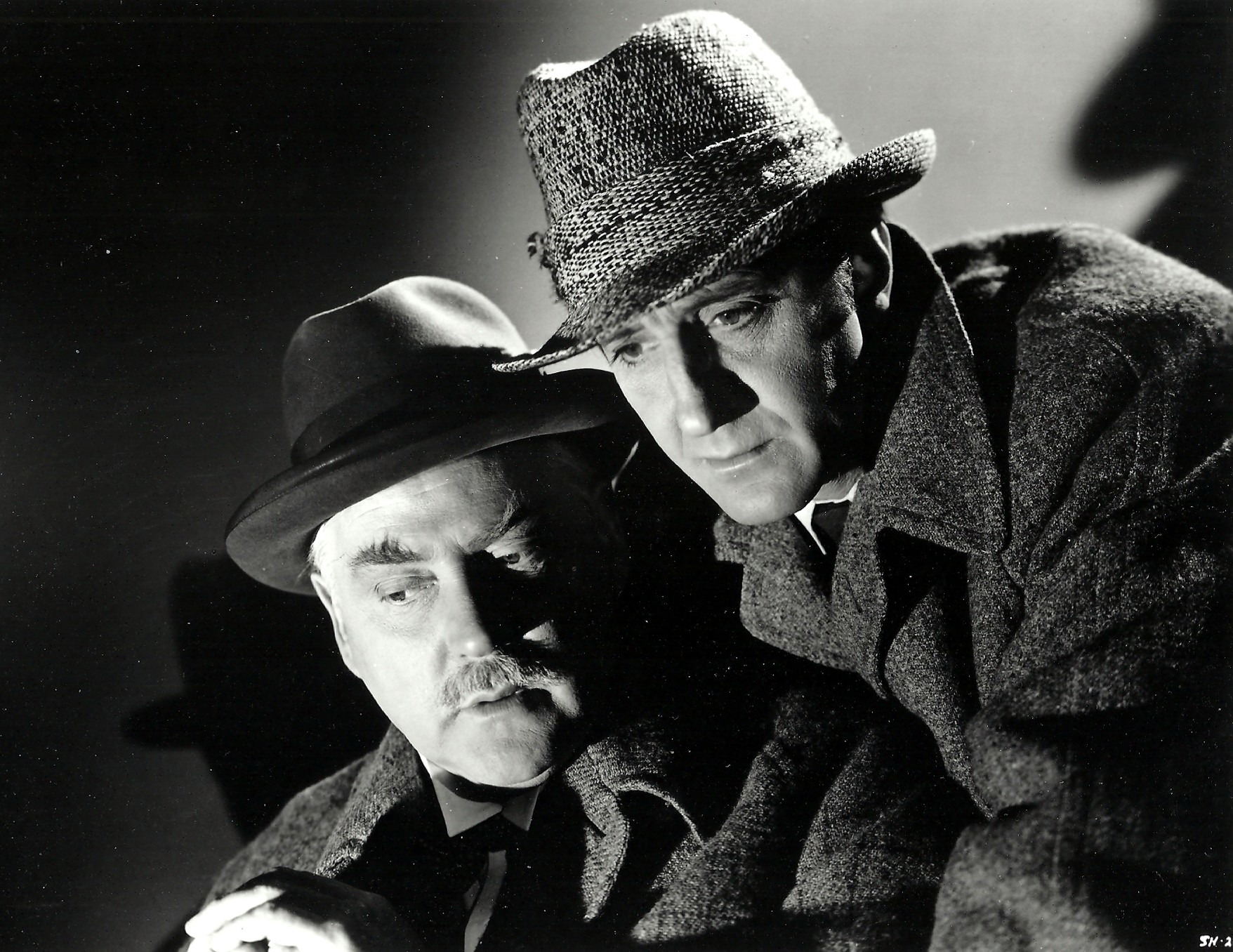
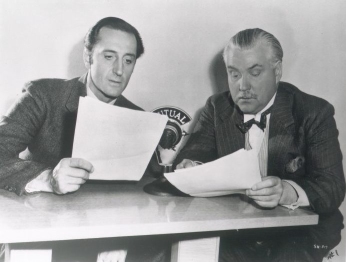
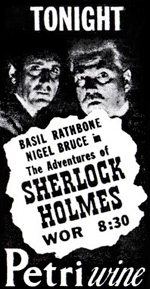
With the popularity of The Hound of the Baskervilles and The Adventures of Sherlock Holmes, two theatrical blockbusters released by 20th Century Fox in 1939, the Sherlock Holmes radio franchise would see its greatest popularity in what OTR historian John Dunning calls “the most celebrated of all Sherlock Holmes offerings” beginning on October 2, 1939.  Basil Rathbone (who played Holmes) and Nigel Bruce (Watson) not only starred in the two Fox films, but in a dozen more B-pictures for Universal between 1942 and 1946.  On radio, the escapades of Rathbone and Bruce were known as The New Adventures of Sherlock Holmes, and the program sold a great deal of Bromo Quinine (on Blue/NBC) from 1939-43 and Petri Wine (on Mutual) from 1943-46.  Rathbone bid the show farewell in 1946 (he felt he had done all he could with the part) and Bruce soldiered on for an additional season opposite movie Falcon Tom Conway.  But the chemistry between the two men couldn’t quite match that of the previous pairing.  Subsequent attempts, with John Stanley (Holmes) & Alfred Shirley/Ian Martin (Watson) from 1947-49 (Mutual; Clipper Craft) and Ben Wright (Holmes) & Eric Snowden (Watson) from 1949-50 (ABC; Petri Wines again), also failed to catch fire.

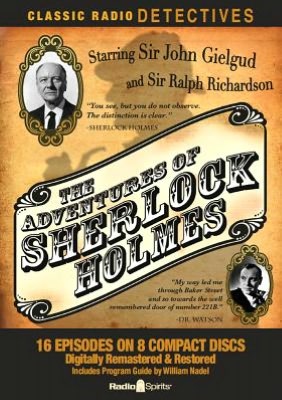
There was a Holmes renaissance in 1955 (transcriptions from a BBC series that was previously broadcast in 1954) that appeared on NBC and ABC (in 1956), with Sir John Gielgud and Sir Ralph Richardson in the Holmes and Watson roles, respectively (and Orson Welles as Moriarty!).  A few of these broadcasts have been collected on the Radio Spirits CD set The Adventures of Sherlock Holmes.  Many distinguished radio thespians have had the opportunity to tackle the role of Holmes & Watson in subsequent years, with one of the best teamings being that of Clive Merrison (Holmes) and Michael Williams, who dramatized every tale from the Conan Doyle canon in a series of productions heard on BBC Radio 4 from 1989 to 1998.

But for many fans, it’s the team of Rathbone and Bruce that’s best remembered as the wise detective and his sidekick, due in part to both their long radio association and their fourteen theatrical films, which continue to be enormously entertaining despite taking more than a few liberties with the source material.

The Mark of the Whistler (1944)/The Thirteenth Hour (1947): “…of which they dare not speak…”

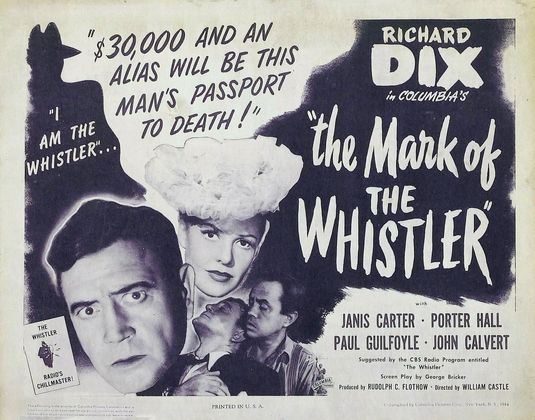
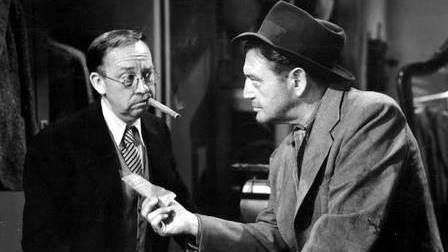
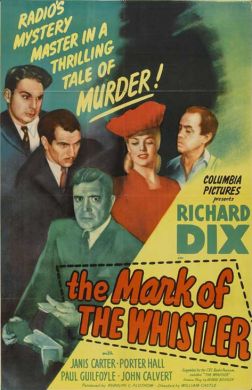
Two of the entries in Columbia’s Whistler franchise (based on the popular CBS Radio West Coast mystery program) rarely turn up in the rotation when the film series is shown on Turner Classic Movies.  This is a shame, because the first of these—1944’s The Mark of the Whistler—comes close to rivaling the debut movie, The Whistler (1944), as the best in the franchise.  Directed by future horror movie maestro William Castle, Mark casts series star Richard Dix as Lee Selfridge Nugent—a down-and-out derelict who happens to come across an interesting advertisement in a discarded newspaper.  A local bank has announced that there is money waiting in several abandoned bank accounts, and on the list of these is one belonging to a “Stella Nugent,” a woman who perished in an apartment fire many years ago.  The only survivor of the family is her son, conveniently named “Lee,” though he has no middle name.

Seeing an opportunity to pick up a quick buck—the bank ad guarantees that each account contains a minimum of one hundred dollars—Selfridge Nugent does a little research on the circumstances surrounding the fire, and convinces a second-hand haberdasher named Joe Sorsby (Porter Hall) to bankroll his plan to latch onto the money (with a new suit, room and board, etc.).  Nugent is also successful in persuading the bank president (Howard Freeman) that he’s the genuine article…and is astounded to learn that the money in the account totals $29,000.  As can be expected, this sudden financial windfall results in a new set of problems for the protagonist.

The Mark of the Whistler’s screenplay was one of two Whistler films (the other being 1948’s The Return of the Whistler) based on a short story by author Cornell Woolrich.  Here, George Bricker does a first-rate job adapting Woolrich’s “Dormant Account” into a taut screenplay with a few fun plot twists…and one that manages to wring suspense even out of mundane situations such as Freeman’s subtle interrogation to see if Dix’s story checks out.  Castle’s direction is also self-assured, utilizing some very effective close-ups.  Mark additionally benefits from a strong cast in Janis Carter as a curious reporter who’s anxious to do a story on Dix’s good fortune, and Paul Guilfoyle as a street peddler who comes to Dix’s rescue on more than one occasion.  Other familiar character faces include Walter Baldwin, Willie Best, Jack Rice, Arthur Space, Minerva Urecal…and Otto Forrest as the omnipresent narrator.

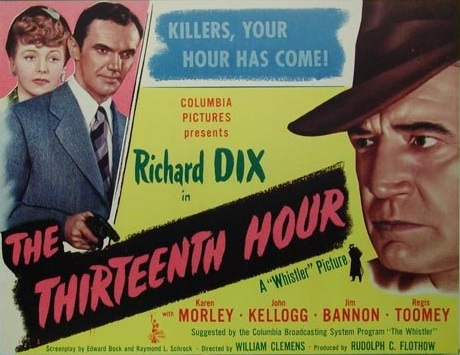
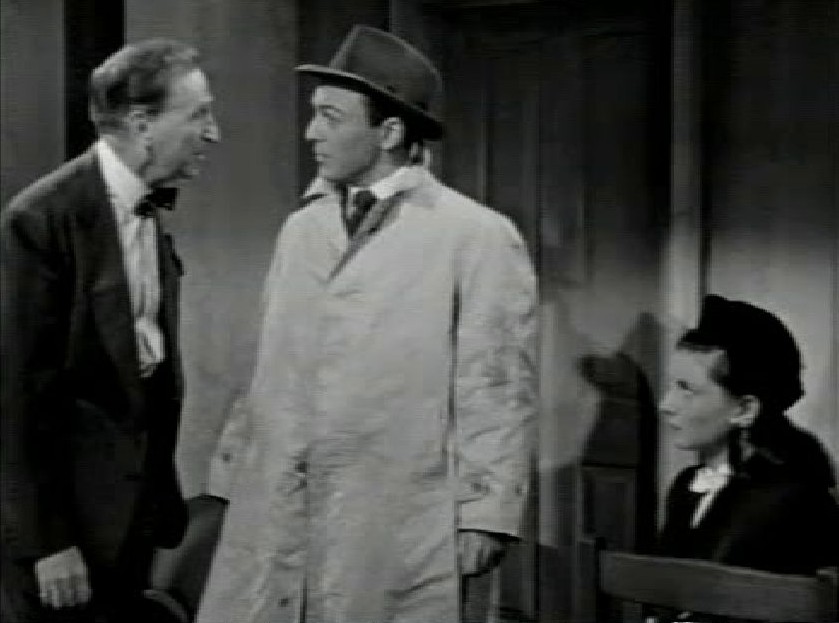
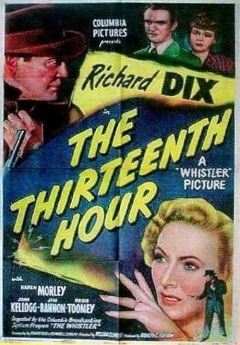
While Mark of the Whistler has been shown on television before (I have a copy recorded from a 1990s airing on the Encore Mystery Channel), The Thirteenth Hour (1947), the penultimate Whistler film, is a lot harder to locate.  It’s also a little more conventional than most of the Whistler movies.  Dix plays a trucking company owner named Steve Reynolds who’s just become engaged to girlfriend Eileen Blair (Karen Morley), the proprietor of a greasy spoon diner.  Steve won Eileen away from a state patrol cop named Don Parker (Regis Toomey), and because of that there’s a little bad blood between the two men.  The hard feelings deepen when Parker investigates an accident involving Steve and his truck (the vehicle slammed into a gas station after Reynolds swerved to avoid hitting a car on his side of the road).  Steve, alas, has no witnesses—even a hitchhiker he picked up shortly before the accident has taken a powder—so he is arrested on a drunken driving charge.

Because it’s his first offense, Steve avoids a six-month prison sentence and instead receives probation…but one of the terms of his probation is that he forfeits his drivers’ license.  Desperate to make sure a truckload of fruit reaches its destination before it rots (if it doesn’t get there, Steve will lose the contract, and possibly his business), he agrees to get behind the wheel to transport the fruit.  During the trip, he’s knocked out by a mysterious assailant…who soon meets up with cop Parker and quickly dispatches him.  Unfortunately, Steve is fingered for the deed.  So, with Eileen’s help, he desperately tries to prove his innocence.

With a screenplay by Edward Bock and Raymond L. Schrock (based on a story by Leslie Edgley), Thirteenth Hour manages to mix Dix’s bid to clear himself with a stolen car ring (headed up by OTR veteran Jim Bannon) and a diamond theft in its brief 65-minute running time.  The twist ending to the film, unfortunately, becomes pretty obvious at a certain point.  Still, Thirteenth Hour is an entertaining B-noir that features strong performances from Dix and Morley (the latter a particular fave of mine), and also has on hand serial henchman stalwarts Anthony Warde and Ernie Adams, not to mention Cliff Clark, better known as “Inspector Donovan” in the Falcon movies with George Sanders and Tom Conway.  It also served as the final onscreen appearance for actor Richard Dix, who would retire from the movie business that year and leave this world for a better one two years later (in 1949).

The Return of the Whistler (1948): “Yes, I know the nameless terrors…”

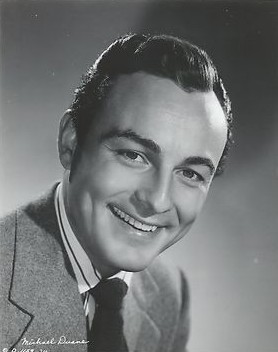
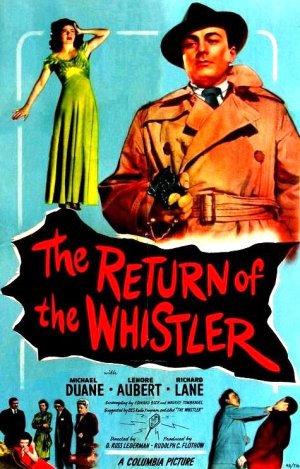
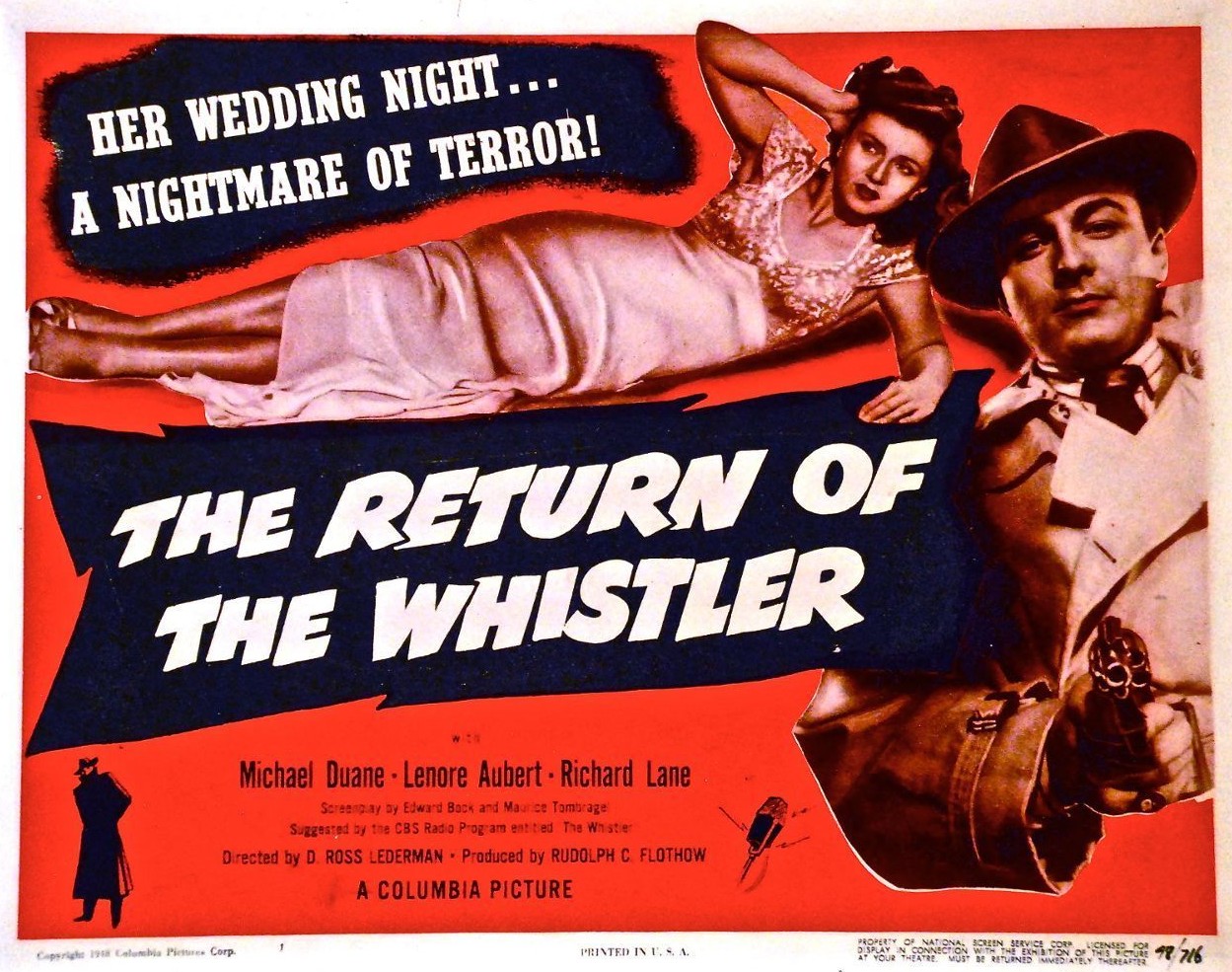
On a night that’s raining felines and canines, Theodore “Ted” Nichols (Michael Duane) and his French fiancée Alice Dupres Barkley (Lenore Aubert) reach the home of the justice of the peace who’s going to join them in holy matrimony…even though they have only known each other for a couple of weeks.  The justice’s wife (Sarah Padden) sadly tells the would-be newlyweds that her husband’s return to town has been delayed by the inclement weather, and that they’ll need to delay the proceedings until the next day.  The wedding eve goes more sour still when Ted’s car conks out (after a mysterious individual monkeys with something under the hood), and the couple can find no room at the only hotel in town.

A none-too-sympathetic night clerk (Olin Howland) nevertheless agrees to rent them a room (after collecting a double sawbuck under the table from Ted), but when he learns that the two of them haven’t yet legally tied the knot, Ted has to get out.  Our hero tells Alice that he’ll catch some Z’s at the garage while the mechanic tends to his automobile.  The next morning, when Ted arrives to wake his bride-to-be, he finds a maintenance man (William Newell) painting the room.  When the night clerk is contacted, he tells Ted that Alice left a half hour after he did…no explanation offered.  So the hunt is on for the missing Alice, with Ted receiving a little help from a private gumshoe (Richard Lane) answering to “Gaylord Traynor.”

The Return of the Whistler (1948), the swan song of Columbia’s 1944-48 film series based on the popular CBS Radio West Coast mystery program, is also the weakest of the eight movies in the franchise for a few reasons.  Richard Dix, the star of the previous seven Whistler vehicles, retired from the silver screen in 1947.  Actor Michael Duane, who had appeared in the earlier The Secret of the Whistler (1946), took over as the protagonist.  Duane was a competent actor, but it was kind of hard to accept him in the series after Dix had made such a memorable impression in the early films.  (In Duane’s defense, Dix would probably have had trouble convincingly playing the young bachelor at the center of Return’s plot.)  Return was also helmed by D. Ross Lederman, a journeyman director whose contemporaries once described his talent behind the camera as “the original bull in the china shop.”  (Lederman, a former stuntman, did display a talent for choreographing fight scenes.)

The Return of the Whistler is also missing the franchise’s trademark “twist ending” that defined the previous entries in the series (not to mention the radio series).  But, it sort of gets a pass here because the screenplay—written by Edward Bock and Maurice Tombragel—is based on a Cornell Woolrich short story, “All at Once, No Alice,” which compensates with plenty of turns and twists in its brief 62-minute running time.  Woolrich’s “Dormant Account” was also the inspiration for the second Whistler film, The Mark of the Whistler (1944)—and his name is familiar to both classic film fans (his stories and novels were used for such films as Phantom Lady, The Window and Rear Window) and old-time radio devotees (with shows like Suspense and Escape doing adaptations of his “The Black Curtain,” “The Black Path of Fear” and “Papa Benjamin”).

Despite the absence of Dix, Return of the Whistler is still a very entertaining little B-noir, boasting a fine cast that also includes James Cardwell and Ann Shoemaker, with familiar character faces like Trevor Bardette, Ann Doran, Robert Emmett Keane and Jack Rice on hand as well.  Lenore Aubert, an actress who enjoyed a brief film career in the 1940s, is probably best known to Bud & Lou fans as the villainess in their horror comedies Abbott & Costello Meet Frankenstein (1948) and Abbott & Costello Meet the Killer, Boris Karloff (1949).  Richard Lane, another Columbia stock player, gets borrowed from the studio’s Boston Blackie franchise (he was Inspector Faraday) to play the part of the skeptical P.I. who lends Duane’s Nichols a hand in finding Aubert.  Because this was the final film in the Whistler series, it’s interesting to note that this is the only film in which the omnipresent narrator (voiced by Otto Forrest) is in desperate need of an umbrella (in the opening sequence)…unless you count the sea spray in the previous Voice of the Whistler (1945).

With the airing of The Return of the Whistler this Saturday on Turner Classic Movies (October 6 at 10:45am), TCM finishes up its Whistler festival.  Next Wednesday, we’ll review the two films that didn’t make the TCM cut: The Mark of the Whistler (1944) and The Thirteenth Hour (1947).