Your Shopping Cart | Your Account Information | Catalog Quick Order | Customer Service | Order Status | Contact Us
RadioSpirits.com

HOMENEW RELEASESBESTSELLERSCLEARANCEBOOKSDVDsMUSICDOWNLOADS

AboutBlogOur Radio Show SEARCH   KEYWORD

Happy Centennial Birthday, Red Skelton!
red-skelton

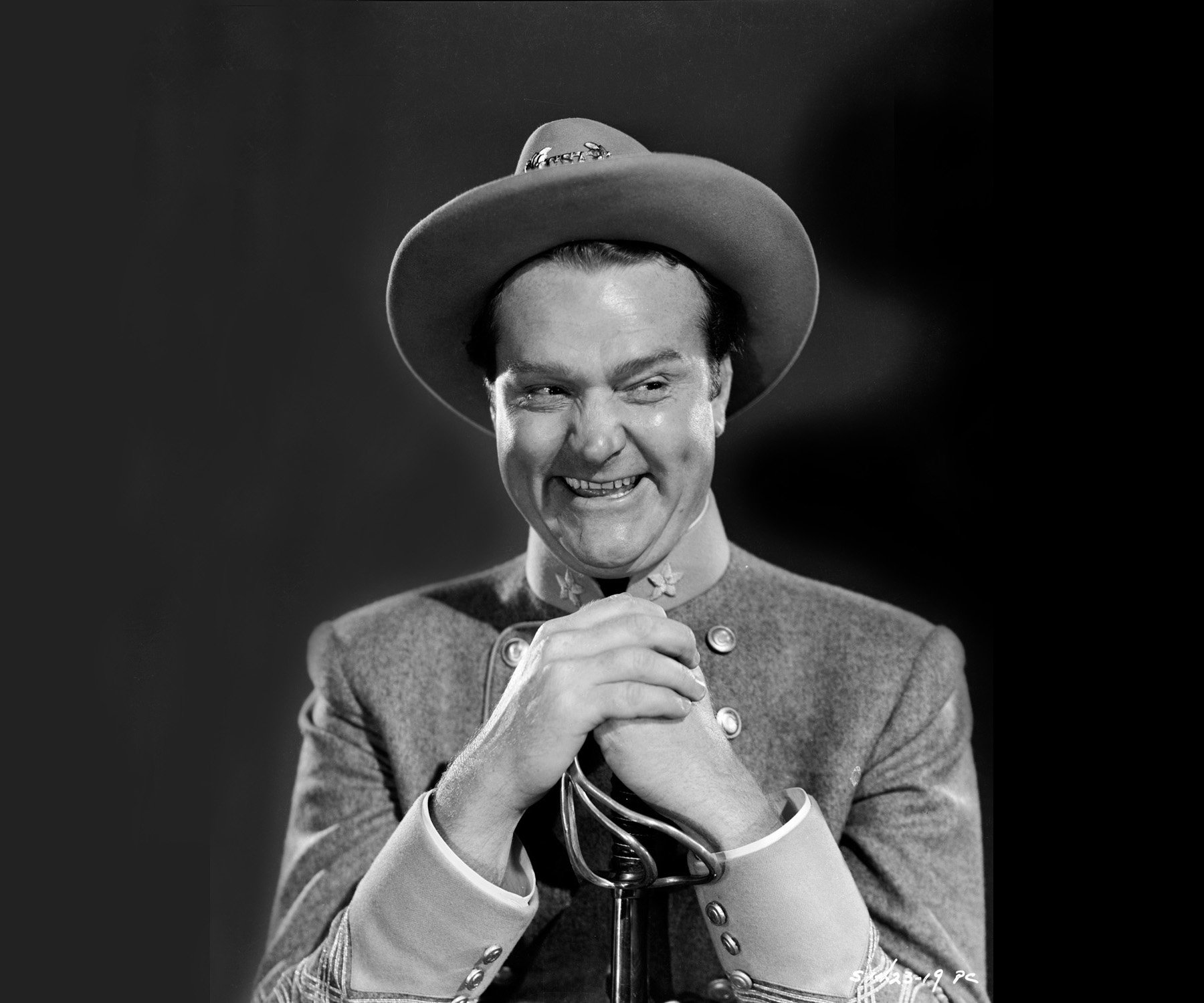
The town of Vincennes, Indiana welcomed Richard Bernard “Red” Skelton into their midst one hundred years ago on this date…and got the best of the bargain, because their favorite son spent most of his show business career dedicated to making audiences laugh in radio, movies, television and on stage.  Not only was Red Skelton able to convulse patrons—he himself freely participated in their mirth: “Why should the comedian be the only one not allowed to laugh?”
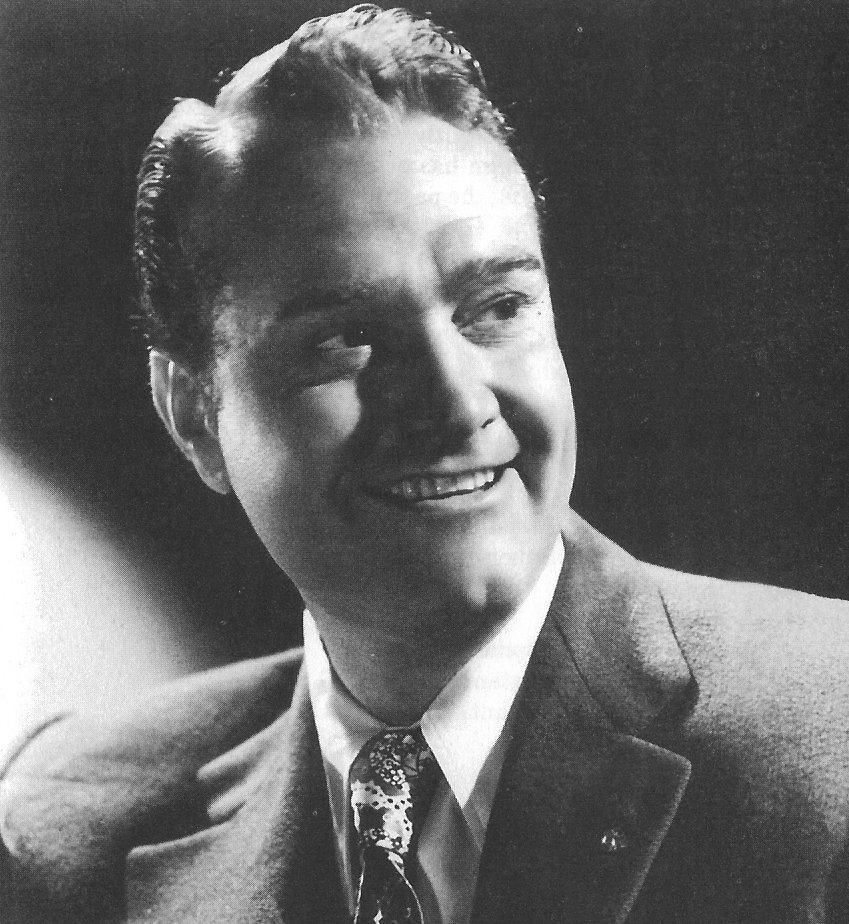
redskelton13Skelton wanted to follow in his father’s footsteps and be a professional clown…and he accomplished that feat in his halcyon days of performing, not to mention his efforts in medicine shows, vaudeville, burlesque, showboats and even the “walkabout” circuit.  They were lean and hungry years for the ambitious funster; the only thing that kept him going was his marriage in 1931 to Edna Stillwell (an usherette at a Kansas theater when he met her in 1930).  Edna was the guiding force in Red’s climb to fame; she took on the responsibility of becoming both his business manager and head writer (jobs she continued to perform even after their divorce in 1943).  It was Stillwell who came up with an idea for a comedy routine in which her husband demonstrated the various ways people dunked their doughnuts…and though Red soon packed on thirty-five pounds (devouring nearly a dozen crullers at each performance, three times a day) he attracted the attention of RKO, who wanted him to do the routine in their film adaptation of the hit Broadway play Having Wonderful Time in 1938.
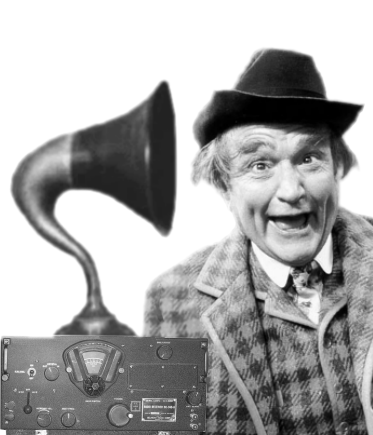
Red&Radio2While Red was making inroads in the movies (he would soon be hired by the Tiffany’s of motion picture studios, MGM, thanks to a good word put in to Louis B. Mayer from “Andy Hardy” star Mickey Rooney), he was also on his way to becoming a star on network radio.  Like his contemporary, Edgar Bergen, Skelton had made a highly touted appearance (on August 12, 1937) on Rudy Vallee’s variety hour…and though it took Red a little longer than it did Edgar (to be fair, Bergen had a “partner” working with him), he eventually became the comedy headliner on NBC’s Avalon Time on January 7, 1939.  Though his stint on that program was brief, it laid the groundwork for what would become his most successful radio showcase: The Raleigh Cigarette Program Starring Red Skelton.
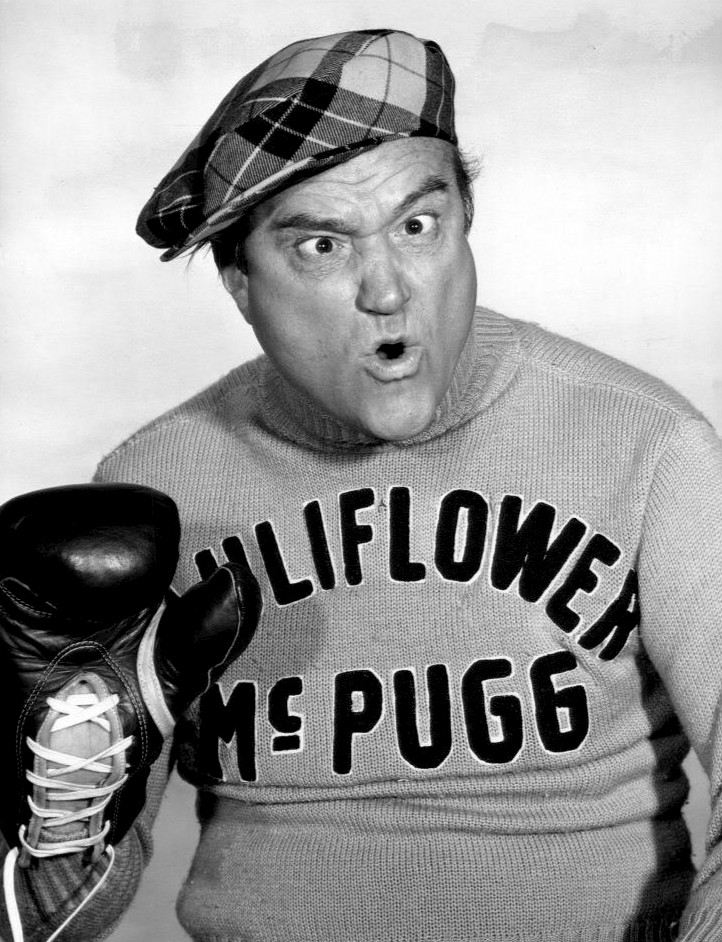
mcpuggThe Raleigh broadcasts began over NBC on October 7, 1941, and allowed Red to introduce a cornucopia of comic characters that I’ve always referred to as his “gallery of grotesques.”  There was Clem Kadiddlehopper, a dimwitted hayseed who made Mortimer Snerd look like a member of MENSA, and who always greeted his bucolic girlfriend with an enthusiastic “We-e-e-e-l-l-l-l Da-a-a-a-a-aisy Ju-u-u-u-u-une!”  There was Willie Lump-Lump, the cantankerous inebriate (“Let’s not get nosy, Bub…”) and stupefyingly inept outlaw Deadeye—who was always introduced while he was trying to get his stubborn horse to come to a stop (“Whoa…WHOA…aw, come on, horse…whoa!!!”).  Red also played punch-drunk pugilist Cauliflower McPugg, Brooklyn expatriate Bolivar Shagnasty, and perpetual milquetoast J. Newton Numbskull.
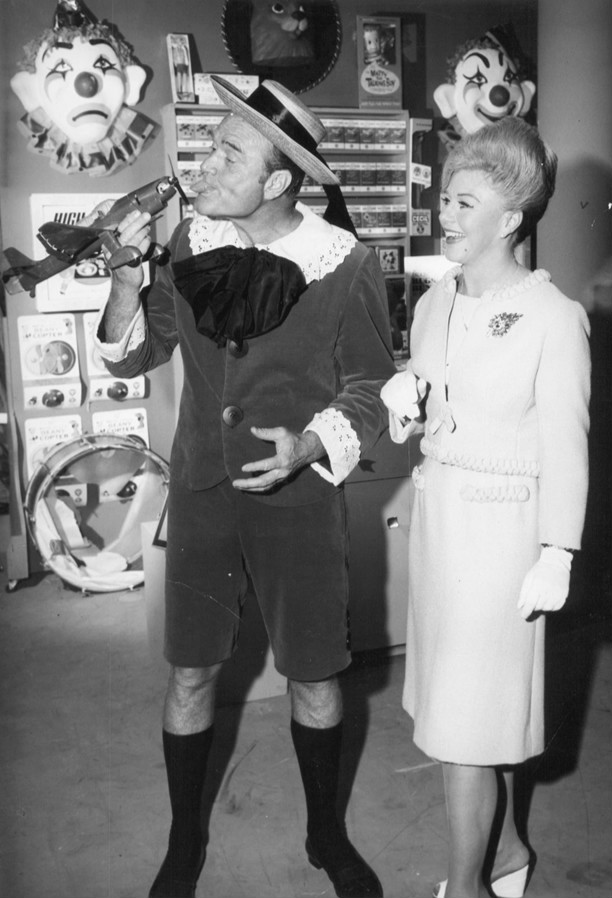
Red_skelton_junior_ginger_rogers_1963Skelton’s most popular character was “Junior, the Mean Widdle Kid”—a hell-on-wheels brat who did the things that Bergen’s Charlie McCarthy only talked about.  Junior was an uncontrollable force of nature; a holy terror who, to his credit, did occasionally contemplate the consequences of his actions by musing to himself (and the audience): “If I dood it—I dets a whippin’…I dood it!”  These last three words quickly became a national catchphrase, as well as the title of a 1943 MGM musical (a remake of Buster Keaton’s Spite Marriage) starring Red—whose affiliation with the studio was always referred to in his weekly introduction by announcer Truman Bradley (“And now, here’s MGM’s star comedian…”).
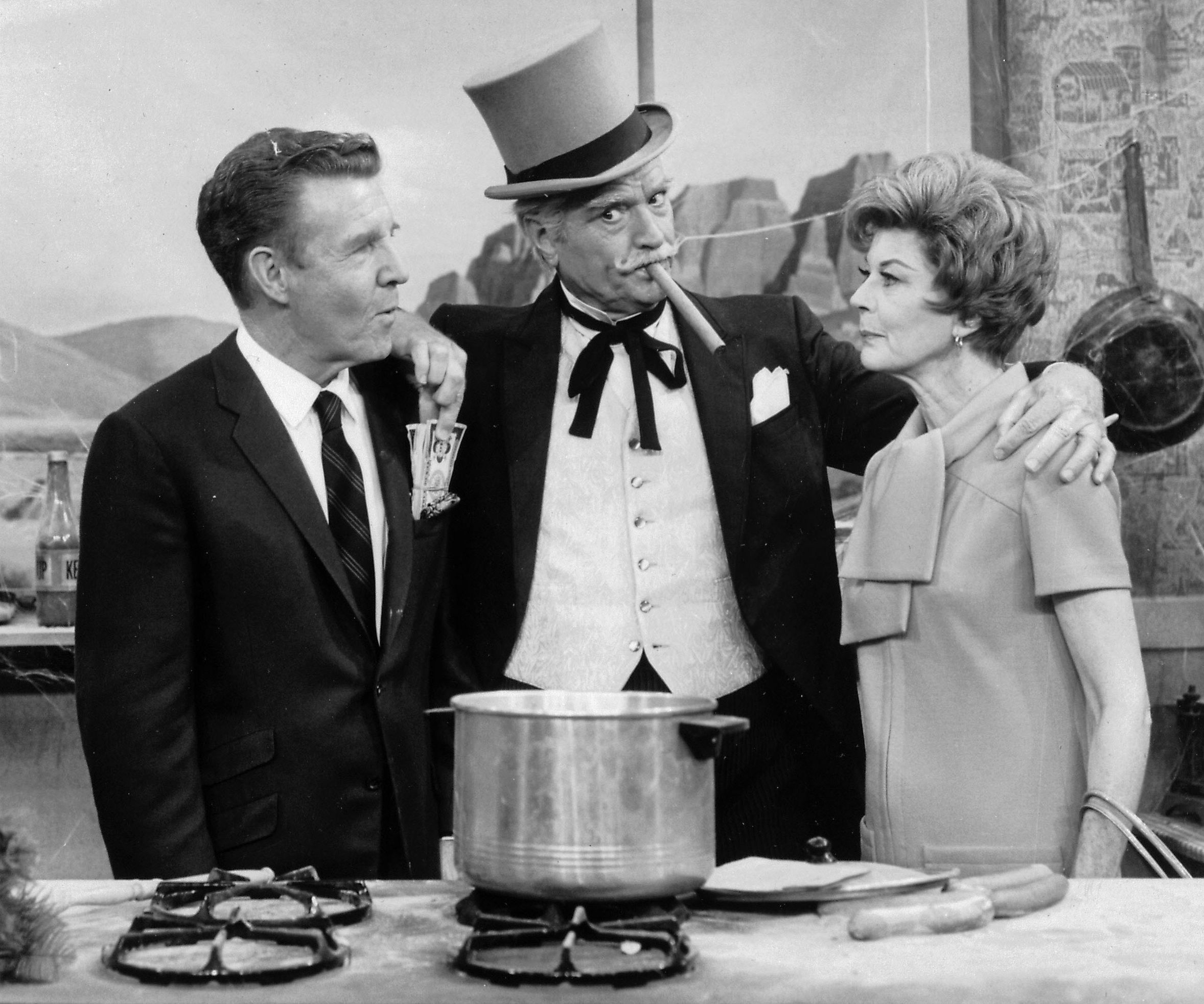
rednelsonsSupporting Red Skelton on his Raleigh program was the talented African-American comic Wonderful Smith (who usually played Deadeye’s foil), and a couple who performed musical numbers on the program, Ozzie Nelson and Harriet Hilliard.  In addition to her warbling duties, Harriet was put in charge of playing the female characters in the sketches (Daisy June, Junior’s mother, etc.).  Ozzie gradually worked himself into skits as well, playing a variety of roles.  “America’s favorite young couple” would eventually get their own spin-off in the form of The Adventures of Ozzie & Harriet in the fall of 1944. By that time, Red was taking a hiatus from the Raleigh program, having been notified to report for the service in March of 1944.  Eighteen months later, on December 4, 1945, Skelton returned to the airwaves with new cast members GeGe Pearson (who took over Harriet’s roles), Verna Felton (who began memorably playing Junior’s “namaw”), Lurene Tuttle (who took over for GeGe), Pat McGeehan, and a new announcer-sidekick, Rod O’Connor.
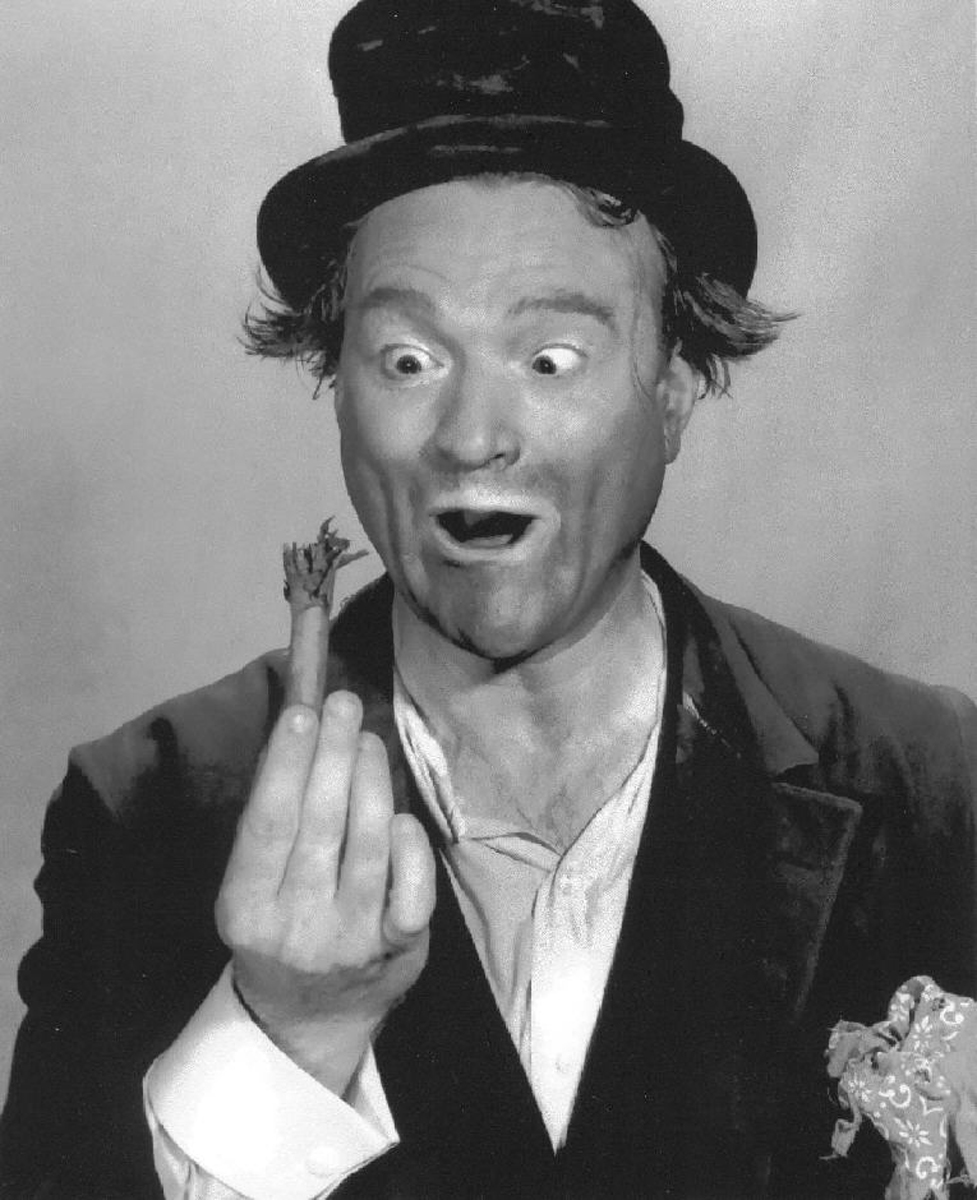
freddieRed continued to broadcast for NBC (and Raleigh) until 1948 when Tide agreed to start paying the show’s bills.  In the fall of 1949, however, Skelton found a new home at the Columbia Broadcasting System, having become one of the major acquisitions in CBS’ “talent raids.”  New regulars like Martha Wentworth (as Polly the Panhandler) and Dick Ryan joined the cast, and Red began introducing brand-new characters like San Fernando Red, the windy politician (“My friends…”).  Red would continue on radio until 1953, but by that time he began to follow some of his radio brethren and sistern into the medium of television—he began in the fall of 1951 with a popular comedy-variety program that would be a staple on both NBC and CBS (where it eventually expanded to sixty minutes and became The Red Skelton Hour) for the next twenty years.  As beloved as Skelton was as a verbal jokester, his heart was always in the art of visual comedy—and he created a character specifically for his TV show named Freddie the Freeloader, whose pantomime antics were frequently the focus of his “Silent Spot.”
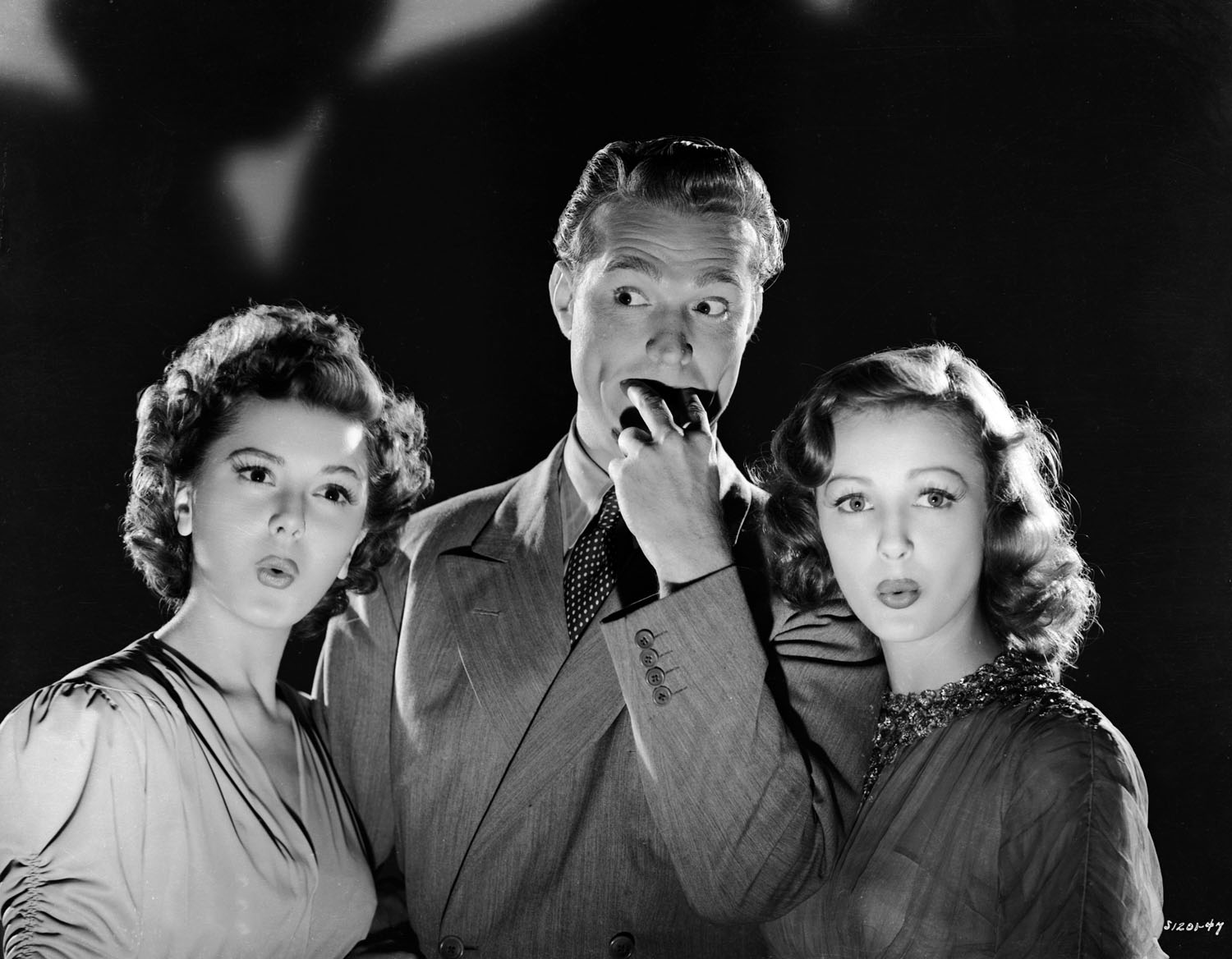
whistling-in-the-dark-rutherford-skelton-greyWith the cancellation of his television show in 1971, Red Skelton showed no signs of slowing down; he went back to performing in live venues, and hosted a series of highly-touted specials on public television in his twilight years, as well as the occasional Christmas-themed program.  His movies—A Southern Yankee (1948), The Yellow Cab Man (1950) and the popular “Whistling” trilogy (Whistling in the Dark, Whistling in Dixie, Whistling in Brooklyn)—would attract new audiences via home video, and Skelton also found new outlets for his creativity through painting (his paintings are now collected by fans and art devotees alike).  The man who once stated simply “I just want to be known as a clown” departed this world for a better one on September 17, 1997—and though he may have left his fans in a state of sadness, he wisely remembered to leave behind a legacy of laughter as well.
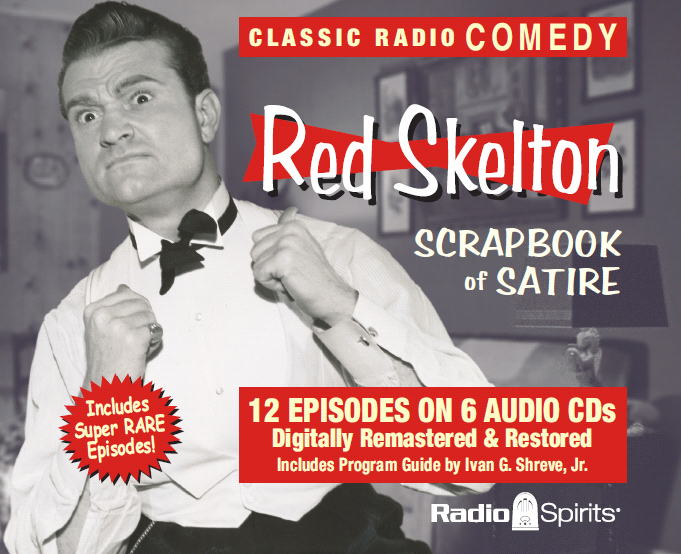
20498For a performer who excelled at visual comedy, it has always been interesting to note that Red’s greatest fame came at the height of his radio career…and to celebrate his one hundredth birthday, Radio Spirits has just released a brand-new collection with broadcasts from The Raleigh Cigarette Program in Red Skelton: Scrapbook of Satire. This set contains not only previously uncirculated broadcasts, but rehearsal recordings as well—in which Skelton was allowed to freely cut-up and ad-lib with the audience’s appreciative consent.  In fact, we have several CD collections that feature “the clown master” at his superb best—check out I Dood It! and Stick Around, Brother…but, be advised that we cannot be responsible for any sides that split during the course of listening to one of the greatest radio comedians of all time.
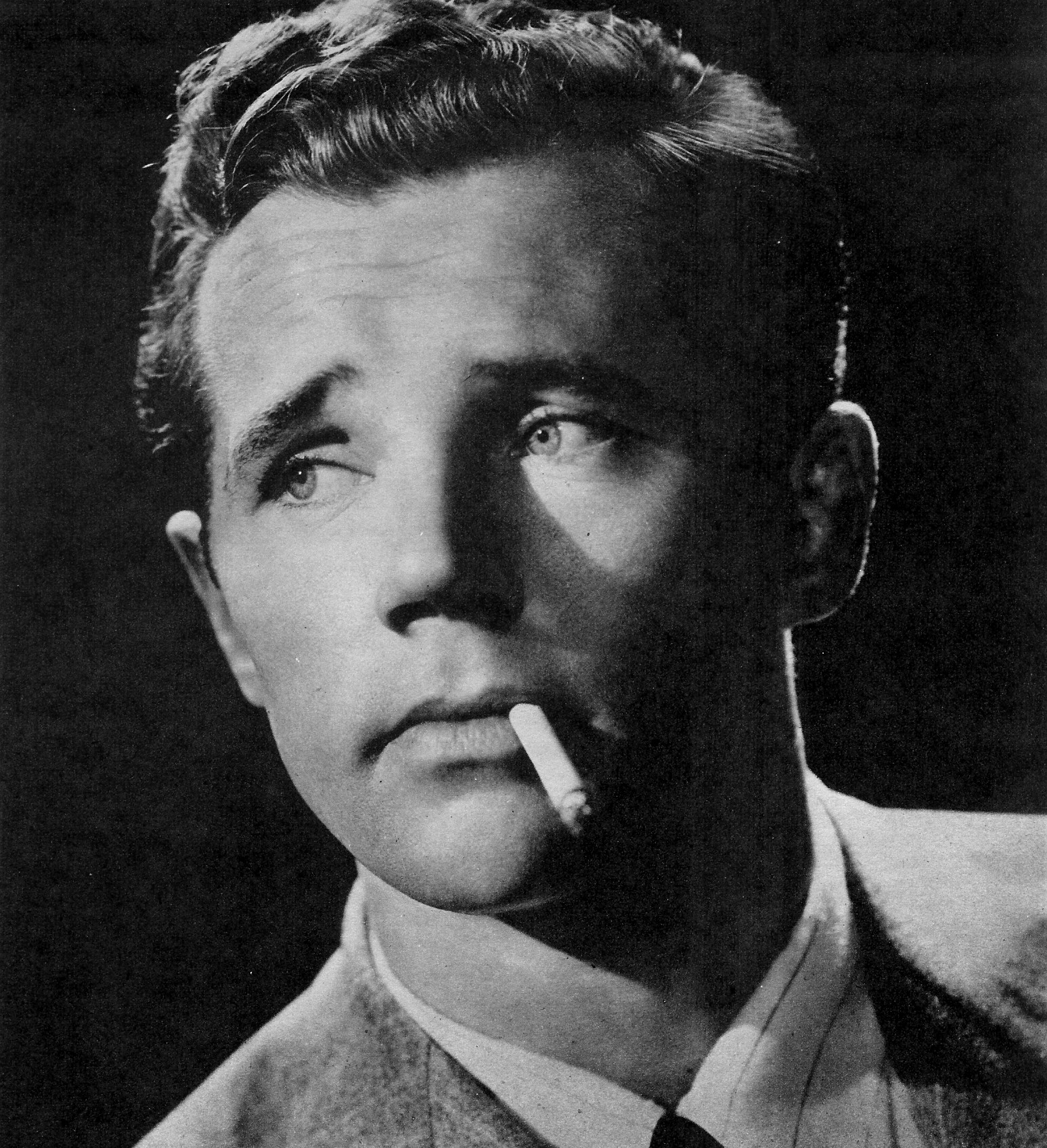
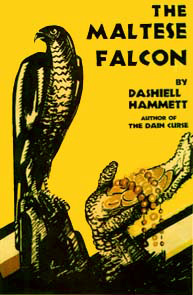
“Wildroot brings to the air the greatest private detective of them all…”

spade16

Shamus devotees would no doubt have an engaging discussion as to whether Samuel Spade was the greatest private detective of them all, but old-time radio fans could probably come to a consensus that The Adventures of Sam Spade—which premiered sixty-seven years ago on this date—was one of the greatest private eye programs of them all (at least during the short five years it was heard on network radio).


maltesebookSam Spade was the creation of author Dashiell Hammett—who introduced the hard-boiled sleuth in his 1930 novel The Maltese Falcon.  Originally published in serialized form in the mystery pulp magazine Black Mask (from September 1929 to January 1930), it would later appear in three short stories published in The American Magazine and Colliers in 1932 (collected in the 1944 anthology A Man Called Spade and Other Stories).  Spade was a noticeable departure from the legion of formalized literary detectives, was an influence on Raymond Chandler’s Philip Marlowe, and was described by his creator as “a hard and shifty fellow, able to take care of himself in any situation, able to get the best of anybody he comes in contact with, whether criminal, innocent by-stander or client.”


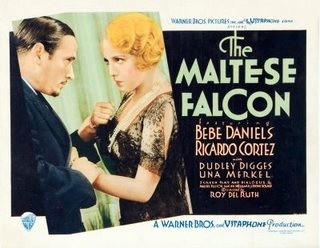
maltese31The success of the novel soon brought Hollywood around knocking on Hammett’s front door—and a movie version was produced in 1931 at Warner Brothers with Ricardo Cortez as Spade.  The film was both a critical and commercial success, but when Warners went back to the well to do a remake five years later, they found themselves stymied by the newly-instituted Motion Picture Production Code, which raised objections to many of the “lewd” aspects of the story.  So, the studio tried an end run, renaming the characters (the detective was now Ted Shane, played by Warren William) and the film Satan Met a Lady (1936).  The film also adopted a somewhat comic tone, and the result was a box office bomb.


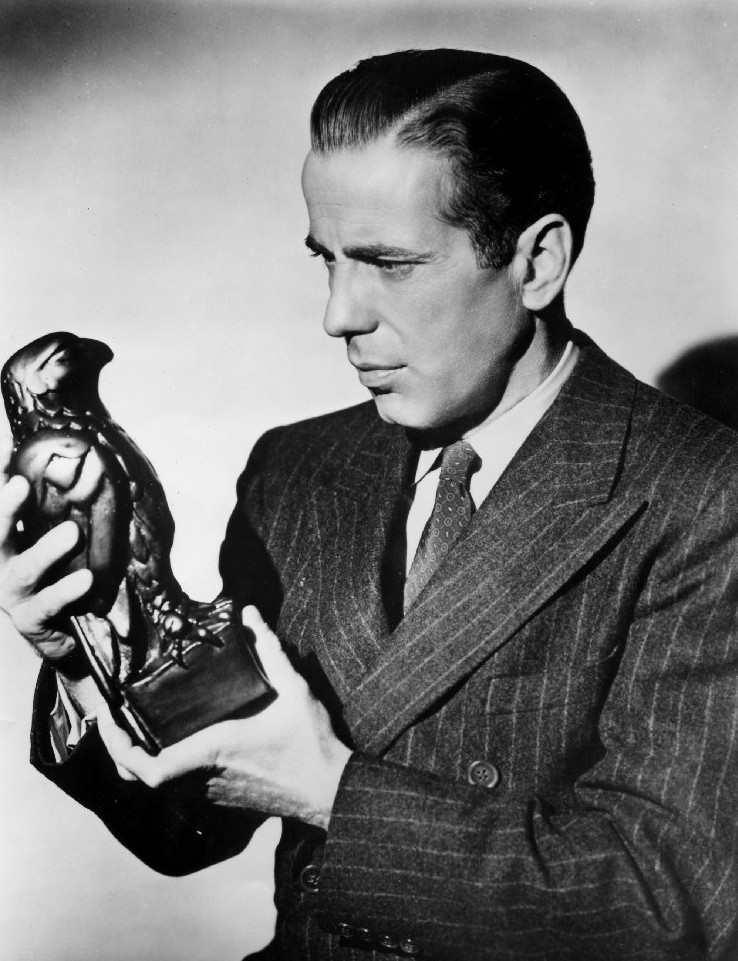
spade11It’s the 1941 version of the film—a rare example of a remake outshining the original—that remains the best known treatment of Hammett’s novel, with star Humphrey Bogart often cited as the definitive Sam Spade.  Director John Huston also wrote the screenplay, and remained remarkably faithful to Dash’s book, though the Production Code did dictate sanitizing the “lewdness”.  The success of the 1941 film made people forget about the 1931 original (in fact, many of the 1931 film’s prints are renamed Dangerous Female).  But, no one could forget about Bogie—he went on to play the detective in two radio adaptations of the film: on a September 20, 1943 broadcast of The Screen Guild Theater, and a July 3, 1946 edition of Academy Award Theater.  (Another celebrated movie tough guy, Edward G. Robinson, played Sam in a production of The Maltese Falcon on The Lux Radio Theater on February 8, 1942.)


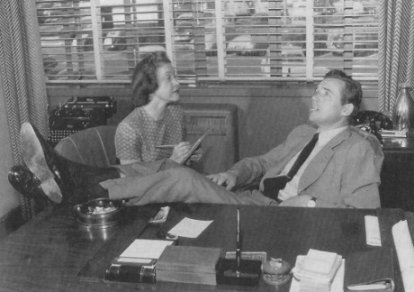
spade4This all laid the groundwork for a regular weekly program featuring the detective, and The Adventures of Sam Spade premiered on ABC Radio on July 12, 1946.  After its thirteen-week run on the Life Savers Network, the show moved to CBS and became a Sunday night staple for three years.  Announcer Dick Joy would tout the show’s sponsor, Wildroot Cream Oil, and then after a brief (and often hilarious) exchange between Sam (played by Howard Duff) and his loyal secretary Effie Perrine (Lurene Tuttle), Joy would let us know that “America’s leading fiction writer” (Dashiell Hammett) and “radio’s outstanding producer-director of mystery and crime drama” (William Spier, the mastermind behind Suspense) had joined forces to present another weekly episode.


And by “joined forces” we mean that the two men decided where to send Hammett’s check, the one he was sent for allowing his name to be associated with the series…since, apart from having one or two of his stories adapted for episodes, the writer’s participation was minimal at best.  Star Howard Duff once related an incident in which he encountered Hammett’s “girlfriend” Lillian Hellman at a party and asked her what the author thought of the show.  “I don’t think he’s ever heard it,” replied Hellman matter-of-factly.


spade8Dash might not have been a loyal listener, but millions of others made up for for his absence.  Written by a team of scribes that included Jo Eisinger (under the pseudonym Jason James), Bob Tallman, Gil Doud, John Michael Hayes and E. Jack Neumann, the series blended hard-boiled attitude and action with a pixyish sense of street whimsy that made the series sparkle and set it far apart from the more familiar 1941 film interpretation.   Producer Spier, in fact, had originally planned to cast a Bogart-like actor in the role of Sam Spade—but his wife, Kay Thompson, liked Duff’s audition the best (despite the fact that the actor was as un-Bogart as a person could be) and Howard got the part.   Duff’s Spade was a cut-up, possessing a breezy insouciance that charmed the listening audience and soon made Bogart’s Spade a mere mist in the memory.


spade10Actress Lurene Tuttle infused the role of Effie with a sweetly daffy naiveté that provided the perfect counterpoint to Duff’s sarcastic Spade. You knew deep down that Effie was in love with Sam, and their dialogue exchanges (many ad-libbed) at the beginning and end of each show were, as James Thurber once commented about Fred Allen and Portland Hoffa, “somehow akin to The Sweetheart Duet from Maytime.” (In fact, Goodnight, Sweetheart was the program’s memorable closing theme.)  Effie would take down the dictation of Sam’s latest “caper,” to be signed and delivered to the client (with Sam’s license number—137596), as each episode shifted back and forth between the two of them in the office and the dramatization of Sam’s working the case. Spade always cued Effie that the case had come to its conclusion with “Period. End of report.”


spade1Despite the program’s popularity, storm clouds began to appear on the horizon, even after the show and sponsor jumped to NBC in the fall of 1949.  Hammett became a target of the House Un-American Activities Committee, and Duff inexplicably found himself listed in Red Channels. (Duff commented to author Chuck Schaden in a 1975 interview: “I wasn’t even a good liberal.”). Wildroot started getting cold feet and issued an ultimatum that they would not continue with the series unless Hammett’s name was removed from the credits.  NBC yanked the program, but reinstated it after receiving 250,000 letters of protest—recasting the title role with actor Steve Dunne who, as John Dunning once commented in Tune in Yesterday, “sounded like Sam in knee pants.”  Sam Spade limped along for one last season, taking its final bow on April 27, 1951.


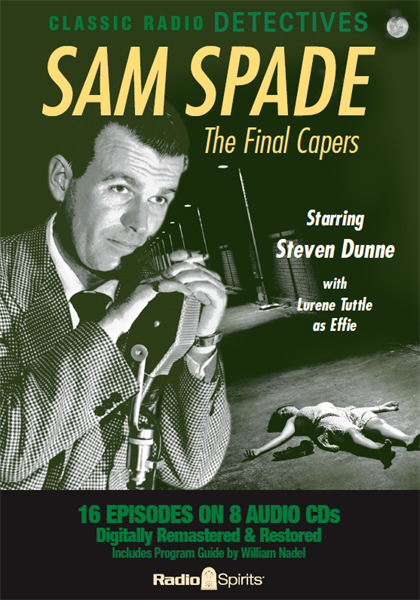
19946There were 245 episodes broadcast of The Adventures of Sam Spade from 1946 to 1951…and sadly, only about a fourth of those have survived the ravages of time and neglect.  Radio Spirits has compensation for this: a book entitled The Lost Sam Spade Scripts that contains thirteen episodes not available for your listening pleasure.  To satisfy your aural Spade cravings, we offer classic Spade (Howard Duff) in the form of Sam Spade: Volumes One and Two.  There’s a little Dunne mixed in with those episodes, as well as the collection Sam Spade: The Final Capers…which contains an audition for a detective show pilot starring Howard Duff, The McCoy (as in “the Real”).  Period.  End of post.

Review – The Jack Benny Program: The Lost Episodes

TheJackBennyProgram_TheLostEpisodes_f

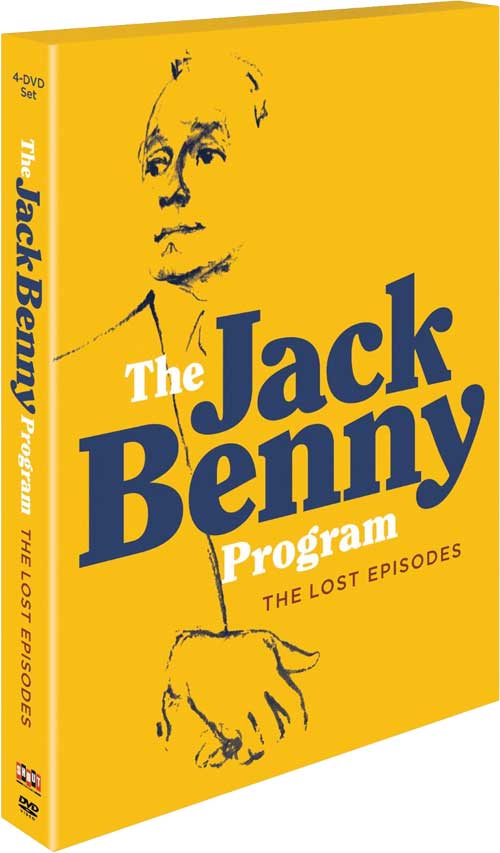
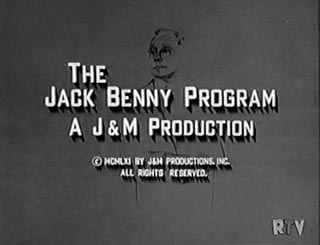
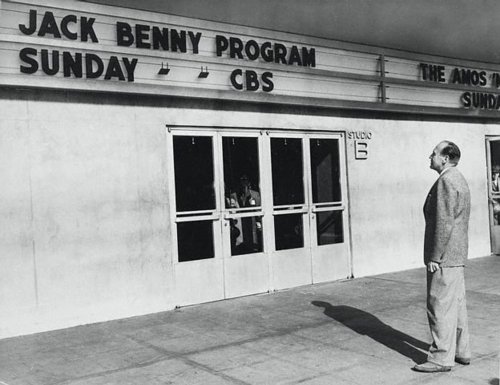
The media company known emphatically as Shout! Factory pre-released one of the most highly anticipated DVD sets for old-time radio fans on June 18th of this year—a three-disc collection entitled The Jack Benny Program: The Lost Episodes.  Eighteen telecasts (restored by the UCLA Film and Television Archive) from the comedian’s celebrated TV series (culled between 1956 and 1964) that in some instances have not been seen since their original broadcast, this release is a must-own item for any Benny fan frustrated by the dearth of good DVD collections spotlighting Jack’s fifteen-year reign on the cathode ray tube.


jackbennyprogram2Except for a few “public domain” sets containing often poorly duped kinescopes, Jack Benny is not well represented on digital versatile disc (DVD).  There are one or two factors that can explain this: first, Benny’s early appearances on TV could be charitably called “erratic”—he did only four telecasts during his inaugural season on the air, and his sophomore year numbered six installments.  (So hypothetically—a release of The Jack Benny Program: The Complete First Season wouldn’t take much more than one disc.)  Throughout the 1950s, The Jack Benny Show aired every other week, alternating with such sitcoms as Private Secretary and Bachelor Father.  Jack wouldn’t embrace the weekly show format until the 1960-61 season—his eleventh year on the air.


jackbennyprogram4Second, the majority of Jack’s telecasts were aired live; occasionally one of his shows would be filmed at a studio (usually Revue, the TV arm of Universal Studios) depending on scheduling conflicts or the technical demands of the episode, but as a rule Benny was a creature of live TV.  Many of those live shows, like many classic radio broadcasts, disappeared into the ether…and unlike radio broadcasts that were preserved through transcriptions, live TV broadcasts were usually saved via kinescope: a process where a camera was pointed at a television monitor while the show was broadcast.  The quality of these kinescopes often left a lot to be desired, which is why when the syndication package of episodes of The Jack Benny Show was put together the majority of episodes used were the higher quality studio productions (spanning from 1953 to 1965).


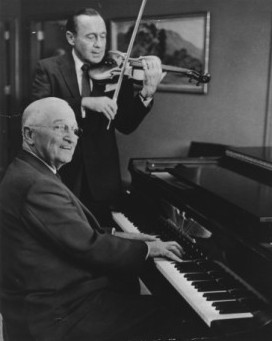
jackbennyprogram5One of Jack’s most popular telecasts was an October 18, 1959 program in which the comedian welcomed as his special guest former President Harry S Truman.  The linking segments of the show (featuring Jack interacting with his regulars and a few incidental characters) were shot at the CBS studio, while Jack’s visit with the President was videotaped (to give it, as some have suggested, a sort of cinema verite gravitas).  Because the end result wasn’t as slick or polished as some of the other Benny programs, this show (the highest-rated program on TV the week it aired) was left out of the syndication package…in fact, it was never even repeated.  Yet it’s one of the eighteen telecasts on the Shout! Factory set, and remains not only an entertaining half-hour but a fascinating curio—Jack Benny’s reputation was such that he was able to draw guests from all walks of life…some who might find the idea of appearing on a comedy program beneath them (one episode features the Reverend Billy Graham!).


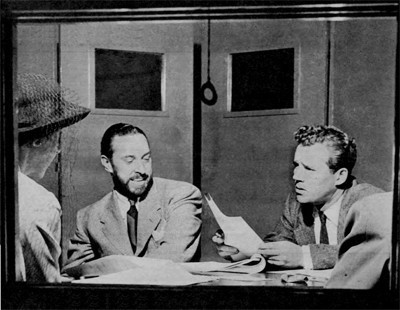
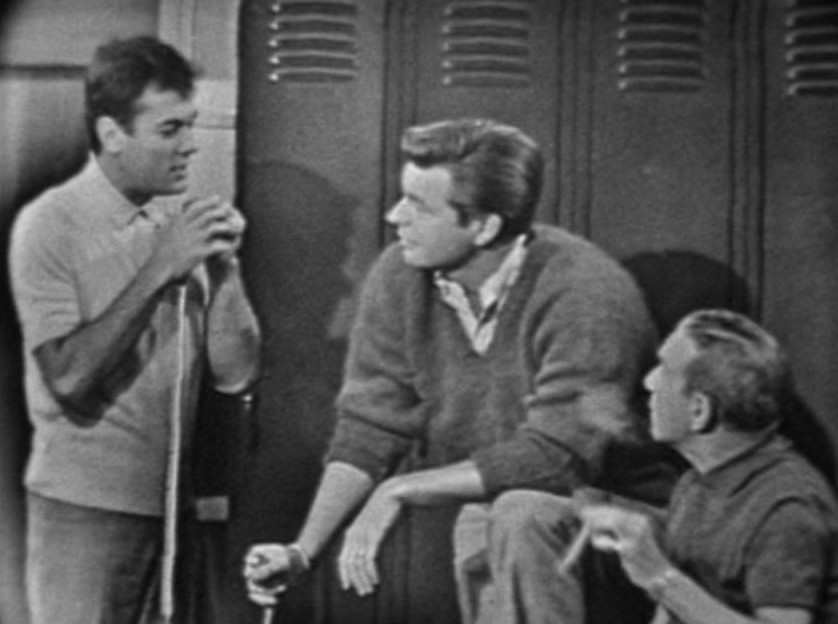
jackbennyprogram6The first show of Jack’s now-weekly season is also among the materials on The Jack Benny Program: The Lost Episodes—an October 16. 1960 telecast that starts out with a scene set against the background of a locker room at the Hillcrest Country Club…and features Jack’s longtime friend George Burns, Tony Curtis and Robert Wagner discussing Jack’s move to weekly television.  This powerhouse lineup of guests is soon joined by musician-composer Johnny Green and later in the broadcast, future newsman Mike Wallace.  Before Wallace went walking up driveways and knocking on doors to embarrass the powerful and privileged on 60 Minutes, he grilled celebrities on an interview program called Nightbeat…and Jack finds himself in the hot seat when he has a nightmare that Mike is interrogating him on that same show.  It is one of the funniest half-hours I’ve ever watched Jack do; I was familiar with the program but was positively giddy to be afforded the opportunity to watch it.


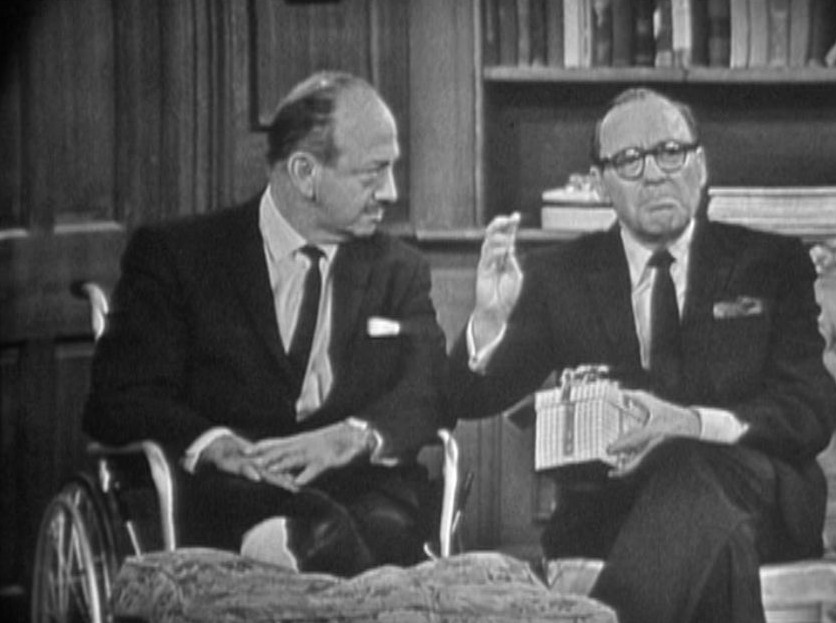
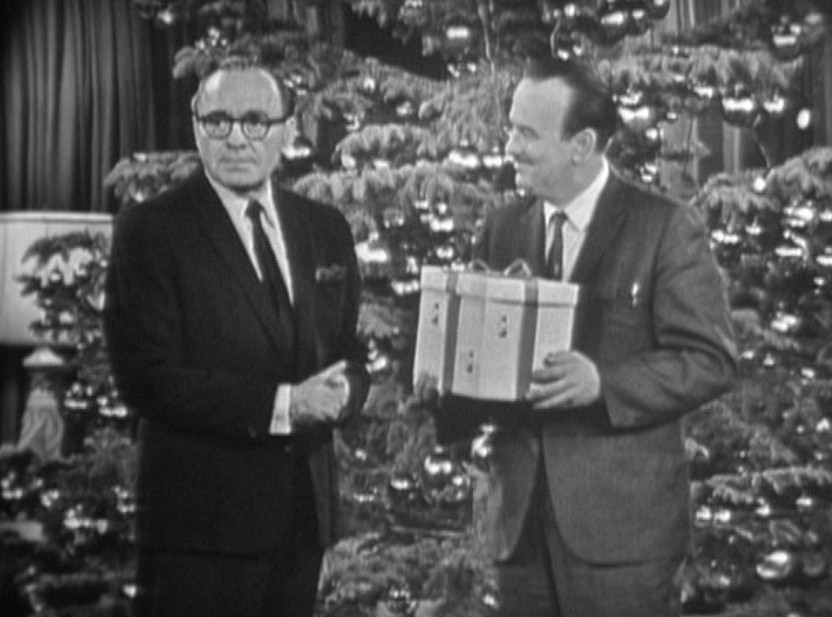
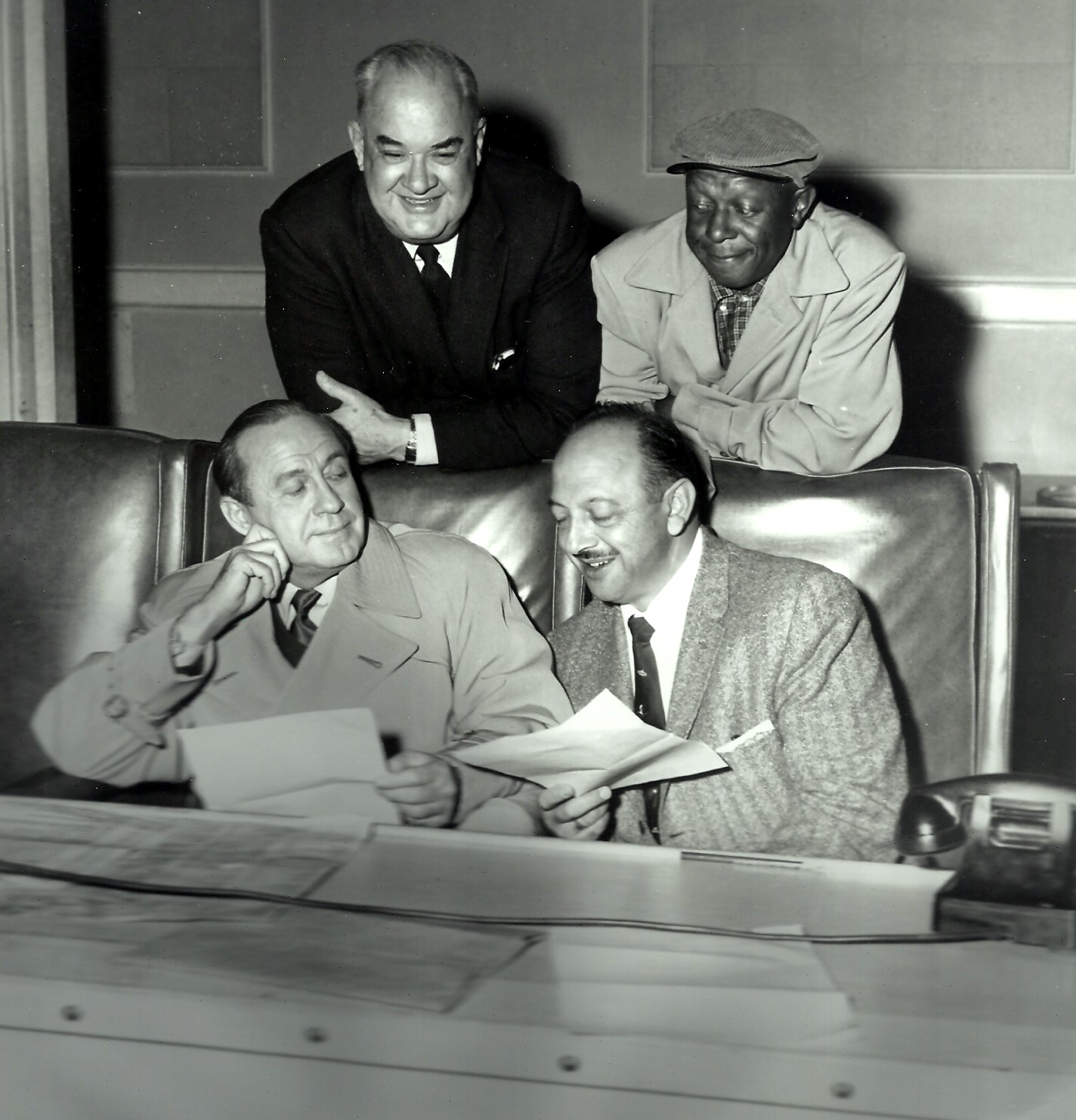
jackbennyprogram8There is a treasure trove of great entertainment in the shows collected on this three-disc set.  You have telecasts with big name stars, of course: George Gobel, Gary Cooper, Natalie Wood, Milton Berle and Dick Van Dyke, to name just a few.  But for some odd reason, the shows that always make me laugh the hardest—and prove that all that celebrity wattage wasn’t necessary for maximum mirth generation—are the ones that feature the familiar Benny cast of regulars: Eddie “Rochester” Anderson, Don Wilson, Dennis Day and the Sportsmen Quartet.  There’s a wonderful Christmas-themed program from December 24, 1961 that features longtime Benny Show player Mel Blanc in one of his first televised venues since his near-fatal automobile accident in January of that same year; Mel turns the events surrounding the accident into a funny “Little Mexican” skit with Jack while also voicing Professor LeBlanc and Polly the parrot (plus “the English horse” Jack’s writers slipped into a script one day just to see if Mel could imitate it).  As riotous as the Blanc/Benny encounter is, I think Frank Nelson tops it: handed a “gift” by his boss, Frank promises he won’t give the game away by letting the audience know the boxes Jack has been handing out are empty.  Jack takes umbrage to this, and so Frank opens his to the audience to reveal the fraud.  “If he had anything in them he wouldn’t be able to pick them up!” Nelson crows gleefully.


jackbennyprogram9

An exasperated Jack soon shouts back at him: “You really hate me, don’t you?”  “Oooooooooh…do I!” screams Frank and at that point, my falling-down-on-the-floor-in-hysterics woke everyone up in the house because I was watching this at five in the a.m.  The last program on the last disc, another Christmas program (this time from 1964), mines hilarity from a sublime visit from one of Jack’s favorite guests, singer Gisele McKenzie.  (And yes, they do their famous Getting to Know You violin duet: “Roses are red/Violets are blue/I’m beginning to sound like you,” she sings out at one point in the song.)


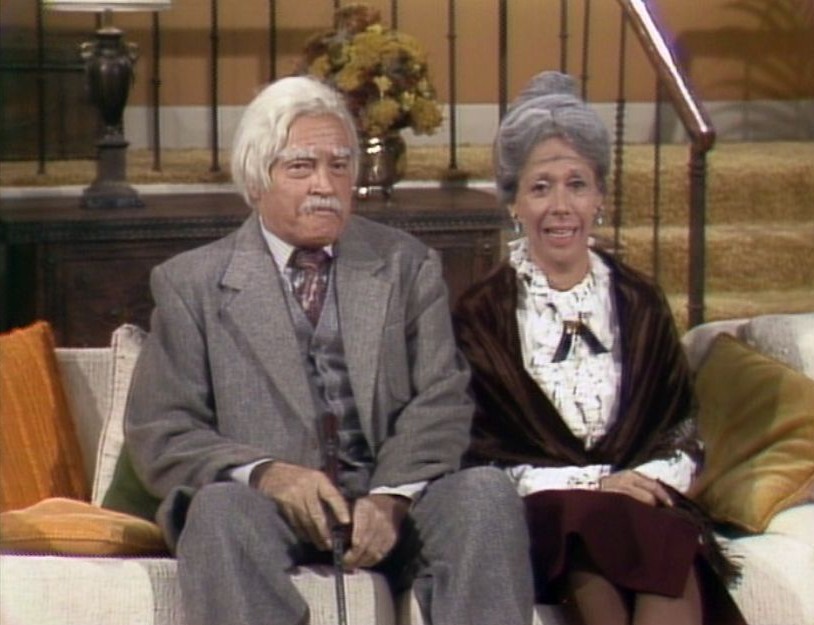
jackbennyprogram7The Shout! Factory collections are renowned for their bodacious extras, and The Jack Benny Program: The Lost Episodes has some real treasures, including newsreel outtakes with Jack and Rochester, and an extended interview with comedian-satirist Harry Shearer (who appeared on the Benny radio and TV shows as a child actor, most notably in the programs featuring the Beverly Hills Beavers), show director Norman Abbott and longtime Benny personal secretary-assistant Dorothy Ohman.  The crème de la crème of the bonuses are some selected sketches from a few of Jack’s NBC specials (the ones he did after his weekly show came to an end in 1965)…but in a way these are disappointing because one wishes they could put together collections with the content of each of these specials in their entirety.  (One of the clips, from “Jack Benny’s New Look,” features George Burns hilariously heckling Jack from the audience; another, “Jack Benny’s 20th Anniversary Special,” offers a look at what Jack and his cast will look like in another 20 years…with an elderly Bob Hope and Dinah Shore tossed in for good measure.)


jackbennyprogram1This DVD set officially ships on July 23 of this year…but if you’d like to order it early, Radio Spirits has it available.  The joy generated by this set’s release is simply immeasurable, and if the sales are positive sources say there’s a good chance future collections will follow.  While some people in select TV markets are fortunate enough to sample the classic television goodies available on the cable channel Antenna TV (where Jack’s show is a staple, along with The George Burns & Gracie Allen Show) others in need of a Benny fix cannot deny that this is a must-purchase: a fitting video tribute to one of the true comedy legends from the Golden Age of Radio.

Happy Birthday, Phil Harris!

jackphilmary

The man who let audiences know what he liked about the South would have celebrated his 109th birthday today.  When wife Alice Faye would jokingly refer to him as “Wonga” on their popular radio comedy program, she was, in fact, addressing him by his given birth name: Wonga Phil Harris.


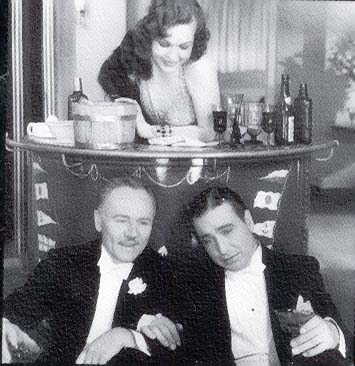
melodycruisePhil Harris was a native Hoosier—born in Linton, Indiana in 1904—but, he spent his formative years in Tennessee, where music was one of his many pursuits.  Phil later relocated to San Francisco and, in the 1920s, fronted a successful orchestra in partnership with friend Carol Lofner.  When that dissolved in 1932, Harris regrouped and formed another band in Los Angeles where he continued to enjoy much success.  The Harris band headlined at the famous Coconut Grove in the Ambassador Hotel, and visited radio’s The Fleischmann Hour with Rudy Vallee on multiple occasions (that’s where Phil first met future wife Alice Faye).  Harris even had his own radio series, Let’s Listen to Harris (1933-34), a series of hit recordings, and appearances in such feature films as 1933’s Melody Cruise.  (A 1933 musical short in which he starred, So This is Harris!, would win the Academy Award for best live action short subject the following year.)


jackdennisphilalicePhil Harris was on top of the world at this point in his career—but, the best was yet to come.  He was asked by comedian Jack Benny to become the musical director on his successful radio program in the fall of 1936 (after George Burns, who had expressed an interest in hiring Phil, went with Wayne King instead).  Benny soon learned that his new bandleader had a flair for snappy rejoinders, and suggested that his writers throw Phil some lines in the scripts of his broadcasts.  To differentiate between Jack and Phil (whose voices sounded similar in the early shows), Benny’s writers created a flashy Southern playboy character for Harris, a man who loved good booze, flashy cars and pretty women.  “Hiya, Jackson!” Phil would enthusiastically bellow to his boss as he made his entrance on each show…not only with a capital E, but with an N-T-R-A-N-C-E as well.  The Harris character was a man both obnoxiously brash and functionally illiterate (allowing the writers to pepper his dialogue with malapropisms)…who somehow remained in control of a musical aggregation unable to read a note of music, and whose fondness for liquor rivaled that of their boss.


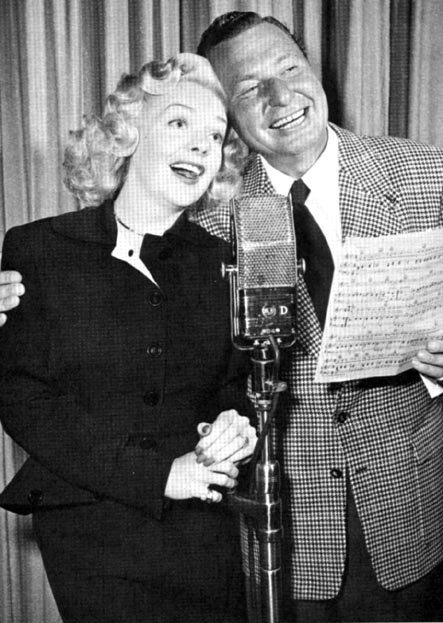
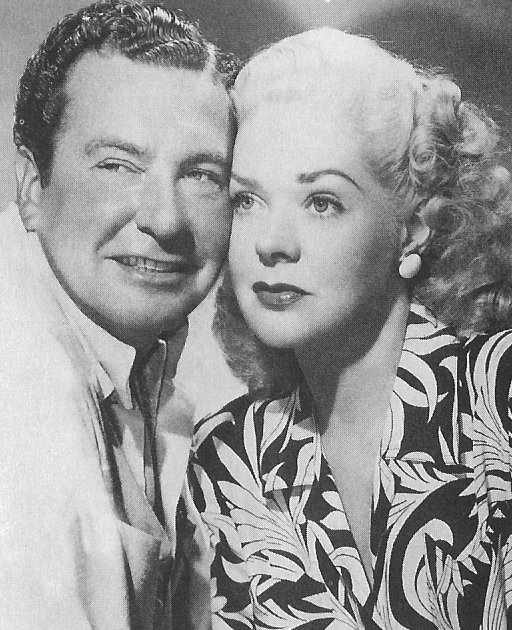
harris&faye1As a member of Benny’s “gang,” Phil’s popularity would soon grow to the point where he was allowed to headline a series of his own – a series that would become one of radio’s most successful “spin-offs.”  But, first, a little backstory: In 1941, Harris tied the knot with actress-singer Alice Faye (it was the second marriage for both).  Five years later, the two of them were the stars of The Fitch Bandwagon, a variety series that had been a hit on radio since 1938.  Once the Harrises joined the program, the Bandwagon began to morph into a family situation comedy.  Phil and Alice played themselves – Jack Benny’s bandleader and his former movie-star wife who put her career on hold to be a mother to their two children: Alice, Jr. (Jeanine Roose) and Phyllis (Anne Whitfield).


Also on the program was Phil’s best buddy Frankie Remley, a left-handed guitar player and accomplished alcoholic Phil had known since a tour of Australia in the 1920s.  Yes, Remley was an actual person, who performed in Harris’ band on The Jack Benny Show…and who auditioned to play himself on Phil’s new series.  Frankie Remley may have been funny when talked about (running gags about him were featured on the Benny program all the time), but the real McCoy wasn’t capable of putting across his legendary joie de vivre, so the role was given to actor-director-producer Elliott Lewis.  Robert North would play Willie Faye, the sponging creampuff brother of Alice, and in the role of obnoxious grocery boy Julius Abbruzio was veteran Walter Tetley…who managed to create a kid even brattier than his celebrated Leroy Forrester on The Great Gildersleeve.


harrisfaye2The Harris family appeared on The Fitch Bandwagon for two seasons before getting a new sponsor in Rexall in the fall of 1948…when it was renamed The Phil Harris-Alice Faye Show.  (The Rexall sponsorship also brought on a new character in Mr. Scott, the head of the company, played by professional stack blower Gale Gordon.)  Though the Harris-Faye program had always been popular due to its plum time slot between The Jack Benny Program and The Edgar Bergen & Charlie McCarthy Show, Benny’s move to CBS in January of 1949 (and Bergen’s temporary departure from radio in December of 1948) soon robbed the Harrises of much of their audience.  It soldiered on as an NBC staple until 1954 (its sponsorship by RCA from 1950-54 allowed ample promotion of Phil’s most successful record, the novelty hit The Thing).  The only reason it did not make the transition to television like so many other radio properties was that Phil simply wasn’t interested.


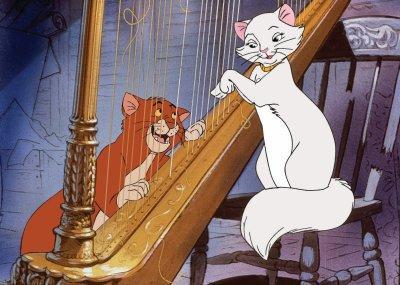
aristocatsAfter the Harris-Faye show ended, Phil resumed his music career with a series of successful gigs in Las Vegas in the 1970s/1980s.  He also appeared occasionally on a number of TV series, including Burke’s Law, F Troop, The Lucy Show, etc.  He earned rave notices for his roles in such films as The High and the Mighty (1954) and Good-bye, My Lady (1956).  Later, beginning with the 1967 Walt Disney studio release The Jungle Book (where he voiced Baloo the Bear), Harris could be heard in Disney productions like The AristoCats (1970) and Robin Hood (1973).  In fact, his last gig was as the narrator and friendly basset hound Patou in 1991’s Rock-a-Doodle.  He retired from acting soon thereafter, and died in 1995.


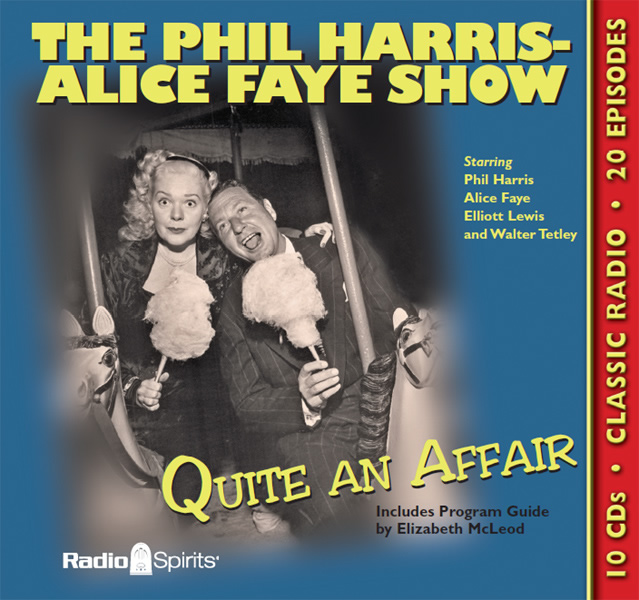
20392For many years, The Phil Harris-Alice Faye Show was considered something of a Holy Grail among old-time radio collectors: the almost complete run of the 1948-50 Rexall sponsored shows existed in recorded form, with smatterings of both the early Fitch Bandwagon years and the later RCA shows turning up on occasion.  But, transcriptions of the series eventually found their way into circulation and into classic several Radio Spirits collections: Money, Beauty & Brains, Explain the Beer, Private Lives, Wonga, Hotel Harris and Quite an Affair.  You’ll also find plenty of Harris on any number of our Jack Benny collections…and check out a rare dramatic performance with Phil and Alice on Suspense: Tales Well Calculated (“Death on My Hands”)!

Happy Anniversary to “Radio’s Outstanding Theatre of Thrills”!

suspense1

If you really wanted to nitpick…celebrating the 71st anniversary of the anthology program Suspense would have to be put off until July 22 of this year—and we’d also have to add a few years, making it the 73rd birthday.  July 22, 1940 marked the official debut of “radio’s outstanding theatre of thrills,” when it premiered as a pilot (or “audition,” as they were known in radio) on the CBS series Forecast.  For an entire hour, listeners were entertained by an audio adaptation of Marie Belloc Lowndes’ novella The Lodger—brought to the silver screen in 1926 by a promising young British director named Alfred Hitchcock.  In fact, Hitch himself directed the Forecast broadcast.  Loaned to CBS for the production by producer Walter Wanger, the Master of Suspense was also joined by Herbert Marshall (who played the titular role) and Edmund Gwenn, both of whom were scheduled to appear in the Wanger-Hitchcock film Foreign Correspondent.


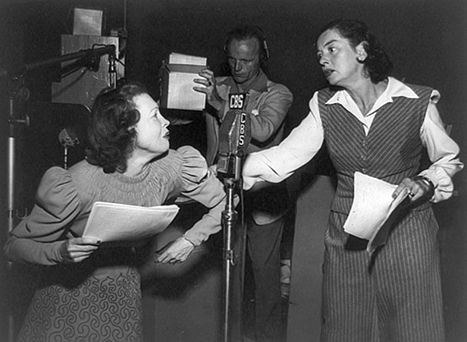
suspense5Suspense’s audition generated enough positive buzz for CBS to bring it to the airwaves on June 17, 1942.  (It wasn’t the only series to spring from the summer program; Forecast begat Duffy’s Tavern and Hopalong Cassidy.)   Producer William Spier was placed in charge of the show, and was determined to live up to his nickname “the Hitchcock of the airlanes.”  Overseeing every aspect of the series, Spier soon acquired a reputation for being able to lure big stars to his microphones (many of whom had never done radio before), and for supervising every aspect of each broadcast from sound effects to music.  Though Suspense started out as a sustained program (meaning the network was paying its bills), it acquired a sponsor in Roma Wines by December of 1943.


suspense4Suspense was responsible for some of the finest radio dramas ever broadcast, and its most famous was a production entitled “Sorry, Wrong Number.”  First broadcast on May 25, 1943 (it would be repeated seven more times), it starred Agnes Moorehead as an invalid who overhears plans for a murder via crossed telephone wires one night when she’s all alone at home.  The half-hour play was written by Lucille Fletcher, who also contributed a memorable episode for frequent Suspense guest star Orson Welles in “The Hitch-Hiker”—the terrifying tale of a man who, without explanation, keeps running into a mysterious drifter by the side of the road that he’s traveling.


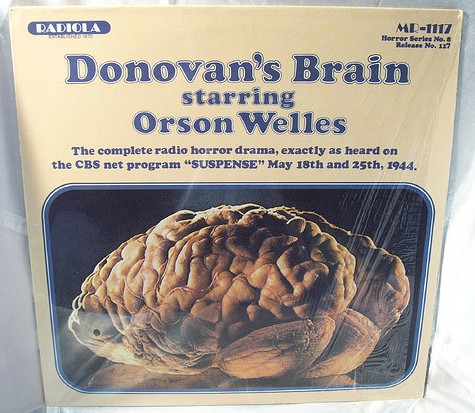
suspense9Welles also appeared in a two-part Suspense production entitled “Donovan’s Brain,” based on the novel by Curt Siodmak.  It was adapted as a feature film on multiple occasions (most famously in 1953) and also bears the distinction of having won a Grammy—the two-part broadcast was released on an LP and snagged a trophy in 1981 for Best Spoken Word, Documentary or Drama Recording.  The science fiction nature of “Donovan” was out of character for Suspense, which usually dealt in realistic crime dramas…but Spier bent the rules a little, and occasionally allowed material like “The Dunwich Horror” and “The House in Cypress Canyon” to become memorable shows.


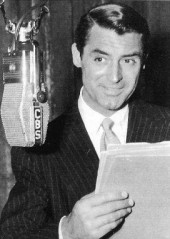
suspense7Suspense soon became the anthology program.  Celebrities angled for a chance to get on the show.  Cary Grant once said: “If I ever do any more radio work, I want to do it on Suspense, where I get a good chance to act.”  Grant, as a matter of fact, starred in one of the classic Suspense broadcasts: “On a Country Road.”  In this thriller, he plays a husband who is stranded with wife (played by Cathy Lewis) on a back road in a car that has out of gas…with an escaped female mental patient on the loose.


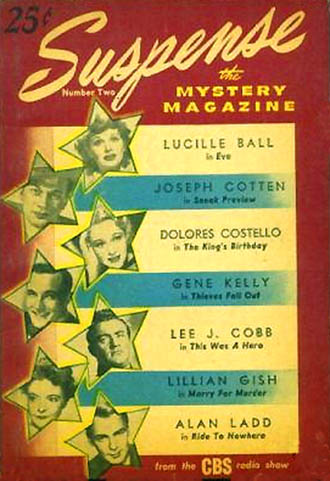
suspense3The cream of Hollywood’s acting crop made the rounds on Suspense, including performers like Ida Lupino, Olivia DeHavilland, Frank Sinatra, James Stewart, Edward G. Robinson, Lana Turner, and many more.  Spier, and future Suspense producers like Anton M. Leader and Elliott Lewis, also indulged in what some might call “stunt casting” – bringing in personalities who might otherwise be out of their comfort zone on a dramatic show.  Many times the results were glorious: comedians Jim and Marian Jordan (a.k.a. Fibber McGee & Molly) were the stars of the classic “Backseat Driver,” in which a couple returning home from the movies discover a stowaway in their car.  Emcee Ralph Edwards, best known for Truth or Consequences, headlined the terrifying scare story “Ghost Hunt.”  And, there are countless other examples.


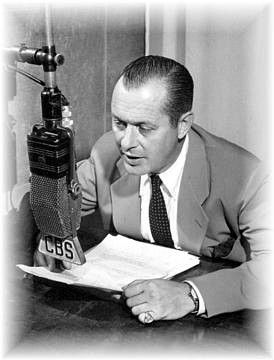
suspense6Producer William Spier gave up the director-producer chair in February of 1948 when Suspense was expanded by CBS to a full hour. This expanded presentation, hosted by actor Robert Montgomery, was a complete bust and the program shrank back to its half-hour size in July of that year with Tony Leader at the producer’s controls.  It was at this time that the bills for Suspense were paid for by Autolite (“You’re always right…with Autolite”).  After a year at the helm of the S.S. Suspense, Leader turned the wheel over to Norman Macdonnell, who later relinquished controls to actor Elliott Lewis.  Under Lewis’ supervision, the series often experimented with the content of its plays, presenting offbeat productions that included a fine adaptation of William Shakespeare’s Othello.


suspense2By 1954, Suspense was getting by on a patchwork of multiple sponsors and the network’s sustaining largesse.  The big-name wattage dimmed as well, though the show would occasionally attract a star or two.  It really became a showcase for tried-and-true radio actors like William Conrad, Lawrence Dobkin, Georgia Ellis, Harry Bartell, John Dehner and Lurene Tuttle, to name just a few.  The staying power of the series cannot be underestimated, however; it continued to present good radio drama (despite a brief cancellation from November of 1960 to June 1961).  And, along with Yours Truly, Johnny Dollar, Suspense actually closed the curtain on Radio’s Golden Age on September 30, 1962.


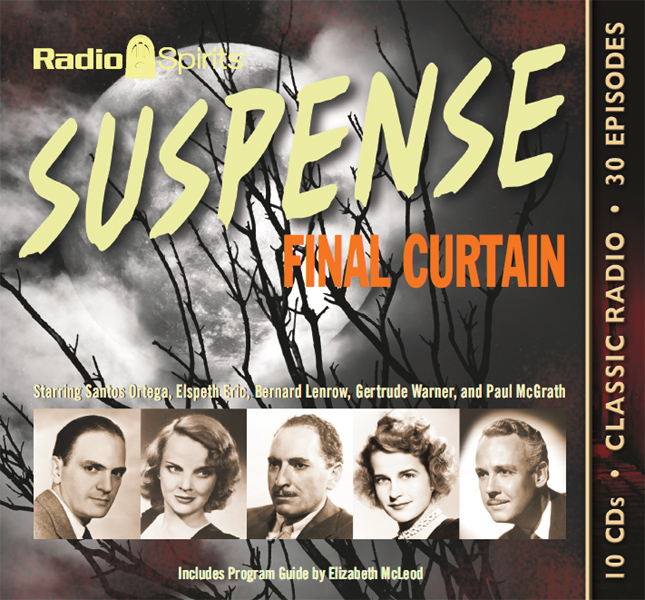
suspense10Old-time radio fans have been blessed in that 900 of the 945 original broadcasts of the series have been preserved, and many are available in CD collections from Radio Spirits.  The latest release, Suspense: Final Curtain includes 30 broadcasts from the programs’ last years; Suspense: Around the World, features stories that span the four corners of the globe; Suspense: Omnibus is also a great way to introduce oneself to the series.  Suspense: Tales Well Calculated features broadcasts with unusual guest stars such as Ozzie & Harriet, Dennis Day, William Bendix and Phil Harris & Alice Faye.

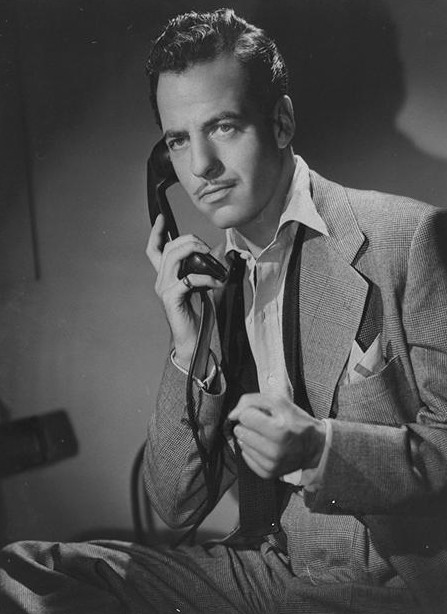
Happy Birthday, Gerald Mohr!

mohr14

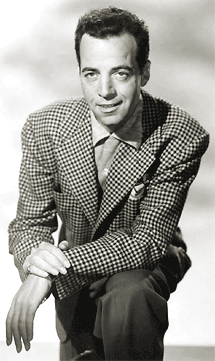
Veteran actor Gerald Mohr was born 99 years ago on this date.  Before his premature death in 1968, at the age of 54, Mohr left behind an amazing legacy of work in movies, TV…and old-time radio.  He had one of the most distinctive voices on radio—and, audiences today can still listen to him emote as private shamus Philip Marlowe: “Get this and get it straight: crime is a sucker’s road, and those who travel it wind up in the gutter, the prison, or the grave…”


mohr_publicityBorn in New York City to Henrietta (Neustadt) and Sigmond Mohr, Gerald attended preparatory school at NYC’s Dwight Preparatory, and upon graduation entered college at ColumbiaUniversity to pursue a medical degree.  Felled by a case of appendicitis, a fellow patient remarked on Mohr’s resonant baritone voice and suggested he go into broadcasting (the patient was in that line of work himself).  Gerald got himself a job as a junior radio reporter, and in the mid-1930s a meeting with wunderkind (and fellow radio actor) Orson Welles got Mohr an invite to join Orson’s Mercury Theatre.  On stage, the eager-to-learn Mohr began to build his reputation by appearing in Broadway productions of The Petrified Forest and Jean Christophe (in which he starred).


gerald_mohr_psaDespite his success on stage, it was radio where Mohr’s amazing voice revealed the range of his acting talent.  He could handle announcing chores, and demonstrated that rather adeptly in the 1930s serial The Shadow of Fu Manchu.  His dramatic turns could be heard on some of the medium’s top anthology shows, like Cavalcade of America, Hallmark Playhouse, The Lux Radio Theatre, and Screen Director’s Playhouse.  He also displayed a flair for “the funny”—in a story arc on Eddie Cantor’s program, he played a notorious thug named “Baby Face,” who held the star for ransom for several weeks.  The Judy Canova Show featured him as muscle-bound movie star (“Humphrey Cooper”), and in the early years of Our Miss Brooks, Gerald was falling-down funny as Jacques Monet, Madison High’s French instructor.  Other comedy series on which Mohr guested included The Adventures of Maisie, Burns & Allen, My Favorite Husband and The Phil Harris-Alice Faye Show.


mohr21Mohr’s best-known radio gig was as the titular detective on The Adventures of Philip Marlowe, a hard-boiled detective series produced by future Gunsmoke creator Norm MacDonnell.  The series ran on the CBS Radio Network from 1948 to 1951, and it remains a solid favorite of fans through surviving recordings.  Gerald also played the title investigator in The Adventures of Bill Lance, a series heard briefly over ABC in 1947-48—Lance had originally premiered in 1944 (with John McIntire) and was created by Whistler “father” J. Donald Wilson.  (Incidentally, from 1942 to 1955, Mohr could frequently be heard on The Whistler as well.)


Gerald was also one of five Archie Goodwins on The New Adventures of Nero Wolfe, (NBC’s 1950-51 detective series with Sydney Greenstreet as the corpulent sleuth), and occasionally played “Sorrowful Jones” on the syndicated Damon Runyon Theater.  There’s no getting around it, Mohr spent a lot of time in studios – also lending his voice to such shows as The Adventures of Superman, Dr. Christian, Escape, Let George Do It, Mandrake the Magician, Night Beat, Rogue’s Gallery, Suspense and Tales of the Texas Rangers.


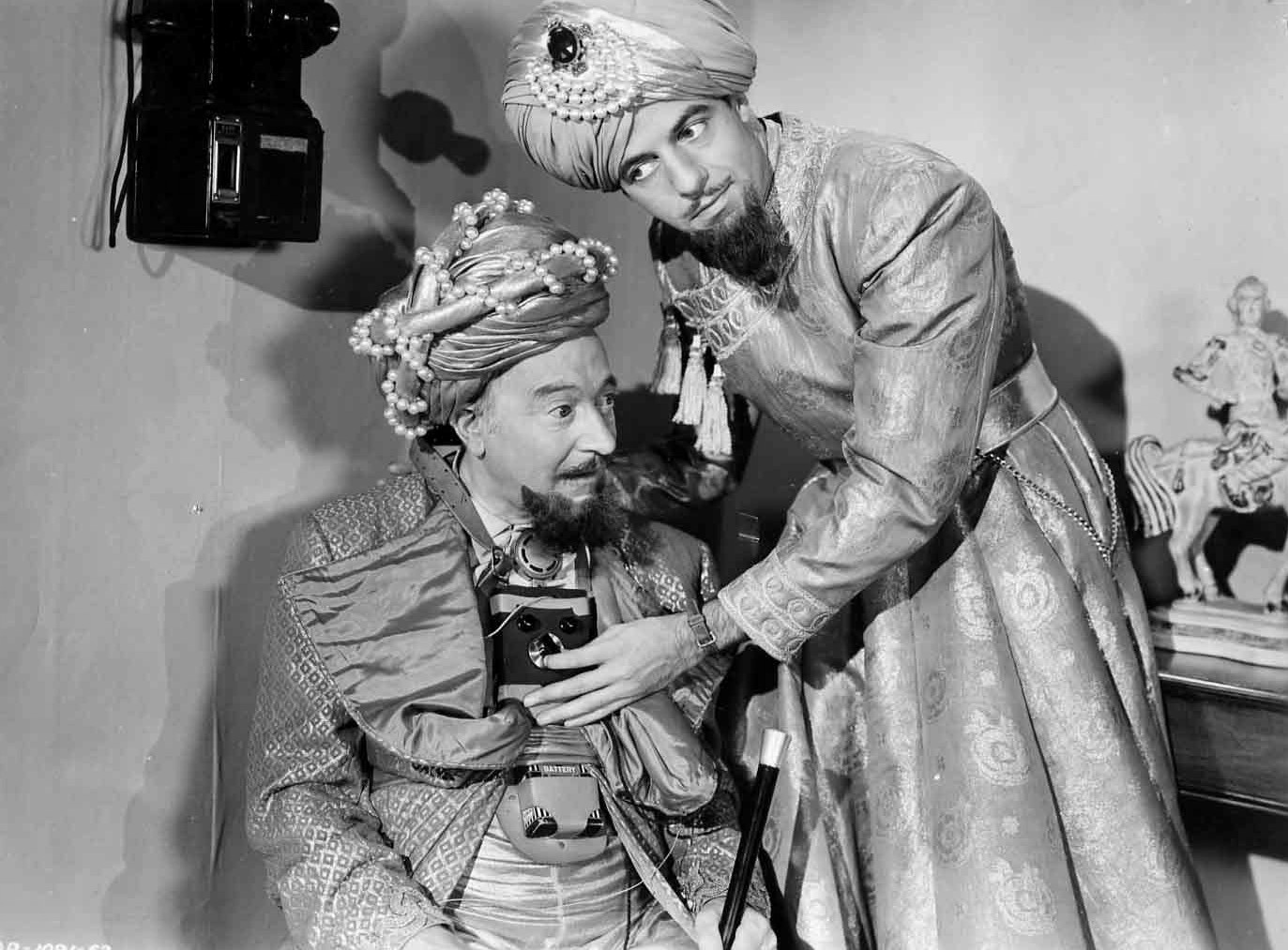
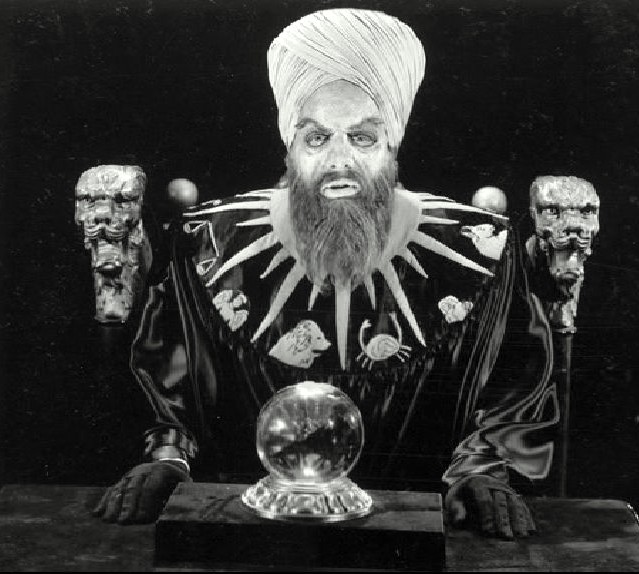
mohr22Mohr used his radio work to get his foot in the door where movies were concerned.  One of his earliest film roles was as the mysterious “Dr. Zodiac,” a phony mystic who was one of the red herrings in the movie Charlie Chan at Treasure Island (1939).  Walt Disney used him to narrate the “Baby Weems” segment in The Reluctant Dragon (1941—Gerald also had a bit part as a studio guard), and his voice can be heard (where else) over the radio as an emcee in Woman of the Year (1942).  Of course, every cliffhanger serial fan worth his salt knows Mohr’s voice as the diabolical Scorpion in Adventures of Captain Marvel (1941), considered by many to be the greatest chapter play of all time.  Gerald would get the opportunity to emote in front of the camera in another Republic serial production entitled Jungle Girl (1941)—in which he played the villainous (and appropriately named) “Slick” Latimer.
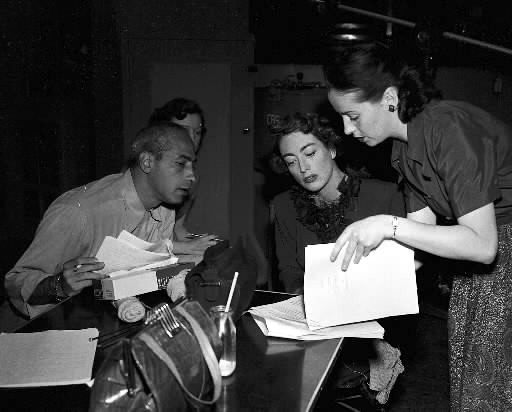
 

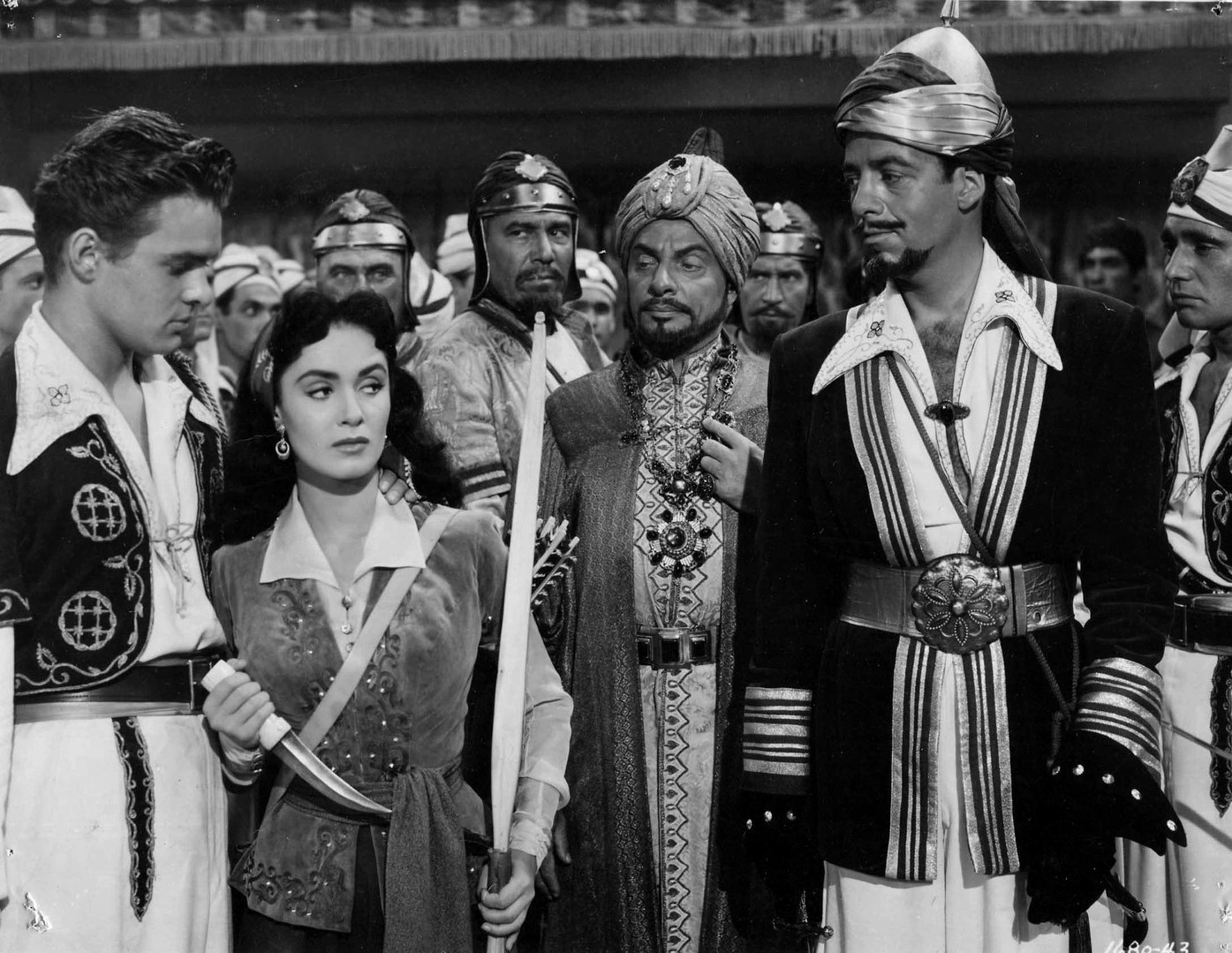
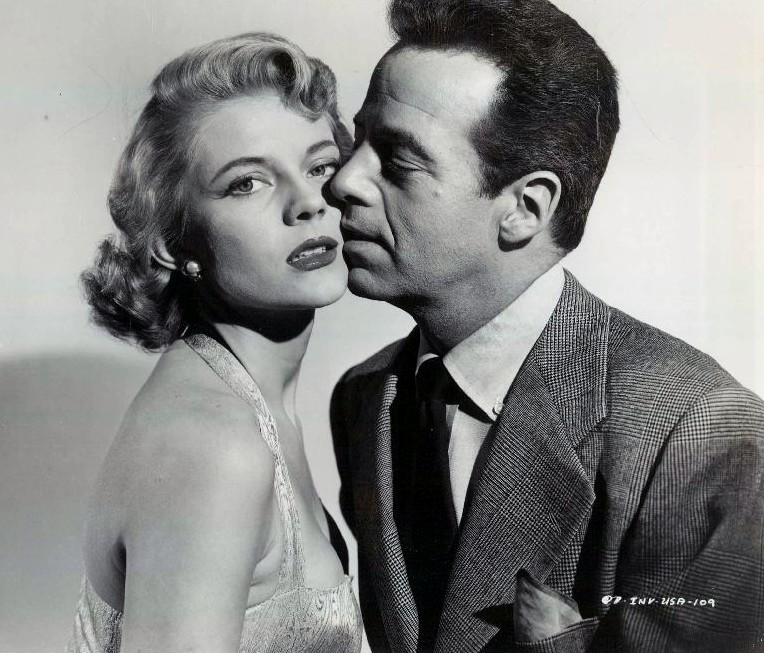
mohr12Gerald’s only handicap on the silver screen was that he looked a lot like star Humphrey Bogart—so when he did get roles in movies, they were usually those of the B-picture variety.  From 1946 to 1947, he played Louis Joseph Vance’s literary creation Michael Lanyard, a.k.a. The Lone Wolf, in three films at Columbia (he took over the part from Warren William)…and would later play that same character briefly in a 1948-49 radio version.  Other films featuring Mohr include Lady of Burlesque (1943), Gilda (1946), Two Guys from Texas (1948), Hunt the Man Down (1950), Sirocco (1951), Detective Story (1951), Invasion USA (1952), The Sniper (1952), The Ring (1952) and Money from Home (1953).


mohr3On the small screen, Gerald Mohr distinguished himself in a 1954-55 series entitled Foreign Intrigue (on which he played Christopher Storm, a Vienna hotelier) that was twice-nominated for an Emmy, and frequently appeared as a guest star on shows like Maverick (playing Doc Holiday twice) and Perry Mason.  As in radio, Mohr perfected that multi-faceted acting quality that could get him gigs on shows as varied as I Love Lucy to Lost in Space.  And he continued to give his pipes a workout: in several early episodes of The Lone Ranger, he served as the narrator, and later voiced superheroes like Reed Richards’ Mr. Fantastic of The Fantastic Four and the Green Lantern on The Superman/Aquaman Hour.


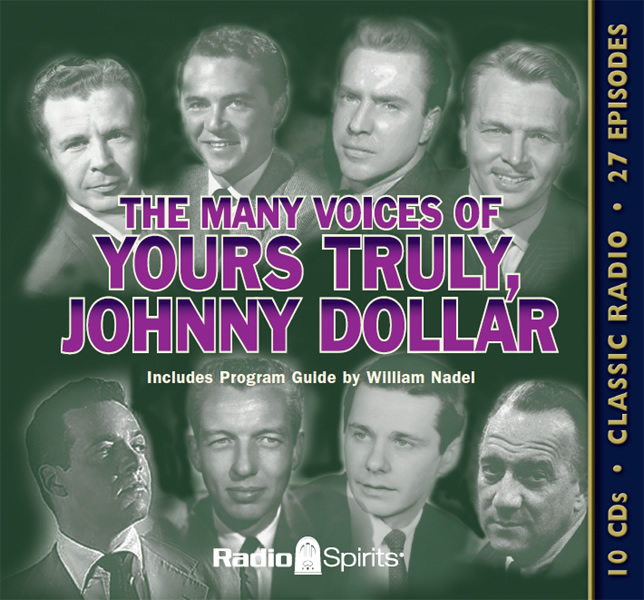
19881Mohr’s last big screen role was in the 1968 musical Funny Girl (as a con-man named Tom Branca); the actor was working in Sweden on a TV pilot entitled Private Entrance and had just completed filming when he succumbed to a heart attack.  It was truly a loss for radio, TV and movie fans—for Gerald had the kind of voice that makes an individual sit up and take notice…and know without having to stop and think just exactly who he is.  Mohr is well-represented here at Radio Spirits, with CD collections of The New Adventures of Nero Wolfe (Parties for Death), Night Beat, The Whistler (Notes on Murder, Skeletons in the Closet, Impulse), Rogue’s Gallery, Mystery is My Hobby (Mystery is Mutual), Suspense (Around the World) and The Damon Runyon Theater (Win, Place or Show, Dolls and Guys on Broadway).  You can also sample the lighter side of Gerald on the Jack Benny collection Be Our Guest and the Phil Harris-Alice Faye set Explain the Beer.  (There’s even a pilot for a potential Johnny Dollar series featuring the birthday boy on The Many Voices of Johnny Dollar!)

Happy Birthday, Mel Blanc!

melblanc1

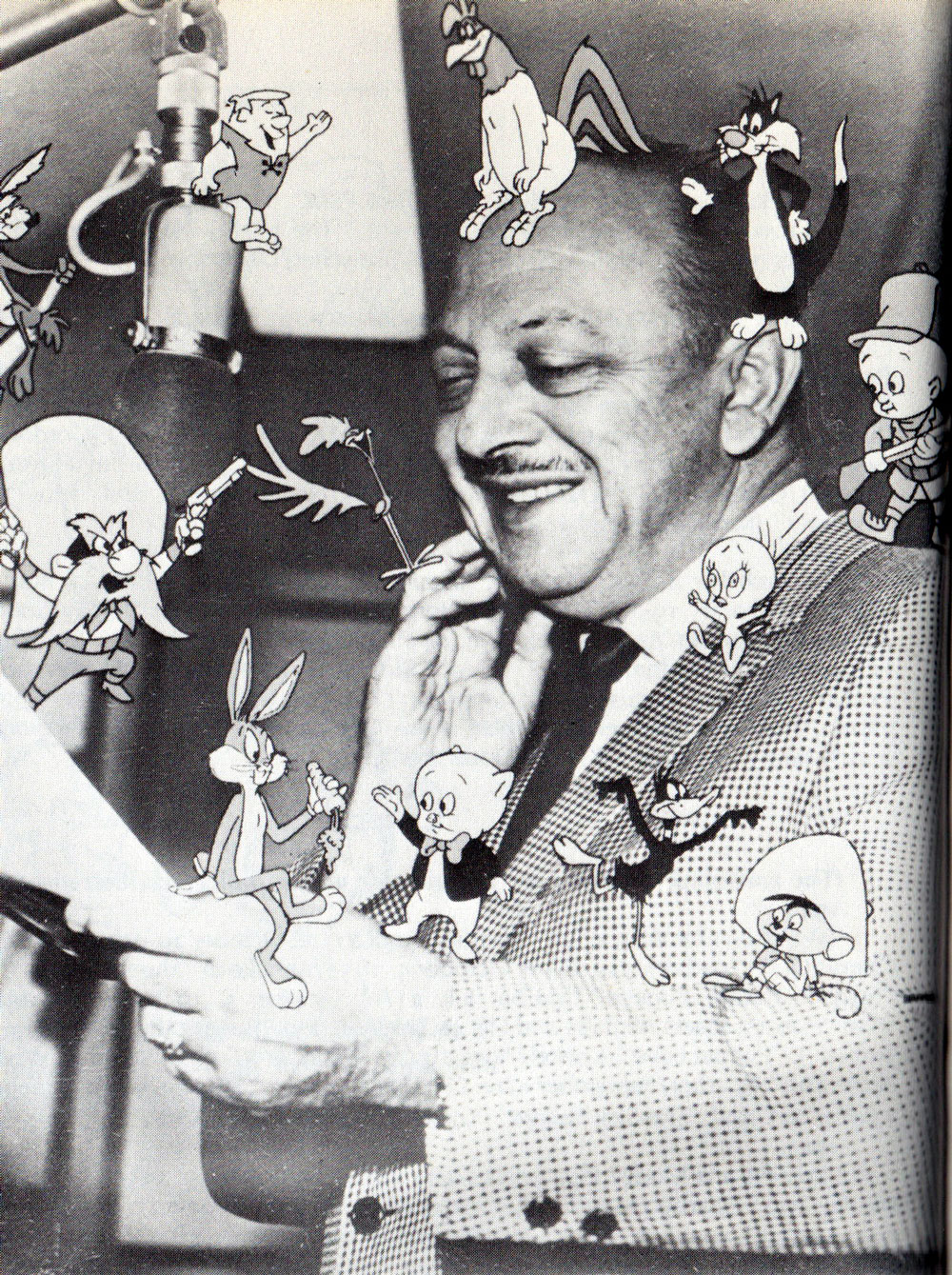
In the 1949 Looney Tunes short Curtain Razor, cartoon star Porky Pig channels his inner Major Bowes by auditioning acts at a talent agency.  One client, a turtle, brags that he is “the man of a thousand voices”—and goes through his repertoire (including Lionel Barrymore and Bugs Bunny) for the porcine agent.  The only problem is: Porky counted 999 voices…and so the turtle goes on his way, promising to come back when he remembers the one he missed.


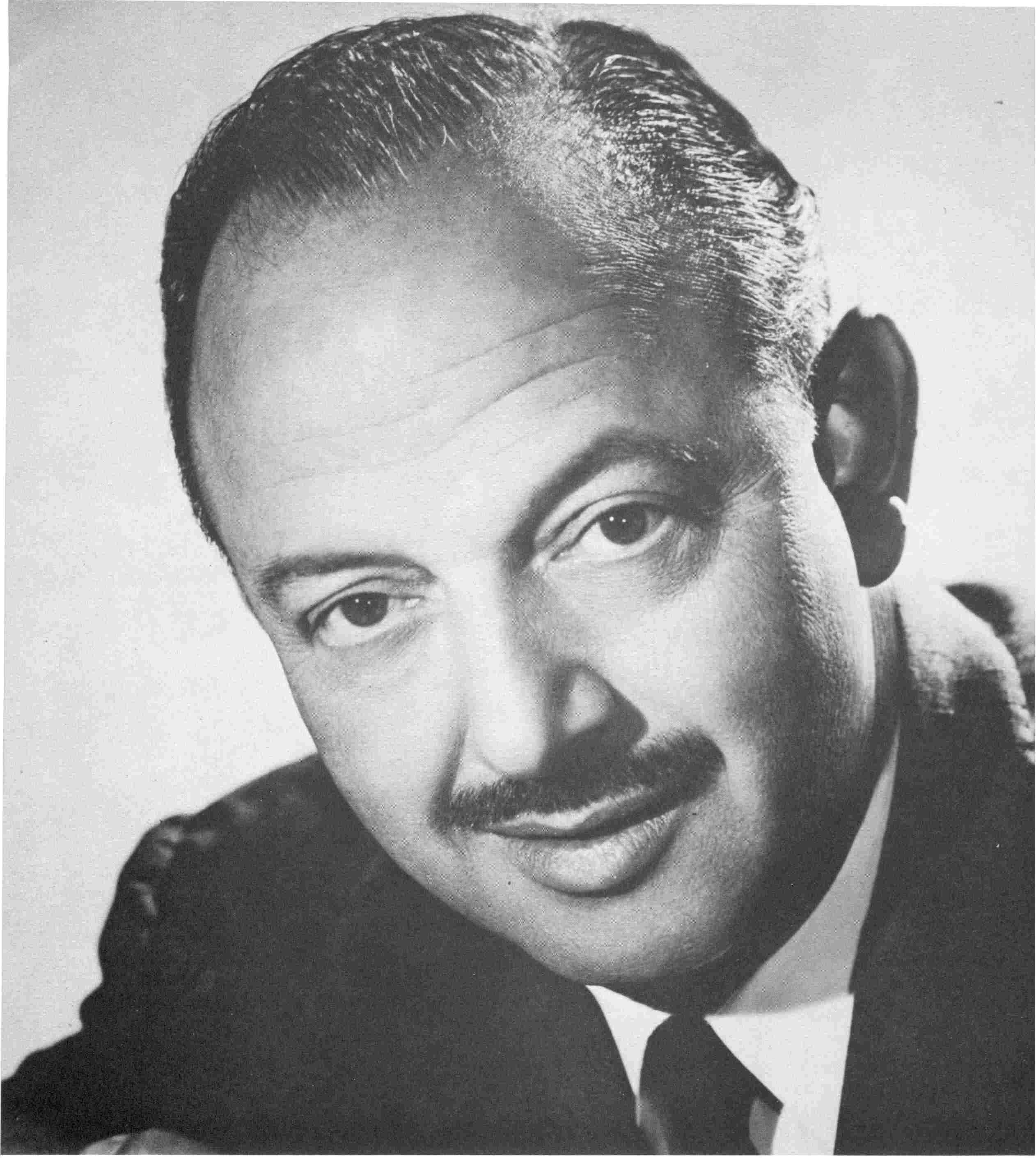
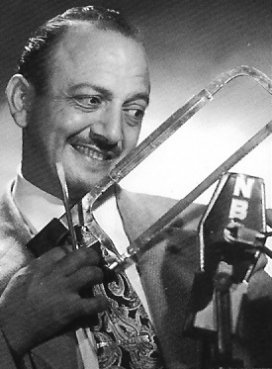
I’ve often imagined that Mel Blanc—who would be celebrating his 105th birthday today, and was literally known as “the man of a thousand voices”—had a similar problem.  Mel voiced so many characters for radio, television, movies and animated cartoons that it had to be impossible to count them all…and even then, I’m certain he would have passed one-thousand many times over.


melblanc6He was born Melvin Jerome Blank in San Francisco in 1908 to parents Frederick and Eva.  Mel later told the story that he changed the spelling of his last name to “Blanc” at the age of sixteen because an instructor had chided him, telling him he would never amount to anything (and would, in essence, live out the embodiment of “blank”).  This teacher must’ve had it in for Mel, because even at the age of ten the youngster demonstrated his amazing talent for dialects and mimicry.  Blanc dropped out of school in ninth grade, and soon landed a job leading an orchestra (becoming the youngest conductor at that time at age 17).  Mel went on to discover vaudeville and radio.  In 1927, he began working as a voice artist for station KGW on their Hoot Owls program.


Mel met and married his wife, Estelle Rosenbaum, a year after he arrived in Los Angeles in 1932.  The two of them then moved to Portland, Oregon where they performed in (and co-produced) a local comedy show for KEX entitled Cobwebs and Nuts.  Estelle kept suggesting that Mel was ready for bigger things, so the couple relocated back to Los Angeles in 1935. A successful audition got him a job at Warner Bros.-owned KWFB.  Not long after that, Mel was hired to be the voice of radio comedian Joe Penner’s pet duck “Goo Goo” (the fowl that the comic was always referring to when he asked people “Wanna buy a duck?”).


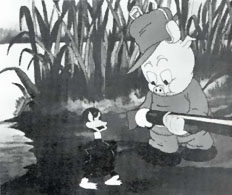
porkys_duck_huntBlanc’s association with KWFB proved most lucrative, because – as a Warner property – it got his foot in the door at the company’s animation department, which at that time was run by Leon Schlesinger.  Schlesinger planned to use Blanc as the new voice of the cartoon studio’s big star, Porky Pig, after a successful tryout.  Porky was distinguished by his habit of stuttering and, in the early years, his voice was supplied by an actor named Joe Daughtery…who really did stutter.  Unfortunately for Joe, he wasn’t able to control it…and that ran into money as far as recording sessions went.  So, beginning with Porky’s Duck Hunt (1937), Mel Blanc was the new voice of Porky Pig…and he would go on to voice just about every major star to come of the Warmers stable: Bugs Bunny, Daffy Duck, Tweety, Sylvester, Foghorn Leghorn, Pepe le Pew, Speedy Gonzales…and so many more.


melblanc5Mel soon became so invaluable to the Schlesinger studio that when he had the temerity to ask for a raise, the notoriously tight-fisted Leon said “nothing doing”—but agreed to give Mel a credit in the cartoons that read: “Vocal characterizations by Mel Blanc.”  And, that was the only calling card Blanc needed to open doors in radio for him from that moment on.  He worked on many of the major shows: Fibber McGee & Molly, Burns & Allen, Abbott & Costello, Judy Canova, etc.  He also landed the biggest prize of them all: The Jack Benny Program.


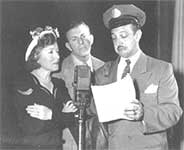
jackmeldonrochIn his early years on the Benny show, Mel was mostly a human sound effect.  He provided the growls of Jack’s pet polar bear Carmichael (the one that ate the gas man), and the wheezing of Jack’s dilapidated Maxwell.  As Mel would later tell it, one day he summoned up the courage to tell his boss: “Mr. Benny…I can talk, too.”  Jack instructed the writers to let him do so; he played minor characters from a baseball announcer (“Greenberg’s on third”) to an exasperated sales clerk to Polly, Jack’s parrot.  Blanc’s most substantial role was Professor LeBlanc, Jack’s long-suffering violin teacher, who would shout with joy (and sing La Marseillaise) whenever his inept pupil’s hour-long lesson was over.  (Of course, I can’t leave out Sy, the Little Mexican and the train station P.A. man who announced: “Train now leaving on track five for Anaheim, Azusa and Cuc…amonga!”)


melblanc3At the height of his popularity on the Benny program, Mel—like fellow cast members Phil Harris and Dennis Day—got the opportunity to strut his stuff in a solo venture with The Mel Blanc Show, which premiered on CBS Radio on September 3, 1946.  Using his normal voice, Mel played a character with the same name: a man who ran a fix-it shop…and who may have been the most inept handyman in popular culture until Emmett Clark was introduced on TV’s The Andy Griffith Show.  (Mel also played a dual role as Zookie, the assistant who stuttered strangely like a certain Warner Bros. cartoon pig.)  Despite a first-rate supporting cast that included Mary Jane Croft, Joe Kearns, Alan Reed, Jim Backus and Bea Benaderet, The Mel Blanc Show wasn’t consistently amusing and it lasted but a single season.  The most memorable thing about the series was the Loyal Order of Benevolent Zebras lodge that Mel belonged to, where he and “Mighty Potentate” Mr. Cushing (Hans Conried) would greet one another with “Ugga-ugga-boo, ugga-boo-boo-ugga.”  (Blanc later adopted this bit of silliness into a hit record with Spike Jones.)


melblanc4It would be no small exaggeration to say that Mel Blanc was not only one of radio’s strongest second bananas, but he was an essential—maybe the most essential—player in the voice artist industry.  Television opened up even more doors for Mel: he became a semi-regular on Jack Benny’s show when it transitioned to the small screen, and later went to work for Hanna-Barbera where he voiced Barney Rubble and Dino on The Flintstones, Cosmo Spacely on The Jetsons, and characters as varied as Hardy Har Har, Droop-a-long and Secret Squirrel.  In the ‘70s and ‘80s, Mel could still be heard on Saturday mornings supplying the voices of Speed Buggy, Captain Caveman and Heathcliff.


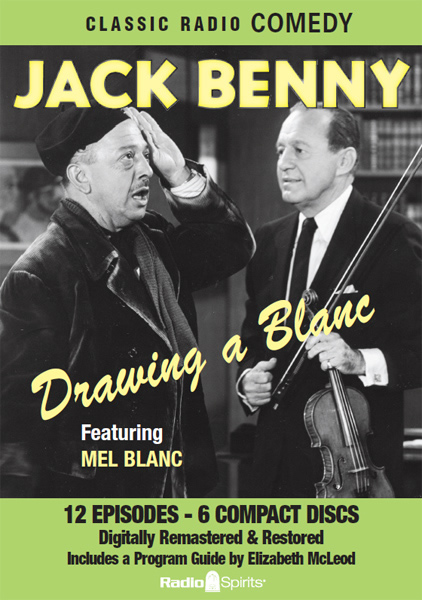
20290As you can see, it’s a Herculean task crediting all the characters voiced by the incomparable Mel Blanc (I haven’t even scratched the surface), whose death in 1989 left a tremendous void in the entertainment industry.  (As Leonard Maltin once observed: “It is astounding to realize that Tweety Bird and Yosemite Sam are the same man!”).  A good place to start enjoying Mel’s legacy would be this Radio Spirits collection, Drawing a Blanc, which highlights some of our birthday boy’s memorable appearances on The Jack Benny Program.  After that, sample more Benny (No Place Like Home, Oh, Rochester!), Burns & Allen (Treasury) and Abbott & Costello (It’s Time to Smile).  Happy birthday, Mel!

Everybody Loves Raymond

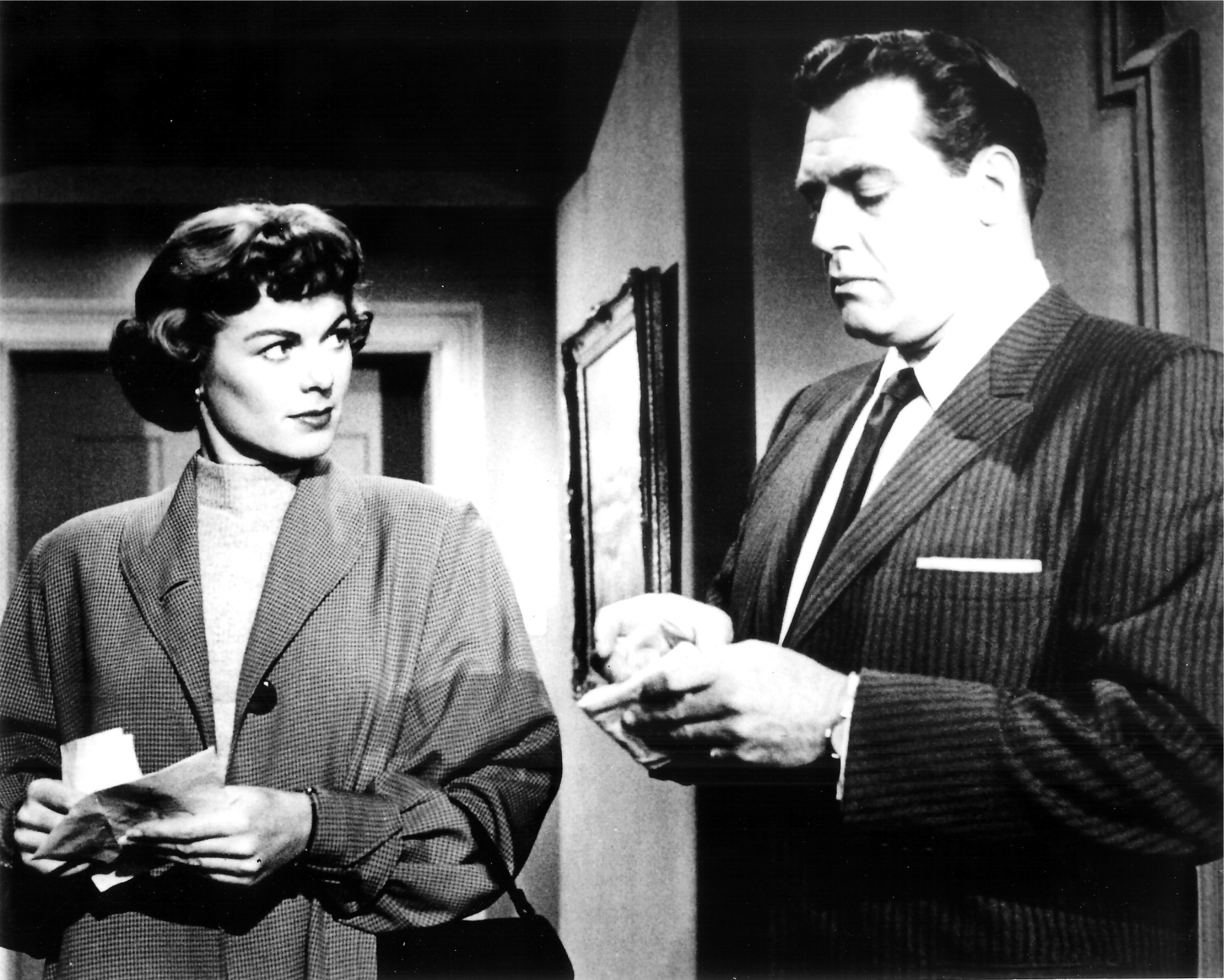
perrymason

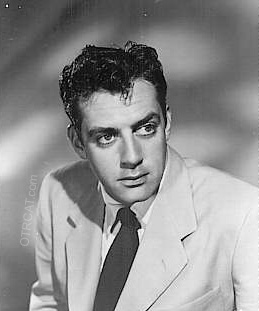
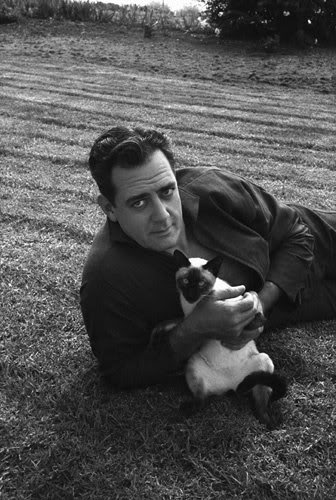
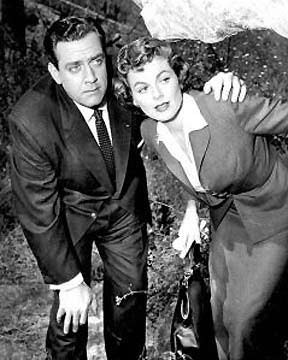
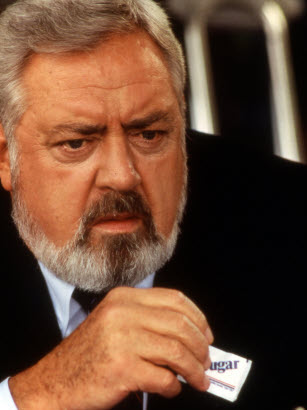
The actor who would be celebrating his ninety-sixth birthday today is indisputably best remembered for two iconic television series—Perry Mason (1957-66) and Ironside (1967-75).  But, old-time radio fans know that Raymond Burr was a rather accomplished radio performer as well…and classic movie buffs fondly recall Mr. Burr as one of the silver screen’s most memorable heavies (no pun intended).


raymondburr3The biographical details of Raymond’s life have always been a bit difficult to keep straight…mostly because Burr, in the tradition of Orson Welles, loved to embellish his C.V. with fanciful details that reporters and interviewers rarely bothered to check.  It is known that Raymond William Stacey Burr was a native Canadian, and that he moved to Vallejo, California with his mother and siblings after she divorced his father.  He attended a military academy for a brief period of time, and then took classes at BerkeleyHigh School, where he later graduated.


raymondburr2For the edification of those who interviewed him, Burr would often fabricate a background in which he worked as a New Mexico ranch hand (with the approval of his mother) and also served a hitch in the U.S. Navy (where he claimed he suffered a stomach wound during the Battle of Okinawa in World War II).  He also padded his resume with such hyperbolic details as having been educated at various educational institutions throughout the world, as well as enjoying an extended acting tour of the United Kingdom to great acclaim.


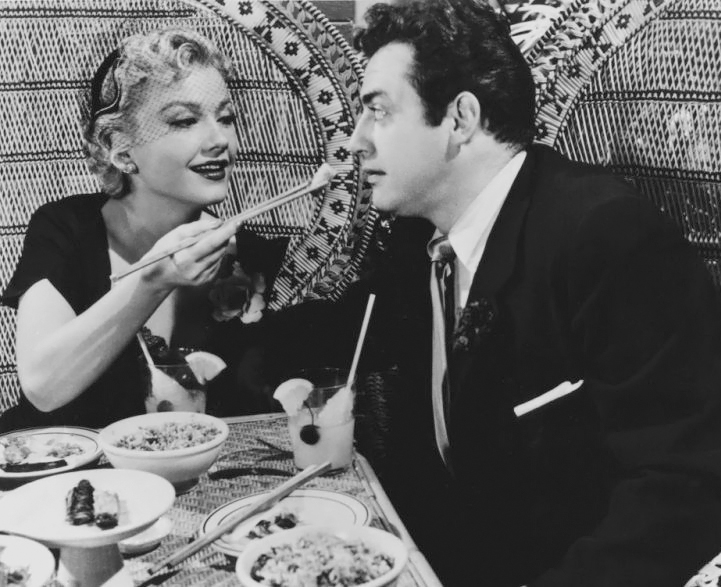
raymondburrIt can be verified, however, that Raymond began his acting career at the Pasadena Playhouse in 1937 and, made his Broadway stage debut in a production of Crazy from the Heat in 1941.  Five years later, he signed a contract with RKO to start making motion pictures.  He had a bit role in 1946’s Without Reservations as a dancing partner to star Claudette Colbert, and his first credited appearance was in San Quentin later that same year.  Because of his girth, Burr was often cast as imposing bad guys in various films noir.  Vehicles like Desperate (1947), Raw Deal (1948), Pitfall (1948), His Kind of Woman (1951) and The Blue Gardenia (1953) feature Ray at his slimy best.


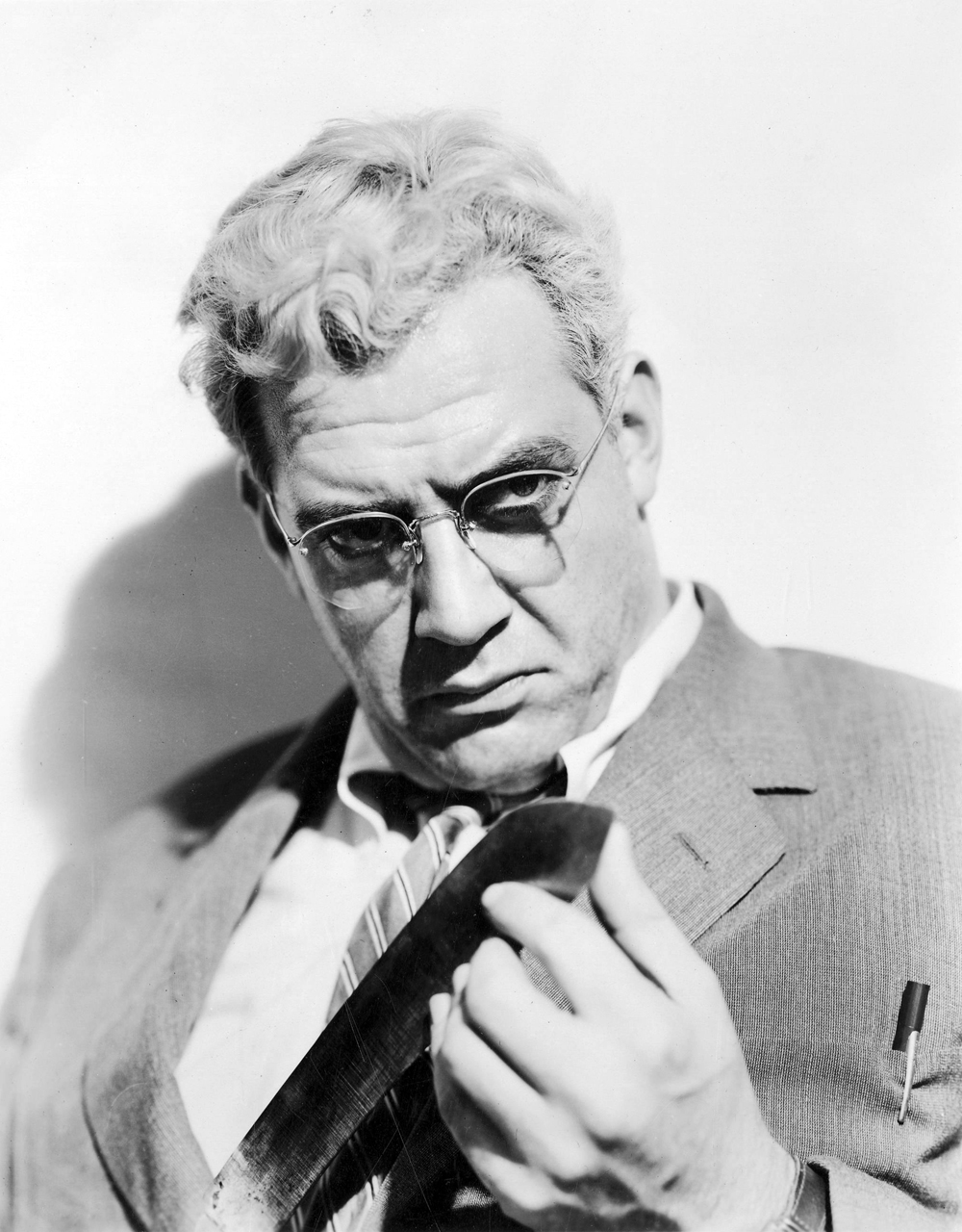
raymondburr10Raymond Burr was also fortunate to land the occasional high-profile movie gig in such classics as A Place in the Sun (1951), in which he plays the fiery District Attorney heckbent on convicting accused murderer Montgomery Clift.  Burr’s best known filmic showcase is unquestionably that of Lars Thorwald, the suspected wife killer being spied upon by James Stewart, Grace Kelly and Thelma Ritter in Alfred Hitchcock’s 1954 classic Rear Window.  In addition to turns in comedies like Casanova’s Big Night (1954) and You’re Never Too Young (1955), Raymond earned a little cult movie cred by appearing as American reporter Steve Martin (no, not the one you’re thinking of) in Godzilla, King of the Monsters! (1956)—the U.S. release of a Japanese monster movie originally known in that country as Gojira (1954).


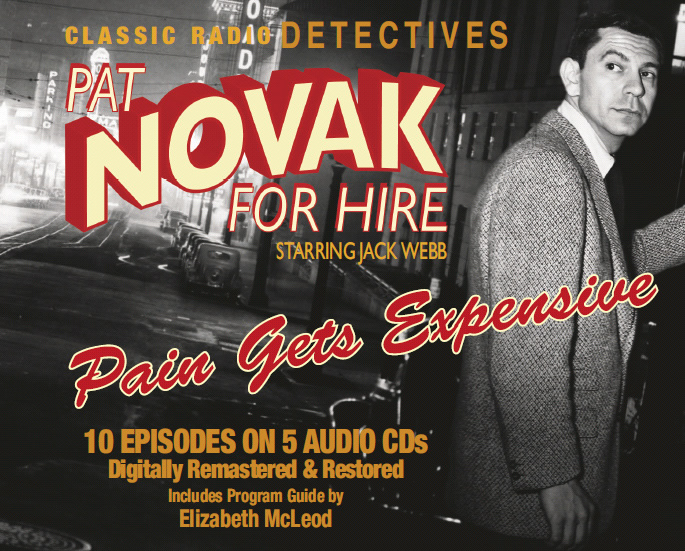
While Burr secured steady work in motion pictures,  he was at the same time stretching his acting chops in radio—he had become close friends with actor Jack Webb, who used Ray on both the hard-boiled detective drama Pat Novak for Hire (as Inspector Helman) and in the early years of Dragnet, playing Chief of Detectives Ed Backstrand.  Other programs on which Burr made regular rounds include Suspense, The Whistler, The Line-Up, The CBS Radio Workshop, and Yours Truly, Johnny Dollar.


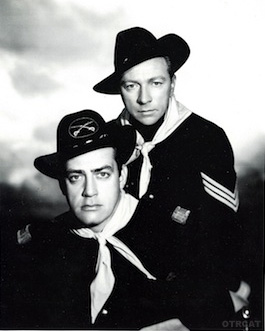
laramie1Raymond Burr’s most high-profile radio role would arrive in January of 1956, when he was cast by Gunsmoke producer-director Norman Macdonnell to star as Lee Quince, “captain of cavalry,” in Fort Laramie (after John Dehner refused refuse the part).  Laramie, a solid series about life on a U.S. Army post in the 1880s, mimicked its sister series’ penchant for superb writing, gritty realism and first-rate acting.  Gunsmoke veterans Vic Perrin and Harry Bartell co-starred along with Burr—as Sergeant Ken Gorce and Lieutenant Richard Sieberts, respectively—with radio vet Jack Moyles completing the quartet as Major Daggett.


raymondburr4Fort Laramie’s excellence was such that it probably could have enjoyed as long a radio run as the celebrated Gunsmoke…but, the series’ death knell was sounded when Raymond arrived for a rehearsal with great news to share with his fellow actors.  He had auditioned for a television series based on Erle Stanley Gardner’s famed literary sleuth Perry Mason, hoping to land the part of Mason’s nemesis, D.A. Hamilton Burger…and was stunned when CBS offered the starring role instead!  The preparations for the Mason series meant that the actor’s stint with Laramie was going to be short-lived—but Burr, always eager to look out for his friends in the aural medium, often tried to get those chums parts on the series whenever he was able.


ironsidePerry Mason made Raymond Burr a household name.  Its nine-year-run on CBS, often as a Saturday night staple, furnished the actor with a pair of Outstanding Lead Actor Emmy statuettes in 1959 and 1961.  When the series came to an end, Burr began an equally long run (eight years) the following season as the titular character known as Ironside—a San Francisco chief of detectives who became paralyzed from the waist down and was forced to rely on a wheelchair after being injured by a sniper’s bullet.  The Ironside series also garnered the actor much acclaim, including six Emmy nominations for his acting.
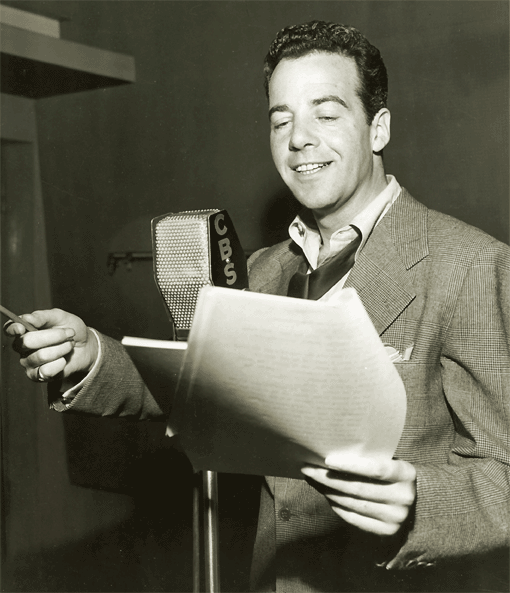
 

raymondburr5In later years, Burr would revisit both of his iconic TV characters: he would defend his loyal secretary Della Street on a murder charge in Perry Mason Returns (1985).  The success of that TV movie led to an astonishing twenty-five follow-ups between 1986 and 1993.  Ray also revisited Ironside (along with the original cast from that series) in a 1993 outing called (what else?) The Return of Ironside.  Sadly, the death of Burr in 1993 put the kibosh on any future Ironside endeavors…though this did not stop the Perry Mason people from putting out four more additional movies (starring other actors) after his death.
 

20334Fans of Raymond Burr can take solace in the knowledge that most of his work on Perry Mason and Ironside is well represented on DVD.  In addition, the actor’s radio work on Fort Laramie is available on CD (in two volumes) as well as his appearances on Pat Novak for Hire (Pain Gets Expensive), The Whistler (Notes on Murder) and The Line-Up (Police and Thieves: Crime Radio Drama).  Why not settle in for a listen on the natal anniversary of a true acting legend?