Your Shopping Cart | Your Account Information | Catalog Quick Order | Customer Service | Order Status | Contact Us
RadioSpirits.com

HOMENEW RELEASESBESTSELLERSCLEARANCEBOOKSDVDsMUSICDOWNLOADS

AboutBlogOur Radio Show SEARCH   KEYWORD

That whistle is your signal for the anniversary…of The Whistler…
voicewhistler6

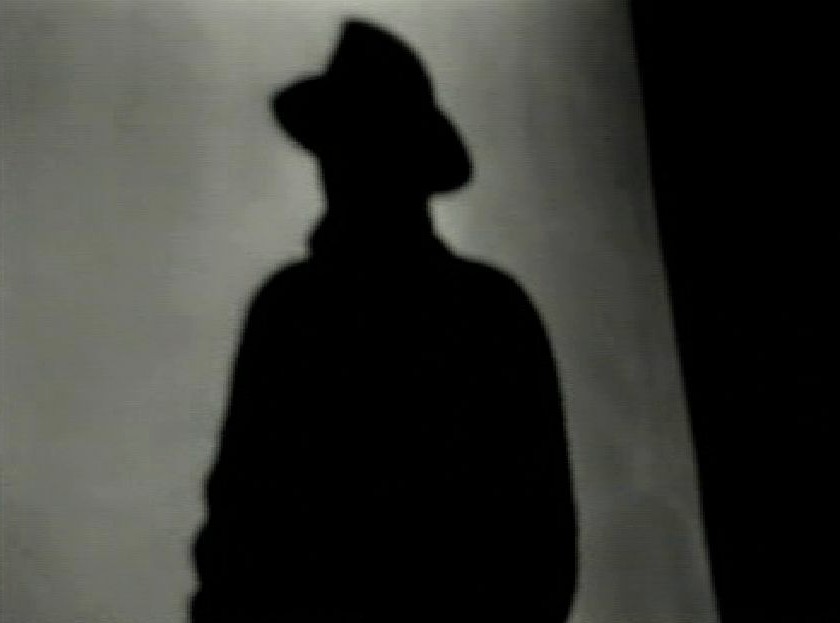
Seventy-one years ago on this date, radio’s best-known omniscient narrator took the first of what would be many strolls by night…and by the time that final curtain was brought down on The Whistler on September 22, 1955, it would be no small exaggeration to say that he was pretty much exhausted after all that walking.   Okay…I’m just having a little fun at the program’s expense—but, the history surrounding one of the medium’s most popular mystery shows is an interesting one, to say the least.
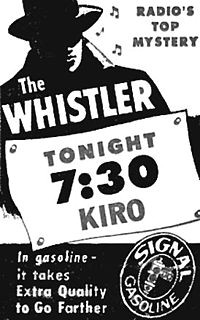
 

kiroFirst, let’s address that popularity angle.  The Whistler was indeed a highly-rated mystery anthology.  In fact, the announcer would often brag that the series was “rated tops in popularity for a longer period of time that any other West Coast program.”  Sponsored throughout most of its run by Signal Oil— the largest independent oil company on the West Coast at the time—The Whistler was heard only within the company’s sales region.  However, the series did enjoy two separate East Coast runs: as a 1946 summer replacement for Campbell Soups’ The Jack Carson Show, and from March 26, 1947 to September 29, 1948 for Household Finance.
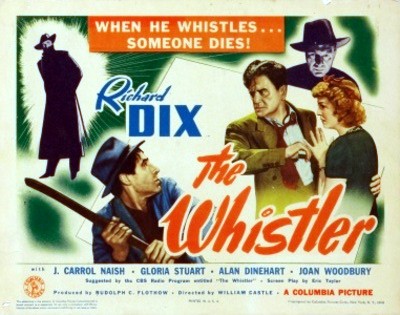
 

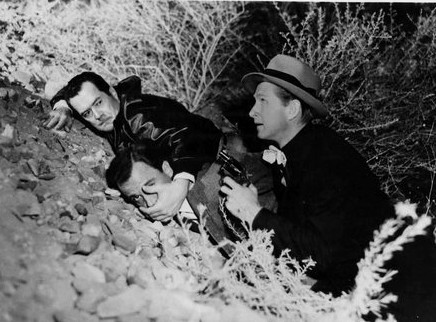
whistlertitle2And yet—The Whistler permeated quite a bit of the popular culture at the time despite its small circle of listeners   It was parodied on such shows as The Jack Benny Program, and its format copied by series like The Mysterious Traveler.  From 1944 to 1948, the Columbia studio released a series of Whistler films (eight in all) that turn up occasionally on Turner Classic Movies (and all of which have been reviewed previously here on the Radio Spirits blog).  The show even inspired a syndicated TV version that ran briefly from 1954 to 1955.
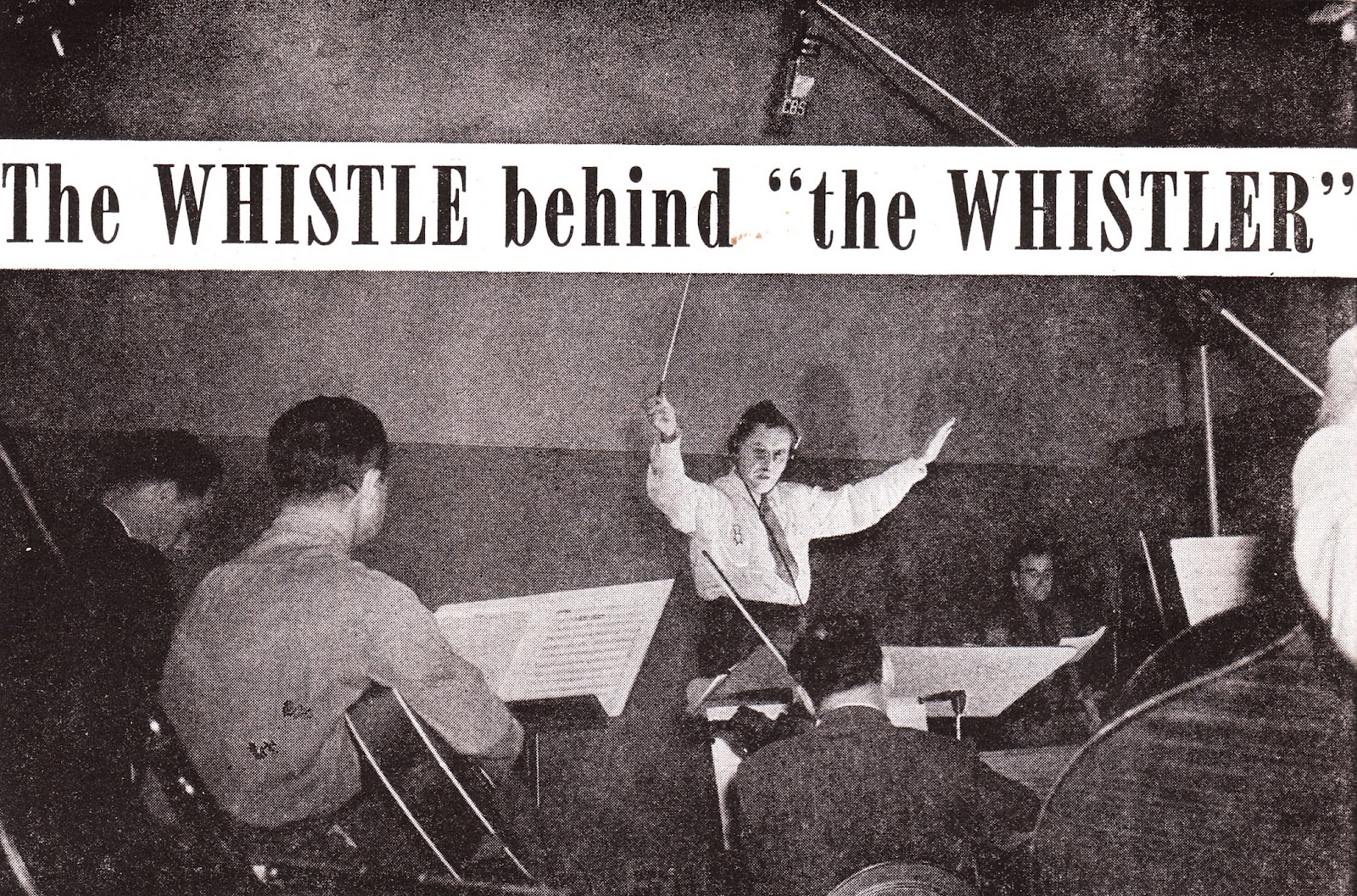
 

whistler4But, because the series’ run has been so well-preserved—of the nearly 700 shows originally broadcast, over 500 of them are extant today—it wouldn’t be stretching things too much to argue that The Whistler enjoys a much larger listenership (and dedicated fan base) than it did during its original Golden Age of Radio reign.  The program featured one of radio’s classic openings:  a haunting 13-note theme created by Wilbur Hatch (who also composed the show’s eerie mood music).  Hatch estimated that only one person in twenty could whistle this exact melody, and for the show’s thirteen-year duration one person pretty much did—a young woman named Dorothy Roberts.  In fact, during the war years, Roberts had to get permission from Lockheed (where she worked) to leave her factory job in order to make it to the program and whistle every week.
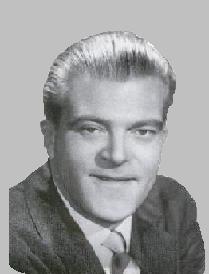
 

whistler5Playing the part of the omniscient Whistler was the responsibility of a variety of performers.  Gale Gordon and Joseph Kearns were one-time Whistlers, as were Marvin Miller, Everett Clarke and William Johnstone (who was heard during the program’s East Coast run in 1947-48).  But, the individual best remembered as the man “who walks by night” was Bill Forman, the popular announcer from programs like The Phil Harris-Alice Faye Show and Father Knows Best.  Forman would be the only actor to receive credit for the role, and even that didn’t happen until November 1951; the actor commented after this hard-fought victory: “I’m proud to be ‘The Whistler’ and I wanted people to know it.”


The Whistler also featured the crème de la crème of talent from Hollywood’s “Radio Row”; performers like Elliott & Cathy Lewis, Betty Lou Gerson, Wally Maher, William Conrad, Hans Conried, Gerald Mohr, and Lurene Tuttle, to name only a few. These performers appeared so often on the show that they were dubbed “Whistler’s children”—and their expertise was such that The Whistler rarely had to rely on the sort of high-powered celebrity wattage prevalent on Suspense.
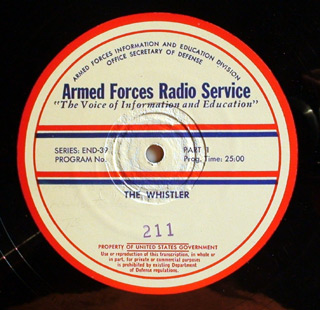
 

whistler2And yet The Whistler was very much like “radio’s outstanding theatre of thrills” in a lot of ways (though the program’s official debut predates Suspense by a month).  Creator Donald J. Wilson might have crafted a mystery series, but in most of the stories there was very little mystery to solve.  The audience knew who the guilty party was (usually the protagonist who, in a moment of weakness, succumbed to human frailty and committed a murder or forgery or whatnot) and it was simply a matter of enduring the nail-biting experience of waiting to see how he (or she) would be caught.  Before it became the fashion for The Master of Suspense to return from a commercial break on Alfred Hitchcock Presents and inform us of a tiny detail that tripped up his crime-committing character, The Whistler did the same thing with its evildoers, often having its narrator reveal to the listening audience “the strange ending to tonight’s story.”
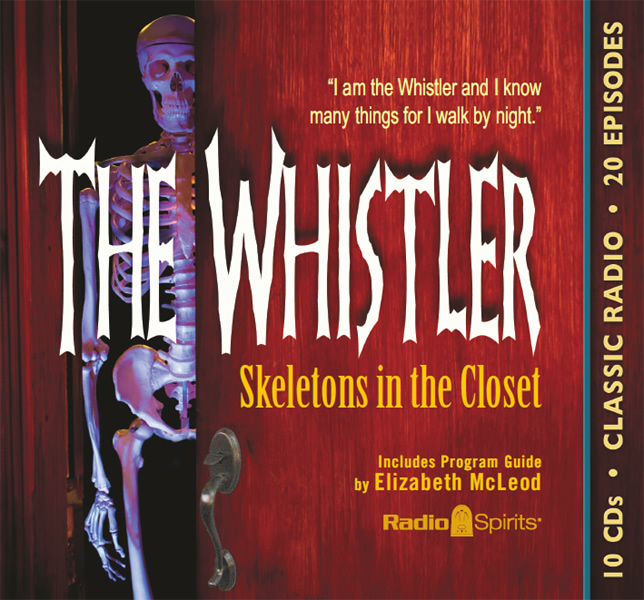
 

20398Radio Spirits is pleased to be able to offer so many CD collections of this radio classic, including The Whistler, Notes on Murder, Impulse and the recently released Skeletons in the Closet.  On a personal note, the series has long been one of my top five favorite dramatic shows and one I would recommend without hesitation to both old-time radio novices and veterans—“because even when you know who’s guilty, you always receive a startling surprise at the final curtain.”
“I’ll clip ya, Bergen…so help me, I’ll mow you down!”

bergen&mccarthy16

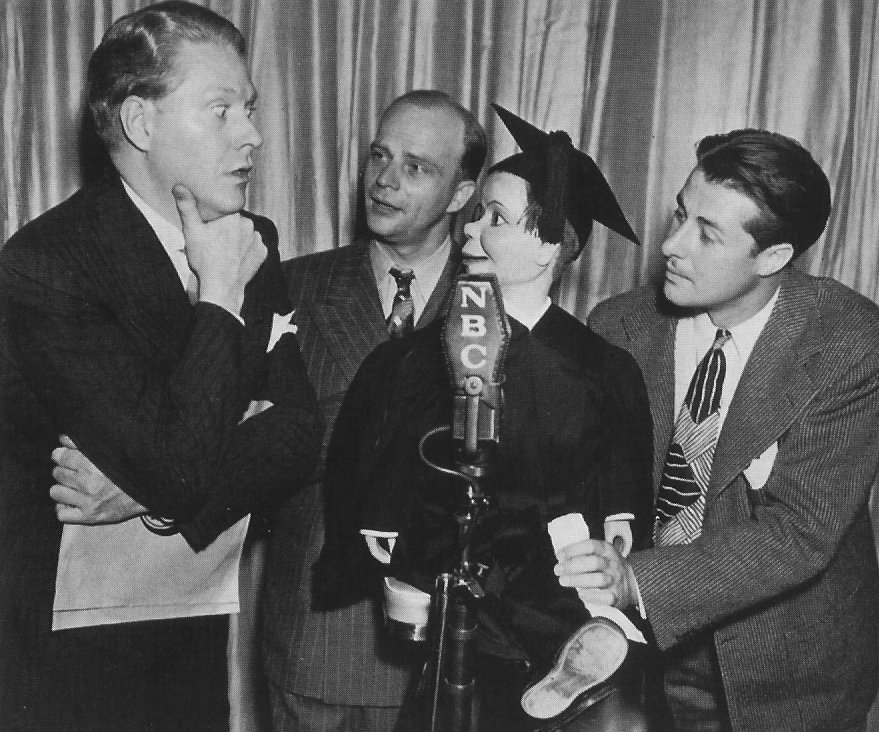
Seventy-six years ago on this date, a program that would soon become the number one radio show in the nation premiered over the Red network of NBC.  The Chase and Sanborn Hour was big-time radio: it featured the likes of Nelson Eddy, Don Ameche, Dorothy Lamour and W.C. Fields—all of whom were audience pleasers at that point in their careers.  The program also attracted top Hollywood celebrities who would frequently emote in sketches both comedic and dramatic, written by highly-paid scribes (one of whom was a soon-to-be-famous Arch Oboler).


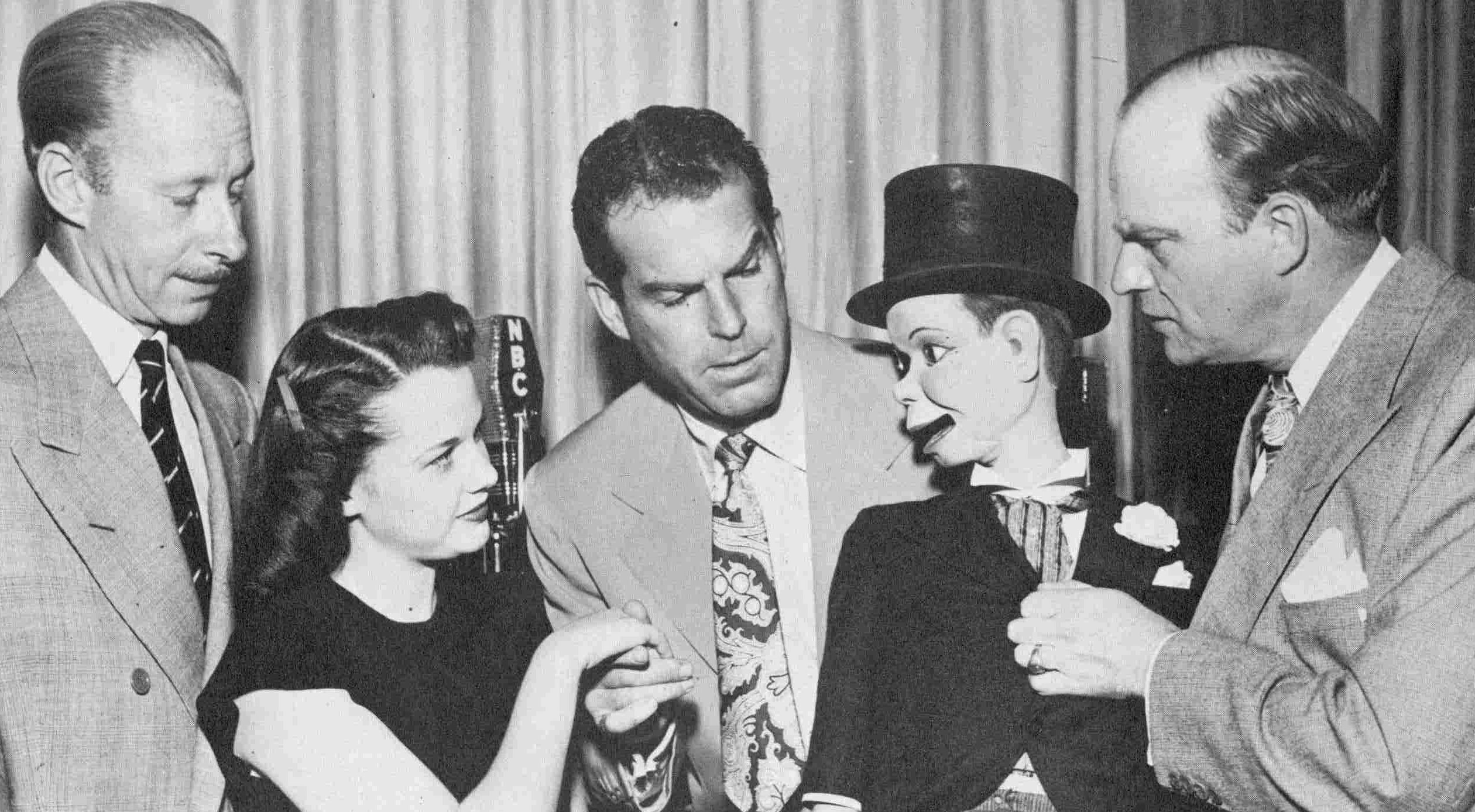
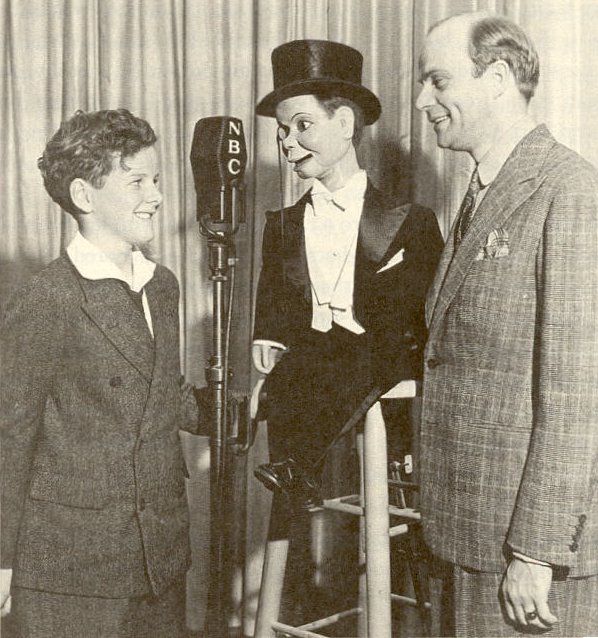
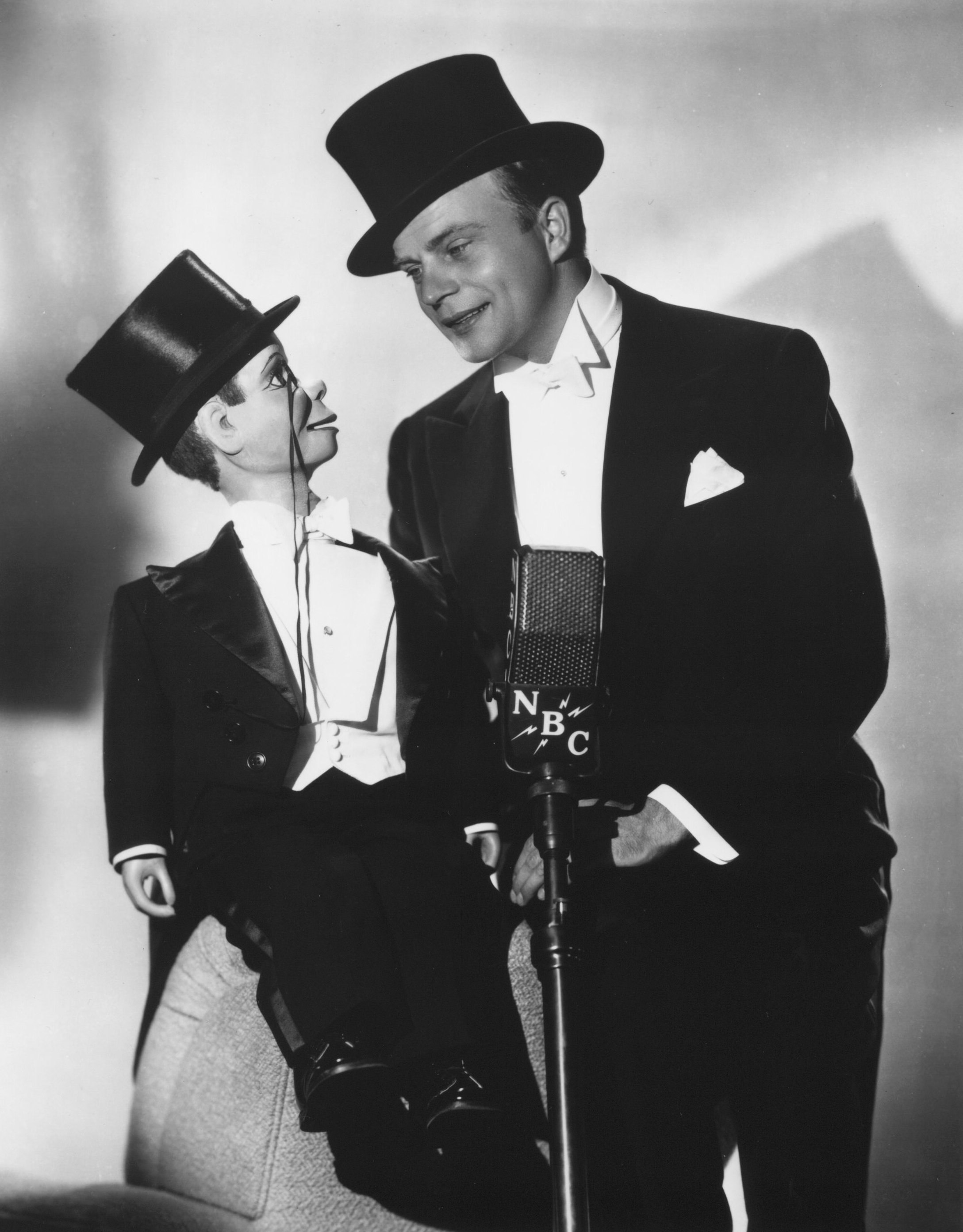
bergen&mccarthy4But the biggest draw on The Chase and Sanborn Hour was a comic ventriloquist and his wisecracking dummy…that’s right, a ventriloquist performed on radio.  His name was Edgar Bergen, and with his wooden sidekick Charlie McCarthy (not to mention Mortimer Snerd and later Effie Klinker) Bergen had been able to turn a highly-touted appearance on Rudy Vallee’s The Royal Gelatin Hour in December of 1936 into a thirteen-week engagement that then led to his hiring as one of the Chase and Sanborn show headliners.  Not only that—Bergen & McCarthy would soon become the most popular segment of the show, so much so that people would often simply say they never missed the chance to listen to “Charlie McCarthy.”


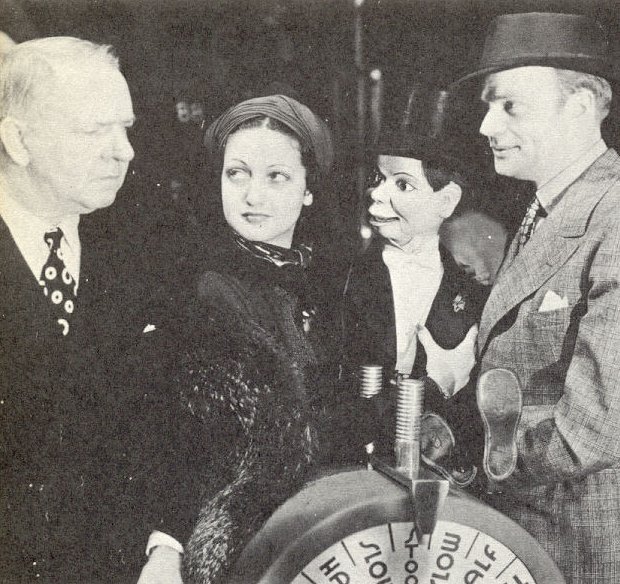
bergen&mccarthy3People who ask the question “How could a ventriloquist succeed on radio?” are no doubt unfamiliar with the talent that was Edgar Bergen.  Edgar was gifted with the same immaculate timing as Jack Benny, and though the performer was somewhat shy and self-effacing in real life, something seemed to possess him when he was on stage; whereupon he transformed a dummy carved out of a simple block of wood into a living, breathing personality…one that played a naughty and often sarcastic schoolboy to Bergen’s stern authoritarian figure.  W.C. Fields (a man who despite his talent was not known for his generosity when it came to his peers) had nothing but praise for Edgar’s keen sense of comedy…though as Don Ameche once told an interviewer, The Great Man really hated Bergen’s dummy.  The “feuds” between Charlie and Fields were often the comedic highlights of the Chase and Sanborn program—and though W.C. left the program after four months, he would return to Bergen and McCarthy’s show as a frequent guest, even squaring off against the duo in his 1939 feature film comedy You Can’t Cheat an Honest Man.


maecharlieBecause of his “youth,” Charlie was able to get away with a lot of behavior that might otherwise be frowned upon from any other individual: his saucy replies to Bergen’s attempts to enforce discipline were greeted by approving laughter from both live and radio audiences, and the dummy was also able to flirt shamelessly with female guests without fear of reprisal.  Well, almost…there was an infamous broadcast from December 12, 1937, when Mae West was the guest star.  An “Adam and Eve” sketch featuring Mae and Don Ameche was heavily criticized for its irreverence (though it’s amazingly tame by today’s standards).  Adding insult to injury, listeners were shocked at an exchange between West and Charlie , which only sounded spicy due to West’s sultry delivery.  Besieged by listeners, ministers, congressmen and other individuals agog that a “family program” would feature such shenanigans, NBC and J. Walter Thompson (the agency handling Chase & Sanborn’s account) later apologized for the offense.  Mae West did not escape so cleanly; she was banned from network radio for an indefinite time period—even the mere mention of her name was verboten.


bergen&mccarthy5When the contracts of Ameche, Eddy and Lamour were up for renewal, Chase & Sanborn decided to prune their weekly show to a half-hour and just concentrate on the elements that were the broadcast’s big draw: namely, Charlie and Edgar.  They continued to sponsor the series under the Standard Brands umbrella, which also included products like Royal Pudding and Tenderleaf Tea.  Don Ameche returned to the program in the 1940s as an announcer-performer, and Nelson Eddy was a favorite guest star, but for the most part it was Bergen’s preserve as he interacted with Charlie, Mortimer Snerd and the show’s guest stars.  Bud Abbott & Lou Costello were regulars on the show in the 1941-42 season (they would get their own program in the fall of 1942), and orchestra leader Ray Noble would often provide laughs as, in Edgar’s words, “a silly ass Englishman.”  Other regulars on the show at various times included William Gaxton & Victor Moore, Barbara Jo Allen (as Vera Vague), Richard Haydn (as Professor Lemuel Carp), and Pat Patrick as the sing-songy Ercil Twing.  A number of female vocalists also appeared over the years: Dale Evans, Joan Merrill and Anita Gordon, to name just a few.
 

bergen&mccarthy2Throughout the 1940s, Edgar Bergen & Charlie McCarthy’s Sunday night show was as much an institution as Jack Benny’s program…but Bergen soon fell into the same ratings trap that removed Fred Allen’s show (the stiff competition from ABC’s Stop the Music).  Edgar wisely chose to exit his NBC show in December of 1948 (while Fred futilely continued trying to put an end to the Stop the Music juggernaut) and reemerged on CBS in the fall of 1949 under his new sponsor of Coca-Cola (later Richard Hudnut and Kraft Foods).  Bergen never achieved the later television success of his contemporaries; he tried a few TV pilots and later hosted a You Bet Your Life-type quiz show in the form of Do You Trust Your Wife? from 1956-57.  He was mostly content to reserve his appearances to boob tube guest roles and occasional acting gigs in movies.  However, he could brag that he was one of the last big-time radio comedians to leave the airwaves—his Edgar Bergen Hour had its final curtain call on CBS on July 1, 1956.


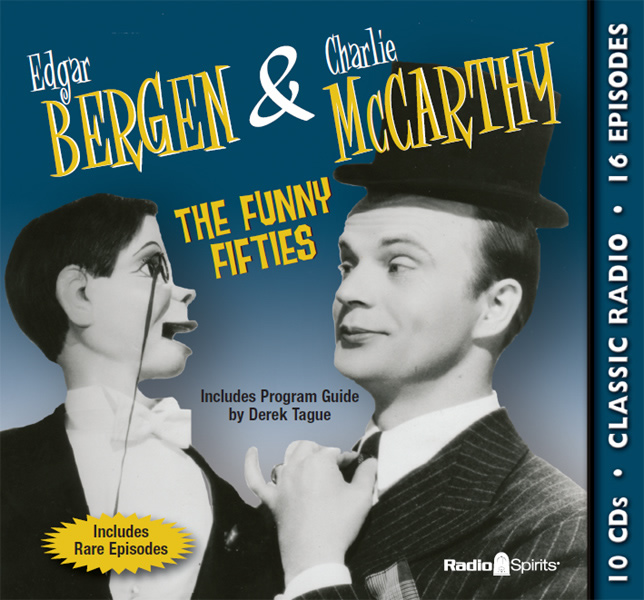
20352In honor of the 76th anniversary of Edgar & Charlie’s long-running radio series, why not check out some of Radio Spirits’ fine CD collections featuring the famous duo?  The collections Ladies’ Men and Homefront Charlie will be of special interest to those fans of their broadcasts from the 1930s and 1940s (and I will confess that I have a small bias for these sets, owing to my liner note contributions) and you can also listen to some rare, uncirculated shows from the 1950s in—what else?—The Funny Fifties.  Happy anniversary, Edgar, Charlie and Mortimer—from your friends at Radio Spirits!

“And now, let’s see what’s going on down in Pine Ridge…”

l&a2

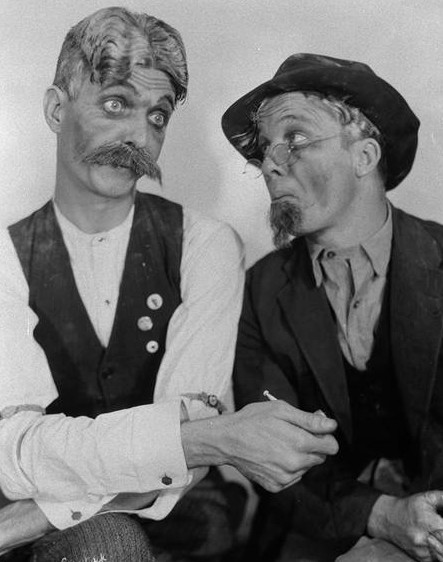
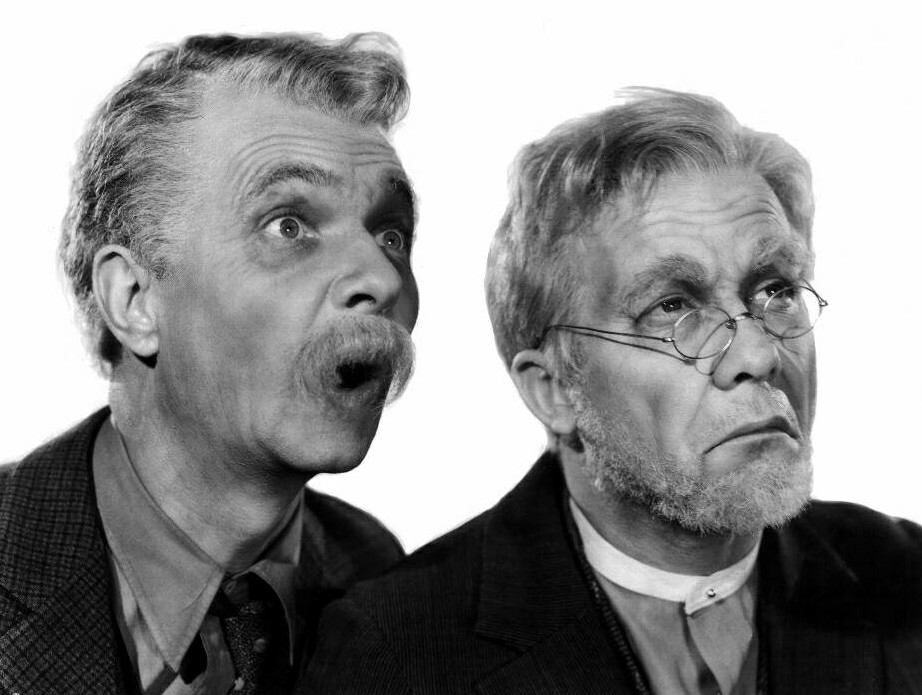
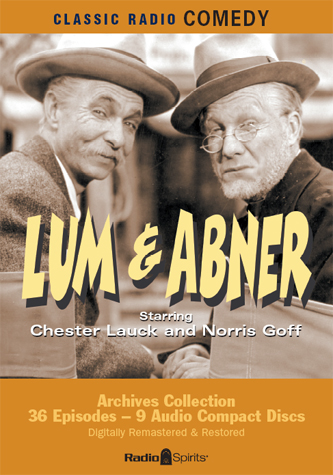
Eighty-two years ago on this date, radio listeners paid their first visit to the sleepy little Arkansas hamlet of Pine Ridge to sit around the stove at the general mercantile known as “The Jot ‘Em Down Store.”  An emporium run by partners Columbus “Lum” Edwards (played by Chester “Chet” Lauck) and Abner Peabody (Norris “Tuffy” Goff) was at the center of a long-running comedy serial that detailed the offbeat goings-on in a small town nestled in the foothills of the Ouachita Mountains.  That program, Lum and Abner, premiered over station KTHS in Hot Springs, Arkansas in 1931…and would be heard over nearly every major radio network (NBC, Mutual, Blue, ABC and CBS) for the next twenty-three years.
 

l&a1Chester Lauck and Norris Goff developed a life-long friendship when their respective families moved to the town of Mena, Arkansas (pop 4,000) in the 1910s.  Both men graduated from the University of Arkansas, and formed a partnership doing blackface comedy as a hobby while working regular jobs.  At a fundraiser for flood relief at KTHS in 1931, Lauck and Goff had arrived and were prepared to do their blackface act…and then noticed that all the other acts auditioning had planned to do the same (the radio serial Amos ‘n’ Andy had reached the peak of its popularity by this time).


lumabnerSo the two men decided to perform some of their “fellers from the hills” material instead.  Lauck and Goff had learned to imitate the dialects of friends and relatives from the Mena area—individuals the duo called “hill people.”  (A group that I, as a native West Virginian, affectionately dub “hillbillies.”)  The success of their audition led to a spot on KTHS for two months before “Lum and Abner,” as their characters became known, auditioned for a spot on an NBC station in Chicago for some executives from Quaker Oats.  (The story goes that the duo was nervous that their “old men” act wouldn’t go over with the suits so they asked the company’s representatives to turn around and face the wall while listening.  Quaker Oats liked what they heard, and gave them the job.)


l&a7Lum Edwards (pronounced “Eddards”) was the levelheaded member of the team, while Abner Peabody (a fanatical checkers player) was the more naïve of the two.  It was, in many ways, a rural version of the popular Amos ‘n’ Andy: in addition to Lum, Lauck played Cedric Weehunt (the slightly dense son of Caleb Weehunt, the town blacksmith), Snake Hogan (the local tough), and Milford “Grandpappy” Spears (a cantankerous old cuss whose son Luke owned the local cafeteria).  Goff took on the roles of Dick Huddleston (the town postmaster), Mousie Gray, Doc Miller, and Squire Skimp (the show’s villain—a combination of con man and loan shark).  Lum and Abner also followed the precedent set by Amos ‘n’ Andy in that many of the show’s female characters—Sister Simpson, Aunt Charity Spears, and Abner’s much-talked about wife “Lizzabeth” —were rarely heard on the show.


l&a5Both L&A and A’n’A mined laughs from dialect humor, and employed a successful formula of two parts comedy to one part soap opera/serial.  But, OTR historian Elizabeth McLeod once drew the definitive distinction between the two shows in an online essay many years ago, pointing out that while Amos ‘n’ Andy “struggled thru the stark, often grim business of earning a living in Depression-era Urban America,” its hillbilly counterpart went the opposite direction, offering up a (wonderful) world of hilarious escapism and absurdity:


In the creation of loopy nonsense, Lauck and Goff had few peers. Only in Pine Ridge would the citizens eagerly buy discount eyeglasses from a man at the carnival—and then spend a full week wondering why they kept crashing into each other. Only in Pine Ridge would Lum decide to corner the market on hogs by starting a chain letter—and then decide to celebrate his success by having a statue of himself constructed from poured concrete. And on and on it went.


“When the real world looked like that, who wouldn’t rather head on down to Pine Ridge?” asked McLeod…and during the course of its lengthy run over the airwaves, audiences made Pine Ridge one of their favorite fictional towns.  (So much so that the burg of Waters, Arkansas legally changed its name to Pine Ridge in 1936…and put up their own Jot ‘Em Down Store [and Museum], which is still standing today.)


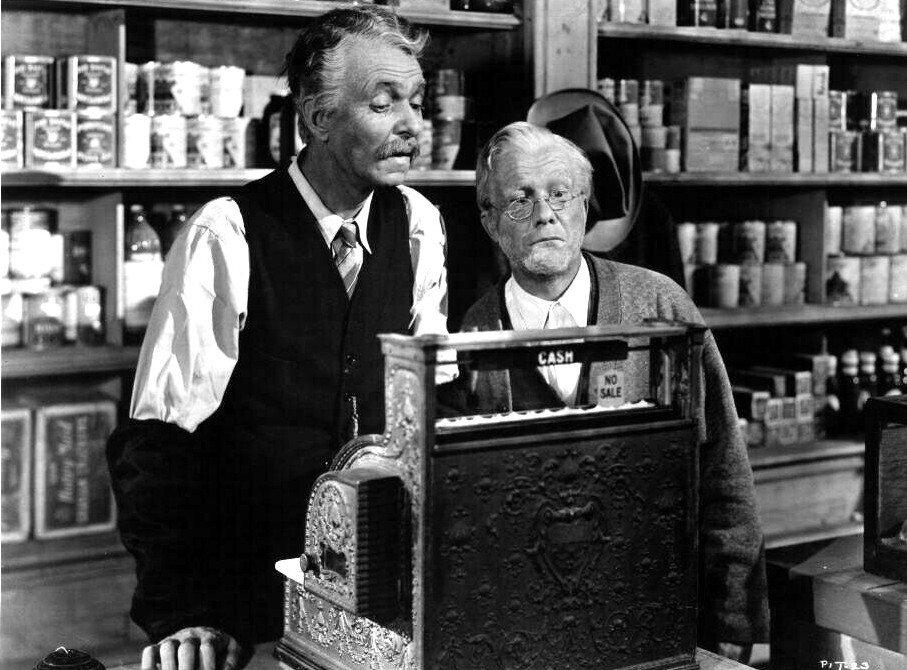
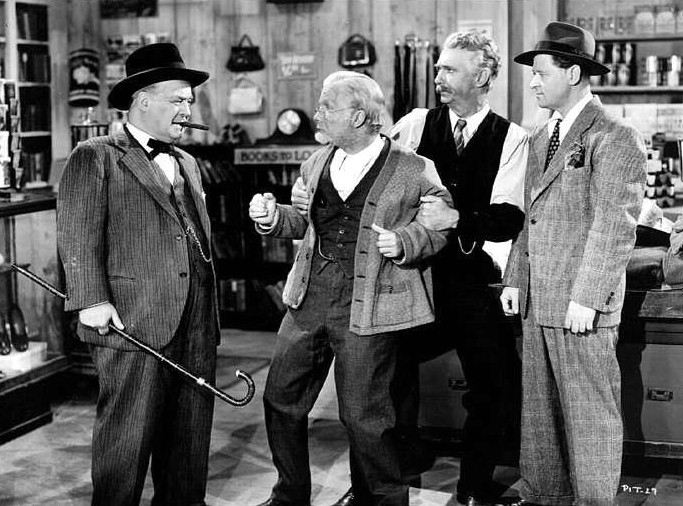
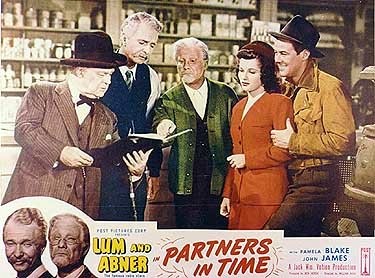
partnersintimelobbyThe success of Lum and Abner led to six feature films (released through RKO) starring Chet and Norris in the radio roles that made them famous, beginning with Dreaming Out Loud in 1940 and ending with the delightful Partners in Time in 1946.  (A seventh film, Lum and Abner Abroad, was released in 1956—but was essentially three half-hour busted TV pilots stitched together to make a feature.)


l&a6For the most part, Lum and Abner was a fifteen-minute, five-day-a-week broadcast, sponsored at various times by Horlicks Malt, General Foods and Miles Laboratories.  But, in the fall of 1948, the program became a half-hour series for Frigidaire, with a live audience and orchestra.  Joining Lauck and Goff were Clarence Hartzell (using his Uncle Fletcher voice from Vic & Sade) as Benjamin Franklin Withers (a half-deaf old codger), and well-known personalities like ZaSu Pitts, Andy Devine, Opie Cates, Francis “Dink” Trout and Cliff Arquette.  After a second season where Ford paid the bills, the show reverted back to its quarter-hour format briefly in 1953-54 before leaving the airwaves for good.


19672One of the happiest stories of old-time radio is that much of Lum and Abner from 1935 and onward has been preserved for modern-day listeners.  I’ve always been pleased to trumpet the fact that Lum and Abner was my official introduction to the world of old-time radio; I heard the program as a youngster over WCAW in Charleston (it’s still heard in WV today, over WVOW in Logan), and I’ve been a fan of the show ever since.  But, you don’t need to move to the Mountain State to get your Pine Ridge fix—Radio Spirits has a slew of CD collections (four volumes, to be exact—and a fifth one is on the way this spring!) featuring some of the program’s classic broadcasts from 1942.  (As Abner would say: “Bless their hearts…buh-less their little hearts!”)

Happy Birthday, Al Hodge!

alhodge8

The Ravenna, Ohio native born on this date 101 years ago had no way of knowing he would take on two acting jobs that would make him a hero to millions of kids glued to both radio and early TV screens.  But, that’s exactly what happened to Albert E. “Al” Hodge when he took a job with the legendary WXYZ in Detroit in the 1930s…and later became one of the early stars on the fledgling DuMont Television network (known by many today as “the forgotten network”).


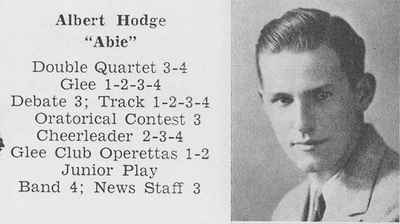
alhodge1While attending Ravenna High School in his teen years, Al Hodge—known to his friends as “Abie”—made both sports and acting his main extracurricular activities…and he was so fond of the latter that he majored in drama at Miami University in Oxford, Ohio, graduating in 1934.  Hodge toured a while with a traveling company of actors known as The Casford Players before landing a position at Detroit’s WXYZ.  Al did everything from write editorials and ad copy, to announce football games and spin records as a disc jockey.  He also wrote and produced for two of the station’s popular dramatic series: The Lone Ranger and Challenge of the Yukon.


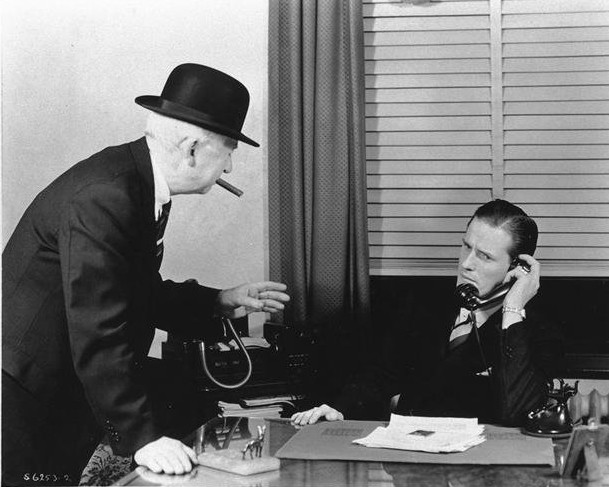
alhodge10Al went on to become the first actor to voice WXYZ’s The Green Hornet, which premiered over the airwaves on January 31, 1936.  Created as a companion piece to the station’s mega-hit The Lone Ranger, The Green Hornet told the tale of newspaper publisher-playboy Britt Reid, who donned a mask and disguise to take on underworld types that operated beyond the reach of the authorities in his fair city.  Like his distant Western relation—and audiences would soon learn with the passage of several years just how distant—the Hornet worked outside the law in order to assist the police…yet often found himself accused of being an outlaw himself.  The Hornet had a sidekick (just as the Lone Ranger had Tonto) in his faithful valet Kato—but eschewed the great horse Silver ridden by ol’ LR in favor of a suped-up automobile called The Black Beauty.


Hodge became so identified as the voice of the Hornet that when Trendle made a deal with Universal Pictures to bring his hero to the silver screen in the form of a serial, Al dubbed in the lines spoken by the Hornet so audiences would feel reassured by the familiar voice.  Hodge played the Hornet until 1944, when he left the program to serve a stretch in the U.S. Navy during World War II.  During his hitch in the service, he was bedridden for nearly a year with a case of pleurisy.


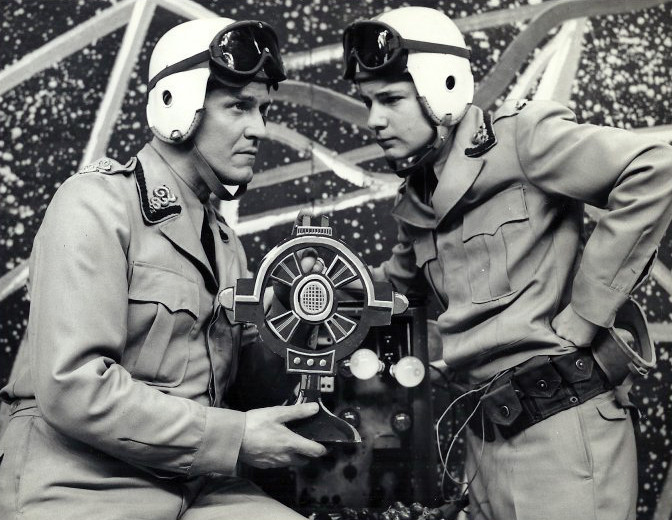
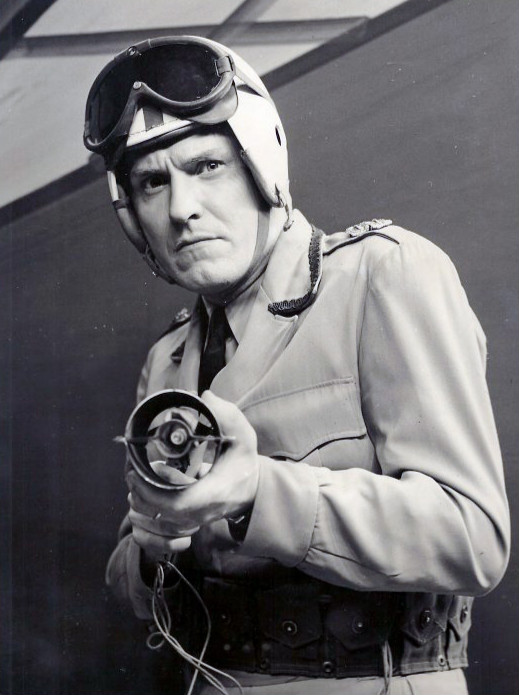
alhodge5Hodge continued to work a number of radio jobs after leaving the Navy—he turned up in guest roles on series like Nick Carter, Master Detective and Gangbusters, as well as The Radio Reader’s Digest, Crime Club, Boston Blackie and Young Widder Brown.  But, Al got the opportunity to break into the medium of television when Richard Coogan left the kiddie science-fiction show Captain Video and Video Rangers seventeen months after it went on the air for DuMont in June of 1949.  It would be Hodge who was best remembered as the Captain, the hero of millions of viewers who tuned in five days a week (and occasionally six, when a companion series entitled The Secret Files of Captain Video began on Saturdays from September 1953 to May 1954, alternating with Tom Corbett, Space Cadet) to see him defeat such opponents as the diabolical Dr. Pauli (Hal Conklin)…who dressed like a movie gangster and spoke in an accent more befitting of a Nazi or Soviet spy.  Captain Video also had a sidekick known only as The Video Ranger (any relation to the Lone Ranger is pure speculation), who was played throughout the series’ run by Don Hastings, brother of Bob (a.k.a. radio’s Archie Andrews).


alhodge6The DuMont network folded in 1955, and Al Hodge soon found work (still as Captain Video) appearing on Wonderama, a local New York children’s show (on WABD) from 1955 to 1956, and Captain Video and His Cartoon Rangers (also strictly a NYC show, in which the hero of children everywhere unspooled Superman and Betty Boop cartoons until 1957).  He later hosted The Super Serial Show (a.k.a. Serial Theater) on station WNTA in Newark in 1959, and emceed The Space Explorer’s Club on WOR-TV in 1961.  (The producers of this show gave him a break and allowed him to host the show as Al Hodge instead of Captain Video.)  Due to his typecasting (everywhere he went people greeted him as “Captain Video”), Al worried about his ability to continue to find acting work.  Although, he did land occasional roles on series like Naked City and M Squad, and appeared in Lover Come Back (1961) and The Outsider (1961).


By the late 1960s and early 1970s, opportunities for acting jobs had completely dried up, and Al was forced to take menial, low-paying jobs (he worked as a security guard at one time).  He spent his remaining years living at the George Washington Hotel in New York City, where he passed away in 1979.  Sadly, Hodge didn’t have a nickel to his name.


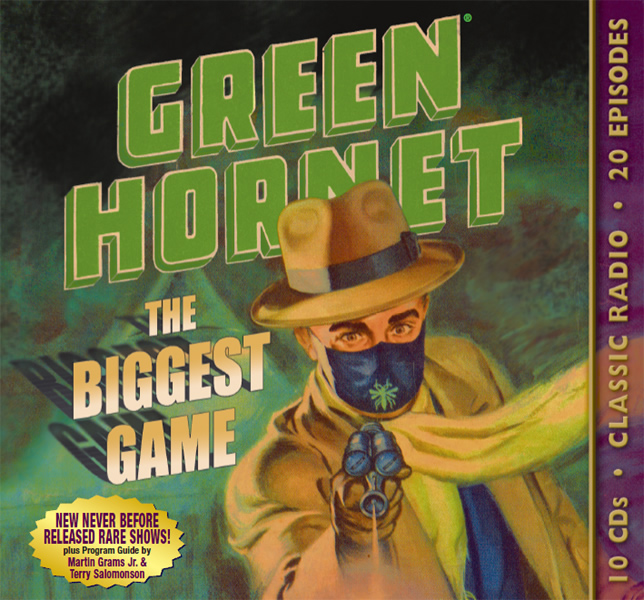
19832The unhappy ending of Al Hodge’s personal story does not negate the hours of joy that he brought to young people as both TV’s Captain Video and radio’s The Green Hornet.  Radio Spirits has collected some of Hodge’s radio work, notably in the CD set The Green Hornet: The Biggest Game.  Those twenty broadcasts from 1939 are among the earliest recordings to have survived from the period when Al Hodge played the legendary crime fighter who “hunts the biggest of all game: public enemies that even the G-Men cannot reach!”

“Always ready with a hand for oppressed men…and an eye for repressed women…”

falcon1

Seventy years ago on this date in history, the literary sleuth created by Drexel Drake made his radio debut on the Blue Network with a series that would entertain listeners until November 29, 1954: The Adventures of the Falcon.  No one ever really explained to the radio audience’s satisfaction why a shamus named Michael Waring adopted the handle of “Falcon”…but the program, a sprightly mystery with light moments of comedy and romance, was so entertaining that no one protested too loudly, either.


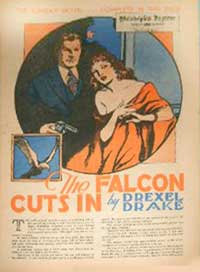
falcon5Drake’s creation was first introduced to the world in a 1936 novel titled The Falcon’s Prey.  According to one researcher, the character (who also went by the name Malcolm J. Wingate) adopted the “Falcon” nickname while on a trip from Cambridge to London.  The detective went on to appear in two additional novels, The Falcon Cuts In (1937) and The Falcon Meets a Lady (1938), and made his last print appearance in a short story for The American Magazine in November of 1938 called “The Falcon Strikes.”


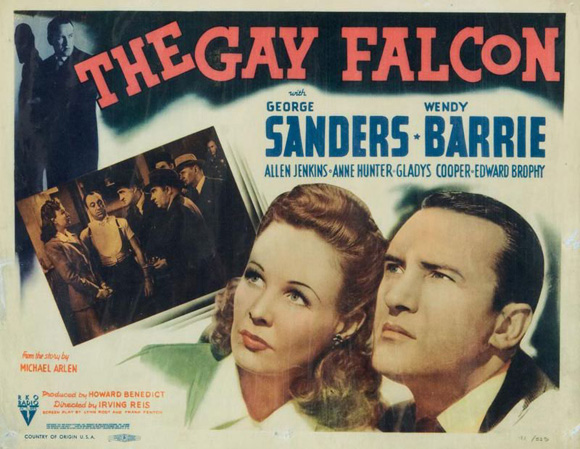
falcon7Further complicating the history of this character’s origin, author Michael Arlen also created a “Falcon” character in a short story for Town & Country magazine in 1940: “Gay Falcon.”  That bird (sorry) became the focus of a 1941 RKO film entitled The Gay Falcon, which the studio fashioned for George Sanders.  This explains the confusion as to why, in the movies, The Falcon was known as Gay Lawrence (even though his handle in the Arlen short story was Gay Stanhope Falcon). This may not seem important…except that it was the RKO picture series that prompted the show’s adaptation for radio.  (Original Falcon author Drake received all the credit in the aural version.)


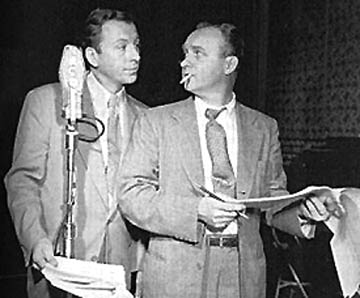
falcon2Of course, by the time the radio show premiered in April of 1943, he was Michael Waring.  This version of the character was a cut above your average aural gumshoe.  He possessed a keen eye for detail that kept him from having to use his fists most of the time, and he brandished a rapier-like sarcasm toward the fools he did not suffer gladly (these were often representatives of the law).  Some episodes featured him in the company of a gal Friday who answered to Nancy (played by Joan Alexander).  His nemeses during the show’s decade-long run included Sergeant Johnny Gleason (Mandel Kramer) and Sergeant Corbett (Ken Lynch).  The Falcon was broadcast from New York for practically its entire run, and Big Apple radio thespians like Joan Banks, Robert Dryden, Elspeth Eric, Ethel Everett, John Gibson and Everett Sloane were often heard in supporting roles.


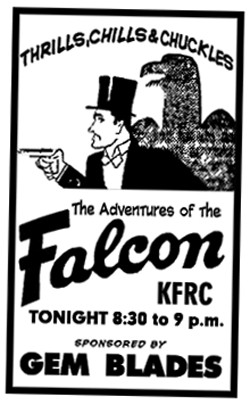
falcon3Barry Kroger played Waring in The Falcon‘s Blue Network run in 1943 (which ended in December).  When the show moved to Mutual in July of 1945, James Meighan inherited the role for two years before handing it off to Les Tremayne.  Les Damon was emoting as the sleuth by May of 1950 (the show had, by that time, moved back to NBC).  And, before the series closed its case file permanently in 1954, George Petrie was wearing Michael Wearing—er, Waring’s shoes.  The series was sustained throughout most of its run, but from 1945 to 1947 The Adventures of the Falcon had its bills paid by its best remembered sponsor: Gem blades and razors.  A classic commercial for the product featured the tolling of a clock while an announcer warned men to “Avoidfiveo’clockshadow…”  A loud chorus would then chime in: “Use Gem Blades!  Use Gem Blades!  Use Gem Blades!”


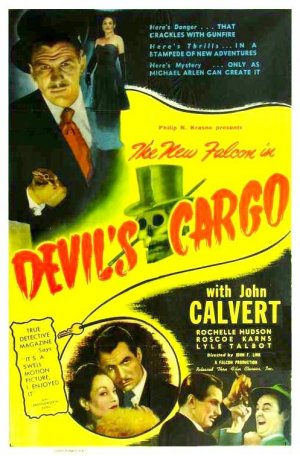
falcon5The independent film studio Film Classics hoped to cash in on the popularity of the radio series, and released three films in 1948.  John Calvert starred as Michael Waring (though his last name is “Watling” in the first two releases) in: Devil’s Cargo (1948), Appointment with Murder (1948) and Search for Danger (1949).  Then in 1955, silver screen tough guy Charles McGraw brought Waring to the boob tube in a syndicated TV series (comprised of thirty-nine episodes), The Adventures of the Falcon—except there was none of that namby-pamby “Michael” stuff…he went by “Mike.”


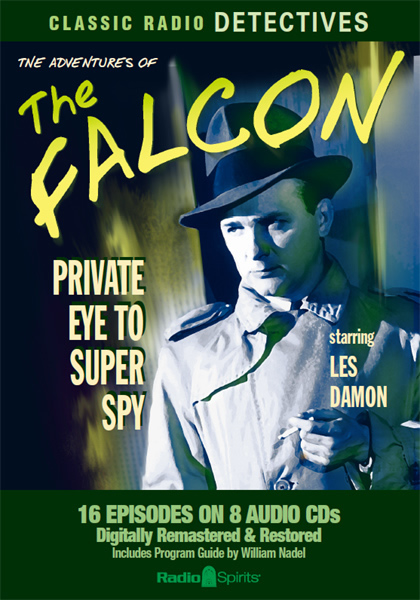
20080Our advice to you would be to stick with the radio gumshoe, whose adventures are featured on the Radio Spirits collections The Falcon: Count Me Out Tonight, Angel (which features a 1945 broadcast with James Meighan…the other fifteen with Les Damon) and The Falcon: Private Eye to Super Spy (all sixteen episodes feature Damon).  The second collection chronicles the transition made by Michael Waring from shamus to espionage agent, in his new career flushing out Communist spies and infiltrators who would rend the very fabric of American society!  (Top that, Johnny Dollar!)

Happy Birthday, Bea Benaderet!

benaderet3

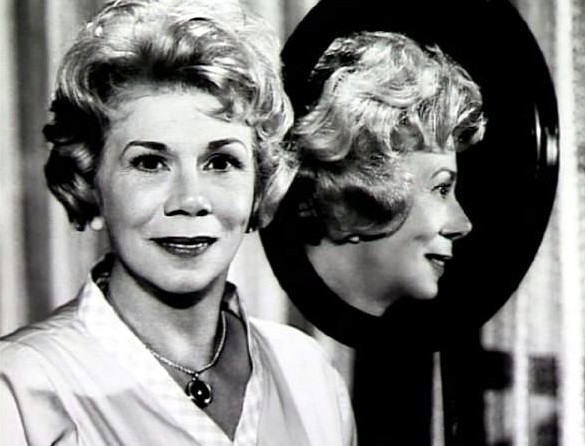
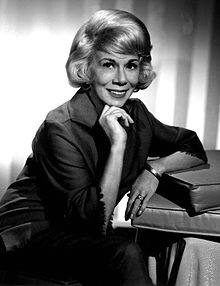
One hundred and seven years ago on this date in New York City, Samuel and Margaret Benaderet welcomed one of radio and TV’s finest supporting comedic talents into the world.  Their daughter Beatrice—or Bea, as she was better known—would use her vocal gifts (including a one-of-a-kind giggle) on shows headlined by major radio-TV personalities like Jack Benny and George Burns & Gracie Allen…and eventually would receive her moment in the star spotlight as well.


Bea_BenaderetAfter graduating from St. Rose’s Academy in San Francisco, CA (where the Benaderets moved shortly after Bea’s birth), Bea began her show business career by getting work at various local radio stations.  She eventually ending up at KFRC—where future NBC-TV wunderkind Sylvester (Pat) L. Weaver was employed as the manager.  Benaderet later moved to Los Angeles and began appearing on network radio programs, notably The Campbell Playhouse—the sponsored version of Orson Welles’ Mercury Theatre on the Air.  Although Bea is best remembered for her contributions to radio comedy, she was also adept at dramatic roles, with performances on such shows as The Adventures of Sam Spade, The Cavalcade of America, Family Theatre, Lights Out, The Lux Radio Theatre, Mayor of the Town, Suspense and This is Your FBI.


benaderet2It would take nearly a lifetime to list all of the radio comedy shows on which Bea appeared as a regular.  She played the adenoidal maid Gloria on The Adventures of Ozzie & Harriet (as well as Mrs. Waddington), and took over for Isabel Randolph’s upper crust Abigail Uppington as Millicent Carstairs on Fibber McGee & Molly.  Benaderet also emoted as Eve Goodwin, a girlfriend of radio’s beloved water commissioner, Throckmorton P. Gildersleeve (Hal Peary) on The Great Gildersleeve, and tut-tutted as Bertha Bronson, mother to the titular working gal of Meet Millie.  She menaced Dennis Day as dragon (land)lady Clara Anderson on A Day in the Life of Dennis Day, palled around with Marie Wilson’s Irma Peterson as Amber Lipscott on My Friend Irma, and was a one-time mom to Judy Foster on A Date with Judy.  Bea also worked on shows starring Red Skelton, Mel Blanc, Ed Gardner (Duffy’s Tavern), Jimmy Durante and Freeman Gosden & Charles Correll (Amos ‘n’ Andy).


benaderet10Old-time radio fans remember Bea Benaderet for three programs starring Lucille Ball, Jack Benny, and George Burns & Gracie Allen.  Bea played Gracie’s best bud Blanche Morton on Maxwell House Coffee Time—though she wasn’t always cast as Blanche; surviving shows also have her playing other parts as different actresses took over as Blanche.  On The Jack Benny Program, Benaderet also essayed multiple parts…but her most famous was that of Gertrude Gearshift, the telephone operator who – along with her chum Mabel Flapsaddle (Sara Berner) – occasionally went out on dates with the star when she wasn’t poking fun at him.  On Lucille Ball’s My Favorite Husband, Bea started out as Lucy’s character’s mother-in-law before settling into the part of Iris Atterbury, Liz Cooper’s confederate and confidante…and wife of Liz’s husband’s boss, Rudolph (Gale Gordon).  Both Benaderet and Gordon played Atterbury-types on a short-lived series entitled Granby’s Green Acres…which would also play a small role on Bea’s TV future.


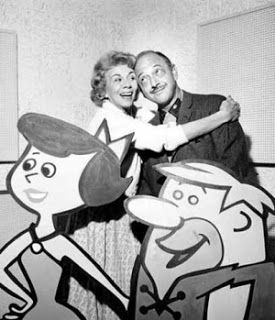
benaderet7When Lucy began laying the groundwork for Husband’s eventual transition to TV as I Love Lucy, she wanted Bea to be Lucy Ricardo’s boon companion, Ethel Mertz…but Bea was too busy working on George and Gracie’s TV show (with occasional appearances on Jack Benny’s program as well).  In addition to her radio and TV commitments, Benaderet supplied voices for many of the cartoons from Warner Bros’ Termite Terrace (notably “Granny” in the Tweety & Sylvester shorts).  It was that work which led her to be hired by Bill Hanna and Joe Barbera, who brought TV’s animated primetime series to life with The Flintstones.  Working with radio veterans Alan Reed, Mel Blanc and Jean Vander Pyl, Bea supplied the voice of Betty Rubble, a gig she worked until 1964.


Bea BenaderetDuring her Burns & Allen days, Bea became close friends with one of the show’s writers, Paul Henning—and when Henning was putting together what would become the monster sitcom hit The Beverly Hillbillies, Benaderet lobbied hard for the role of Granny.  After seeing Irene Ryan’s screen test, however, Bea knew that Irene was all right for the part…and instead, settled for a consolation prize as Cousin Pearl, a relative of the family Clampett.  For the 1963-64 fall TV season, CBS gave Henning a half-hour on their schedule to create any show he wanted (on the strength of Hillbillies’ phenomenal success)…and that’s when Bea Benaderet finally got her chance for top billing.


benaderet11Henning borrowed a bit of background from his wife Ruth (whose family ran a hotel that catered to salesmen traveling by railroad) to create Petticoat Junction.  This sitcom starred Bea as widowed innkeeper Kate Bradley, who oversaw a small inn called The Shady Rest in a rural hamlet affectionately known as Hooterville.  Aided (though some might say hampered) by Uncle Joe Carlson (Edgar Buchanan), Kate attempted to keep the hotel going (along with her three comely daughters) despite the constant threat of the closure to the railroad spur line that brought most of her clientele.  Junction became such a smash that CBS agreed to air a semi-spinoff in the form of Green Acres beginning in the fall of 1965.  Acres was an updated take on the radio sitcom that Bea had appeared on with Gale Gordon – and because both shows were set in the same town there was a great deal of interaction between the two series.


Sadly, Bea Benaderet passed away in 1968, though her signature series would stay on the air for two more seasons.  She’s inarguably a favorite here at Radio Spirits…and we’d suggest checking out some of her work on collections like Wit Under the Weather (Jack Benny), Stick Around, Brother (Red Skelton), As Good as Nuts (Burns & Allen), That Ain’t the Way I Heared It! (Fibber McGee & Molly) and A Day in the Life of Dennis Day.

Happy Birthday, Frank Lovejoy!

franklovejoy

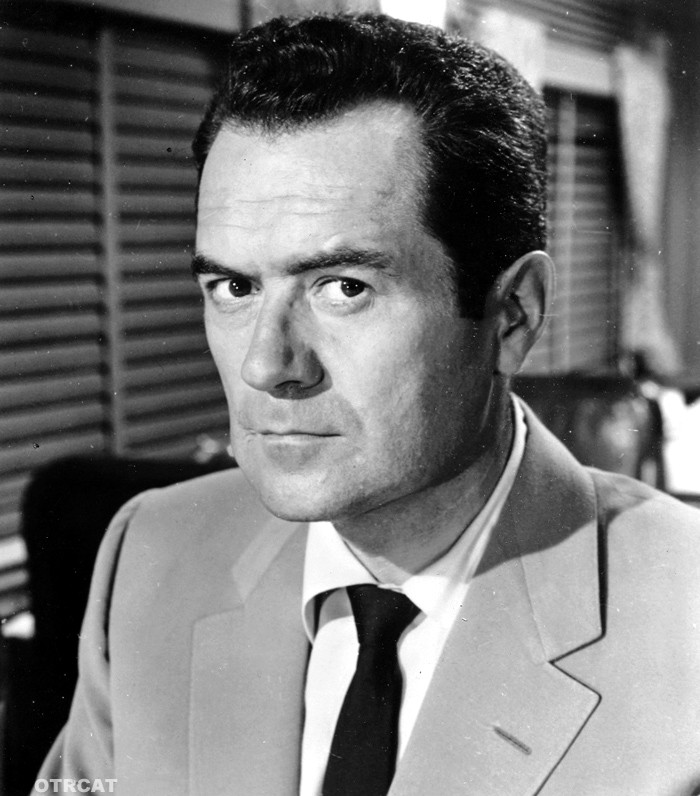
The actor fondly remembered by old-time radio fans as the reporter who covered the “night beat” for the fictional Chicago Star was born 101 years ago today.  OTR devotees take pride in being able to identify certain voices while listening to broadcasts from long ago…and Frank Lovejoy had one that was unmistakable.  From his earliest beginnings on radio soap operas in the 1930s to his later TV and movie showcases, Lovejoy’s voice projected an authoritarian, no-nonsense presence—coupled with a versatility that kept him from being too overbearing—making him what many have described an “everyman.”


lovejoy8Lovejoy was a native of The Bronx but spent most of his formative years growing up around New Jersey.  Had it not been for the stock market crash in 1929, Frank might have pursued a lucrative career on Wall Street—instead, he drifted into show business, making stage appearances on Broadway in 1934.  He supplemented that with a lot of radio work, appearing on serialized programs like The Adventures of Jungle Jim and Superman; daytime dramas such as The Life of Mary Sothern and Betty and Bob; and nighttime favorites such as Gang Busters.  One of Frank’s better-known gigs at this time was starring in a syndicated Green Hornet knock-off called The Blue Beetle, in which he played a rookie patrolman given super powers and a secret identity to fight crime.


Frank acquired a reputation as a dependable actor on the “soaps,” regularly appearing on Brave Tomorrow, Bright Horizon, Joyce Jordan, M.D., Today’s Children and We Love and Learn, among others.  He was also a mainstay on crime dramas; he played Lt. Bill Weigand on Mr. and Mrs. North in its early years, and later starred in a series based on Craig Rice’s literary sleuth John J. Malone in the series Murder and Mr. Malone (also known as The Amazing Mr. Malone) on ABC from 1947-49.  Lovejoy worked alongside radio greats like Arch Oboler (Arch Oboler’s Plays, Lights Out) and Norman Corwin (The Columbia Workshop, Twenty-Six by Corwin), and on wartime series like This is Our Enemy and The Man Behind the Gun.  In the early New York years of This is Your F.B.I., Frank served as the program’s narrator.  Other programs on which he could be heard included Box 13, Escape, Mr. District Attorney, The Molle Mystery Theater, Romance, Suspense and The Whistler.


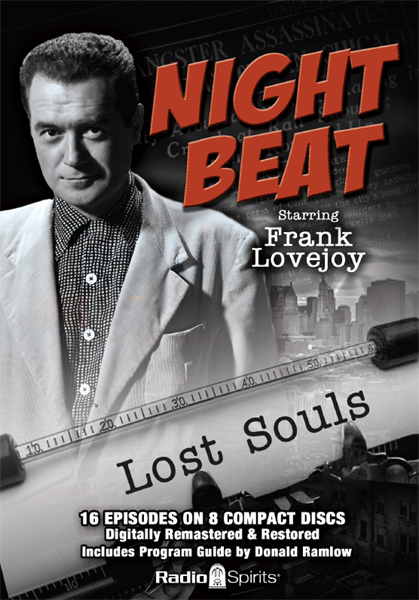
20439It was the dramatic program Night Beat, however, that would cement Frank Lovejoy’s radio fame.  Though its run was relatively brief (1950-52), the hard-hitting newspaper drama about a Chicago reporter named Randy Stone, and his adventures on the swing shift, remains one of the most underrated programs from Radio’s Golden Age.  Nearly 100 broadcasts have been preserved for today’s listeners, who may still enjoy a show that features both humorous and tragic stories…and fine acting turns from many of Radio Row’s thespic veterans, including Ted de Corsia, Jeanne Bates, Lawrence Dobkin, Lurene Tuttle, William Conrad and Joan Banks (a.k.a. Mrs. Frank Lovejoy).


lovejoy14By the time Night Beat premiered on NBC Radio in 1950, Frank was already starting to stake out a film career.  His motion picture debut was in 1948’s Black Bart…and though the actor appeared in a number of well-received movies, among them Home of the Brave (1949), Goodbye, My Fancy (1951) and The Winning Team (1952), Lovejoy occasionally had difficulty transferring his radio strengths to a visual medium.  He often came across as sort of a stiff (if effective) hero in such films as I Was a Communist for the F.B.I. (1951), House of Wax (1953) and the camp classic Shack Out on 101 (1955).  But Frank was capable of rising to the occasion with solid performances in movies like In a Lonely Place (1950), in which he plays Humphrey Bogart’s detective pal, and The Hitch-Hiker (1953), which finds him and Edmond O’Brien menaced by the titular villain, played by William Tallman.  Lovejoy’s best performance remains that of his Average Joe who finds himself inescapably tangled with hardened criminal Lloyd Bridges in the 1950 noir Try and Get Me! (also known as The Sound of Fury).  This one is very difficult to track down…but, since it has recently been restored by the Film Noir Foundation perhaps a DVD release will follow soon.


lovejoy20Frank Lovejoy also made inroads on the small screen, as a guest star on such programs as Lux Video Theatre (a 1950 performance in “Double Indemnity” got Frank nominated for an Emmy), Four Star Theatre and The Loretta Young Show.  His most prominent boob tube work was as the star of Meet McGraw (The Adventures of McGraw), on which he played a hard-hitting detective who couldn’t afford a first name.  (Okay, a little levity there.)  The series had an old-time radio feel to it…which might possibly be due to the fact that it was created by future film director Blake Edwards, who was also responsible for such radio hits as Richard Diamond, Private Detective and The Lineup.


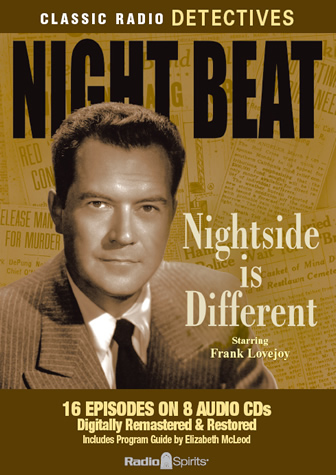
19825Frank Lovejoy was only fifty years old when he succumbed to a heart attack on October 2, 1962.  But, the actor left behind a rich legacy of radio performances, and is represented with fine cinematic showcases like In a Lonely Place and The Hitch-Hiker—both of which are available on DVD.  If you’re looking for his radio performances, Radio Spirits offers two first-rate collections of Frank’s signature series, Night Beat: Nightside is Different and Lost Souls.

Happy Birthday, Ozzie Nelson!

herecomethenelsons1

In 1930, Oswald George Nelson—who would have been celebrating his 107th birthday today—graduated with a law degree from Rutgers University in New Jersey, and was ready to hang out his shingle for business.  Sadly, the world would soon know one less lawyer…though there are no doubt a few of you reading this who are remarking that this is not necessarily a bad thing.


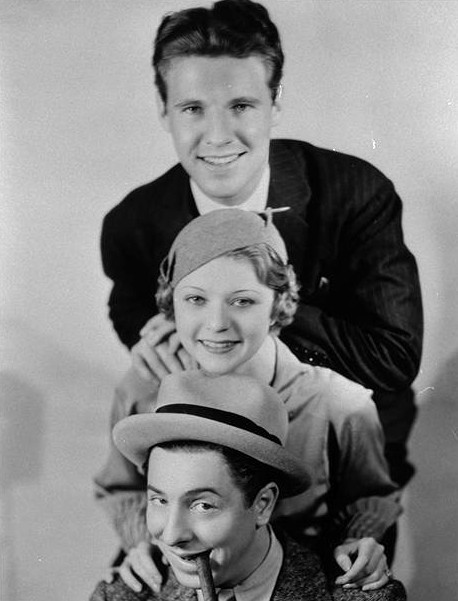
hhnFor you see, Ozzie Nelson already had a successful sideline as a bandleader — a gig he’d had since the age of 14, earning the money he needed to pay his way through college.  So, Nelson decided to stick with that profession, a choice that paid off tremendously a few years later.  In 1932, he added young female vocalist Peggy Lou Snyder to the band…known by that time by her professional handle, Harriet Hilliard.  Ozzie had seen Harriet in a 1932 film short (The Campus Mystery), and that prompted his decision to ask her to join the band.  The young couple established a musical trademark by tossing lyrics back and forth in their songs in a nonchalant, conversational manner…very innovative for the time.  On October 8, 1935, Ozzie made certain that Harriet wouldn’t be leaving the band any time soon by making her Mrs. Ozzie Nelson.


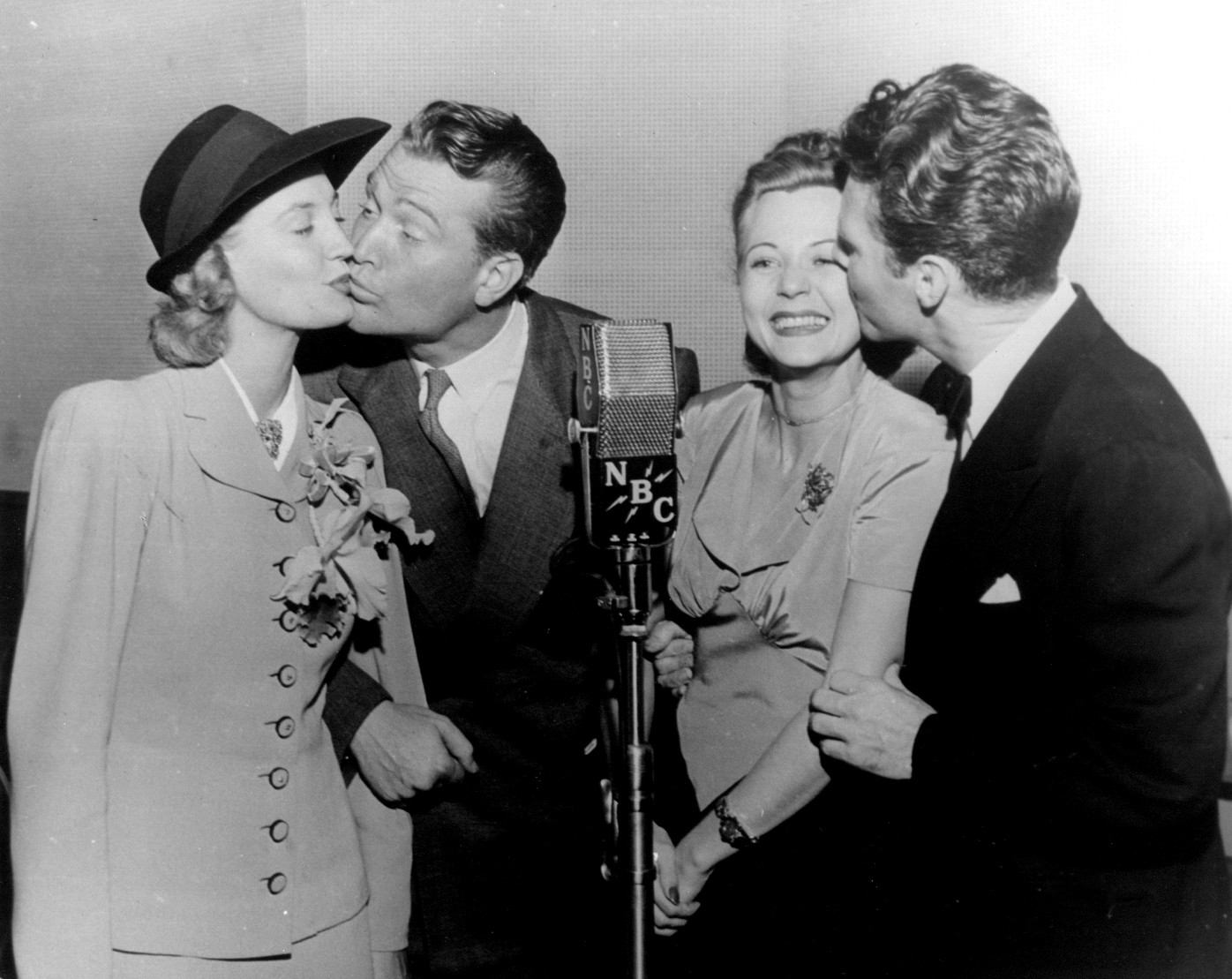
pennerozzieharrietBy the time Ozzie & Harriet tied the knot, they were already popular radio stars as supporting headliners on The Baker’s Broadcast — the program that starred comedian Joe “Wanna buy a duck?” Penner.  Joe quit the series in 1935 (a very unwise career move on his part) and the show was taken over by Robert L. Ripley of “Believe It or Not” comic strip fame.  After the program left the airwaves in 1937, the Nelsons moved to Hollywood to take advantage of the motion picture opportunities there (Harriet was by this time establishing herself as an actress in vehicles such as Follow the Fleet).  The pair soon landed another radio job in the fall of 1941 on The Raleigh Cigarette Program…starring “MGM’s star clown,” Red Skelton.


Red & Ozzie & HarrietHarriet’s role on the Skelton show was to provide a voice for Red’s female characters, like Daisy June and the mother of “Junior, the mean widdle kid.”  But, it wasn’t too long after the show’s premiere that Ozzie started writing himself into the sketches as well.  Both Nelsons were also prominent in films around that time, appearing together in vehicles like Sweetheart of the Campus (1941) and Take It Big (1944).  But, the Skelton gig would soon vanish.  Red had to leave radio at the end of the 1943-44 season, because he’d been called up for military service.  So, on the advice of Fibber McGee & Molly creator Don Quinn, Ozzie and Harriet successfully pitched the idea of a sitcom entitled The Adventures of Ozzie & Harriet to CBS, which premiered the show on the day of their ninth anniversary in 1944.


ozzie&harriet1The Adventures of Ozzie & Harriet was an immediate hit, though in its early years many of its supporting characters were a little too wacky, clashing with the tone of the program that attempted to realistically portray (with only slight exaggeration) “America’s favorite young couple.”  Part of what allowed Ozzie & Harriet to move away from this vaudeville style of comedy was the addition of the Nelsons’ sons, David and Ricky, to the cast in 1949.  Ozzie wasn’t particularly wild about having his progeny enter show business at such a young age (he had used child actors to portray the boys up until that time), but relented after the Nelson sons protested that Bing Crosby had used his sons when he guested on a broadcast in December of 1948.


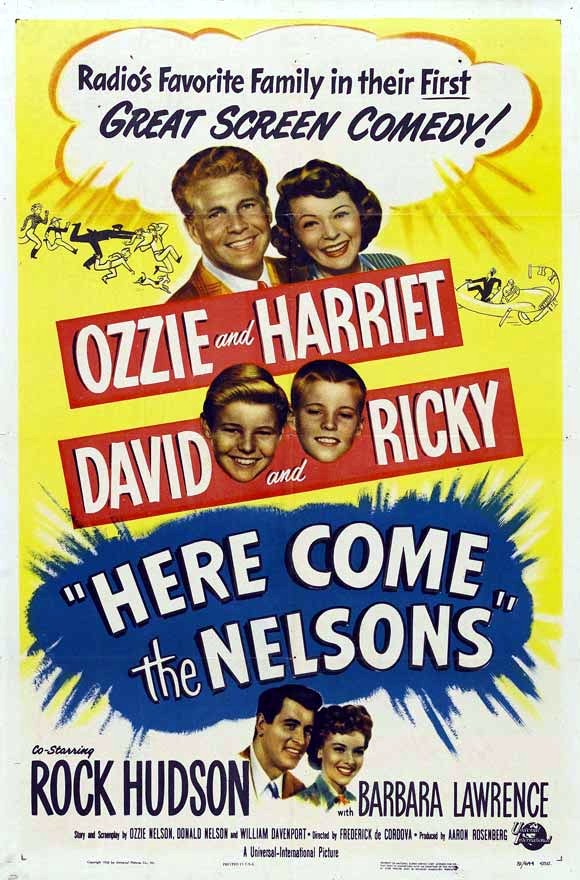
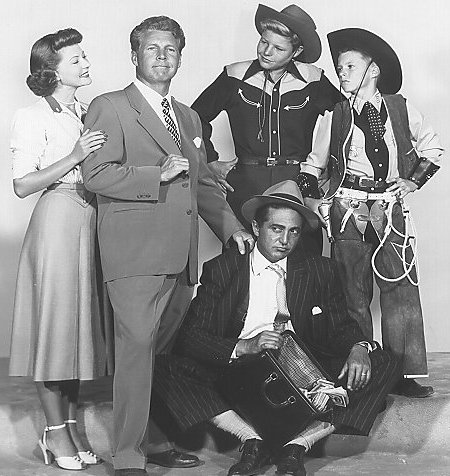
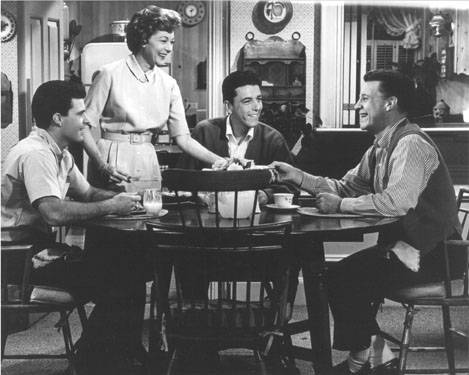
herecomethenelsonsposterThe Adventures of Ozzie & Harriet ran for four years on CBS Radio, moved to NBC for a season, then switched to ABC for its final five years on the air.  The last two years of the radio program overlapped with the TV version of the family comedy, which premiered in the fall of 1952 after a moderately successful “pilot” was released that same year: Here Come the Nelsons.  The TV Ozzie & Harriet would run for fourteen seasons, from 1952 to 1966—a situation comedy record, and one that allowed home audiences to watch the family (particularly David and Ricky) grow up before their very eyes.


herecomethenelsons2One of the best-remembered joke references involving Ozzie & Harriet had to do with Ozzie’s occupation.  Harriet herself brought down the house on a Tonight Show appearance with her husband in the 1970s when she asked, “Just what is it you do for a living?”  Ozzie always alibied that most of the TV episodes supposedly took place on the weekend, when he wasn’t at work.  On radio, however, he was still at his bandleader’s job — and in the Here Come the Nelsons movie he worked for an ad agency!  In reality, Ozzie was one of TV’s first “auteurs”—he supervised every aspect of the program as actor, director, producer and (uncredited) writer.


ozzieharriet6Ozzie & Harriet Nelson attempted a brief TV comeback in 1973 with a syndicated sitcom entitled Ozzie’s Girls.  This program featured a pair of college co-eds (Brenda Sykes and Susan Sennett) moving into David and Ricky’s old bedroom.  It lasted just a single season.  But, the couple needn’t have worried about their TV legacy—The Adventures of Ozzie & Harriet continued to flourish in perpetual reruns.  And, in 2011, Sam Nelson (Ozzie & Harriet’s grandson) initiated a project at Kickstarter to raise money to restore the entire run of the series (435 episodes) to DVD.  We wish Sam much success with this undertaking.  Despite the tendency by many to dismiss the series as a bland depiction of 1950s America, Ozzie & Harriet was actually an underrated and funny sitcom…thanks to today’s birthday boy, Ozzie Nelson himself.  If you don’t believe us—check out these DVD sets featuring “America’s favorite young couple” in their prime, as well as their performances in the Red Skelton collections I Dood It! and Stick Around, Brother.