Your Shopping Cart | Your Account Information | Catalog Quick Order | Customer Service | Order Status | Contact Us
RadioSpirits.com

HOMENEW RELEASESBESTSELLERSCLEARANCEBOOKSDVDsMUSICDOWNLOADS

AboutBlogOur Radio Show SEARCH   KEYWORD

Happy Birthday, Eddie “Rochester” Anderson!
rochester6

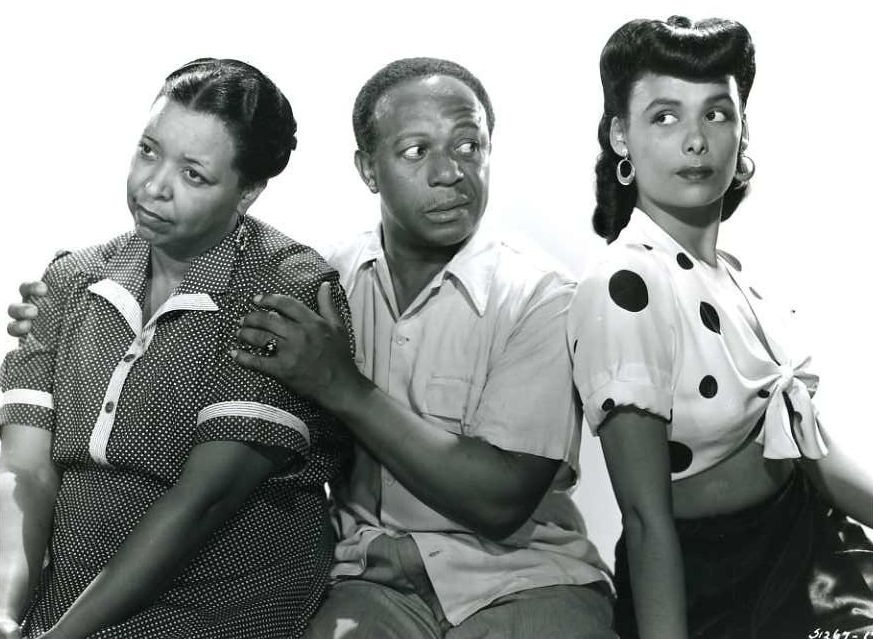
One hundred and eight years ago on this date, one of radio and television’s most prized sidekicks was born in Oakland, CA to a family of show business performers.  His father, “Big Ed” Anderson, performed in minstrel shows, while his mother Ella Mae was a tightrope walker (until a fall put an end to her career).  As such, birthday celebrant Eddie Anderson was motivated to follow in his parents’ footsteps, joining with his older brother Cornelius in a group called The Three Black Aces. The Aces started out singing in hotel lobbies for spare change before working their way up through the vaudeville circuit to play the Roxy and Apollo theaters…and eventually the Los Angeles Cotton Club out west.

bennyrochester1Eddie could sing and dance, but he sang with a distinctive gravel voice because he had ruptured his vocal chords as a kid—he and his friends hawked newspapers, and believed the person with the loudest voice sold the most.  Breaking into the movies, Anderson’s first onscreen credit was 1932’s Hat Check Girl, in which he played a waiter.  For the most part, those types of roles (along with porters, bootblacks and other servile occupations) would be his cinematic bread and butter, although he did land the prestigious part of “Noah” in The Green Pastures.  Eddie’s biggest break would come about from a one-shot appearance on a March 28, 1937 Jack Benny Program broadcast in which he played an insouciant train porter.  His raspy voice registered with Benny and listeners, and the comedian used him intermittently before finally finding a permanent place for him on the program as wisecracking valet, Rochester Van Jones. His popularity on the program would result in his being billed as Eddie “Rochester” Anderson for the remainder of his career.
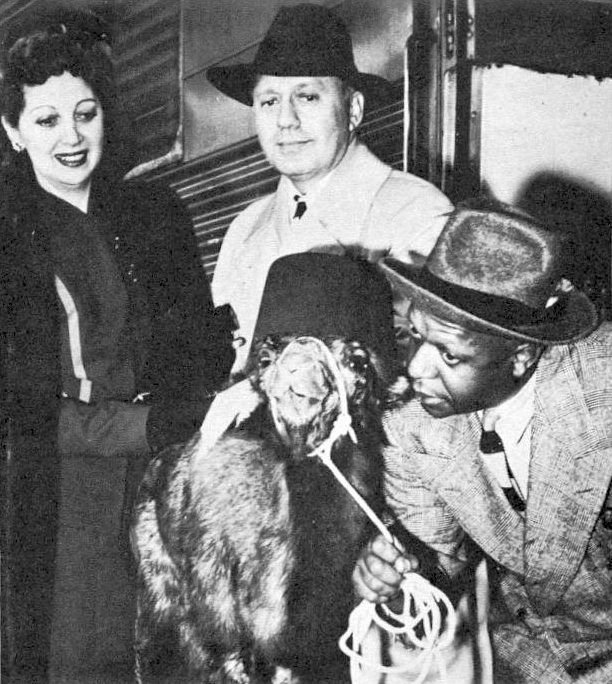
jackbenny1At a time when it was difficult for African-American performers to get work in the entertainment industry—and even harder to find parts that weren’t mired in stereotypes—Eddie Anderson was the exception to the rule.  (He may have played a valet on radio, but he earned a salary generous enough that he soon had his own manservant off-mike.)  Granted, Eddie was assigned a traditionally subservient role on the Benny program…but the Rochester character enjoyed an unusual relationship with his employer in that he was more of a trusted confidant than a lackey, and it often seemed as if he were really in charge.  He slowly started to replace Mary Livingstone as Jack’s foil (Mary’s mike fright gradually reduced her participation on the program); never hesitating to poke fun at his employer’s vanity, miserliness and miserable violin playing.  
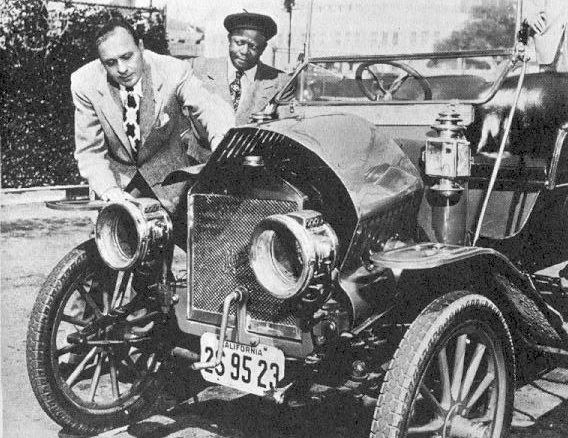
jackbenny2Benny took a lot of grief from the prevailing attitudes of the times for hiring Eddie to be a regular.  It was often difficult, for example, to take Anderson along on tours of army bases and hospitals because of the discrimination in the Armed Forces, so the Rochester character was usually featured on the phone with his “boss.”  But, Benny knew that “Rochester” was very popular with radio audiences, and was never hesitant about featuring him prominently on the program.  Benny also took pains to insure that any jokes regarding Rochester’s race were innocent and without malice, and that they came from the character and not he or any of the other members of the cast.  (An example: a viewer once wrote in and took Jack to task for a show in which Rochester decked Jack while sparring in a boxing ring; the comedian wrote him back and tactfully explained that it wouldn’t have been as hilarious if he had hit his employee.)
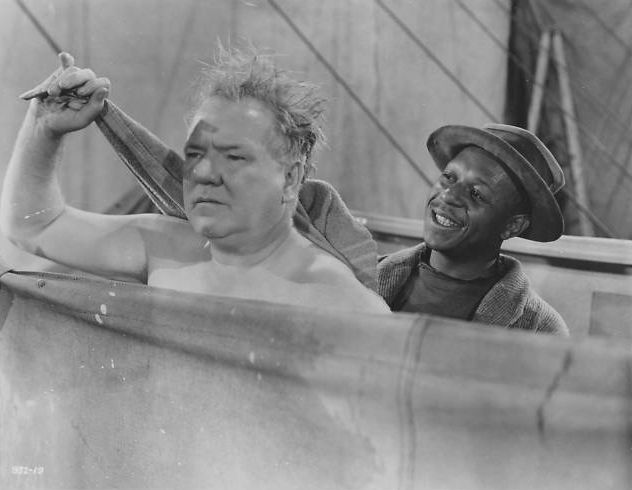
rochester13Eddie’s success on the Benny program led to his appearing with his “boss” in three feature films based on the radio show: Man About Town (1939), Love Thy Neighbor (1940) and Buck Benny Rides Again (1940).  Anderson also played Jack’s sidekick in the 1943 film The Meanest Man in the World—though his character goes by “Shufro” in that vehicle. His association with the comedian often echoed in the films he made without Benny.  In 1941’s Topper Returns, his chauffeur character plans to leave the employ of Cosmo Topper (Roland Young) after tangling with ghostly apparitions, announcing that he’s going back to Benny because “ain’t nothin’ like this ever happened there.” But, Anderson was able to keep a high profile in non-Benny vehicles, among them Jezebel (1938), You Can’t Take It With You (1938), You Can’t Cheat a Honest Man (1939), You Can’t Get Away With Murder (1939), Gone With the Wind (1939), Tales of Manhattan (1942), Cabin in the Sky (1943—which may very well be his finest hour onscreen), Brewster’s Millions (1945), I Love a Bandleader (1945—with Phil Harris!) and The Show-Off (1946).  His last feature film was the all-star comedy extravaganza It’s a Mad Mad Mad Mad World (1963), which also features a cameo from his famous boss…though the two of them do not, sadly, appear together.  In this, Eddie plays one of two cab drivers (the other is Peter Falk) hired to drive the main characters to “the big W” in search of buried loot.
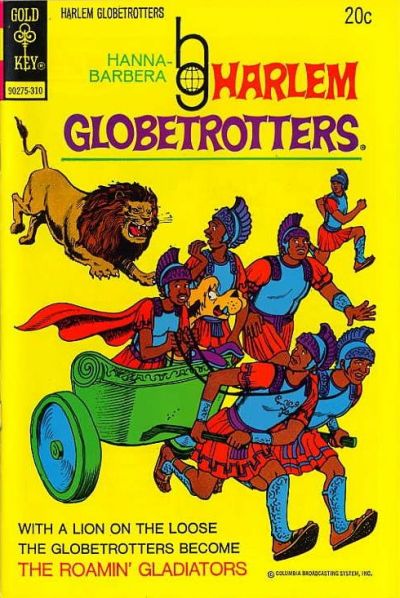
HarlemGlobetrotters7Anderson followed Benny into television and, along with announcer Don Wilson, was pretty much the only cast member from the radio version to stay with the program until it left the air in 1965.  He did guest bits on such series as Bachelor Father, It Takes a Thief and Love, American Style…and that distinctive voice of his was used for Bobby “B.J.” Mason in one of his last show business gigs: a Hanna-Barbera animated series based on the Harlem Globetrotters.  When his “boss” passed away in 1974, Eddie was clearly choked with emotion by the news as he gave a TV interview and spoke about the comedian with the greatest devotion and respect.  Three years later—and it’s only fitting, since Anderson had a habit of never being on time during his stint with Benny—he followed his boss when he left this world for a better one on February 28, 1977.
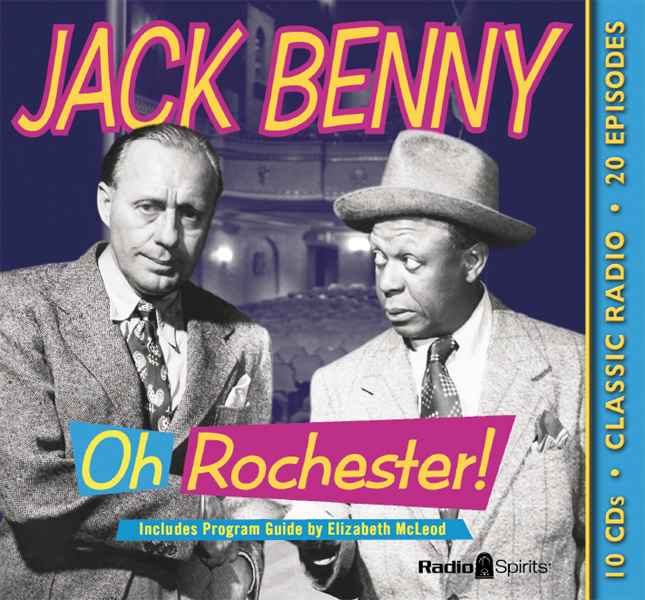
20346Here at Radio Spirits, we have as much Eddie “Rochester” Anderson as anyone can handle.  As a Jack Benny Show regular, he’s present and accounted for on all of our Benny collections: Be Our Guest, Drawing a Blanc, Jack Benny vs. Fred Allen: The Feud, Maestro, Neighbors, No Place Like Home, Picture Parodies, Remotes and Wit Under the Weather.  But there are two Benny sets worth special mention: Oh, Rochester! spotlights classic Jack Benny Show broadcasts where Eddie is in…well, the spotlight.  And in The Gang’s All Here, there are audition broadcasts for two series (it’s a shame they never got off the ground): The Private Life of Rochester Van Jones and The Rochester Show.  If you’d like to take a little Rochester along in your car, there’s our Road Trip: Humorous Travel Tales collection…and we also have “holiday” Rochester for Halloween (Happy Halloween!) and Christmas (Radio Christmas Spirits, Christmas Radio Classics, The Voices of Christmas Past), too!
Happy Birthday, Tom Conway!

conway14

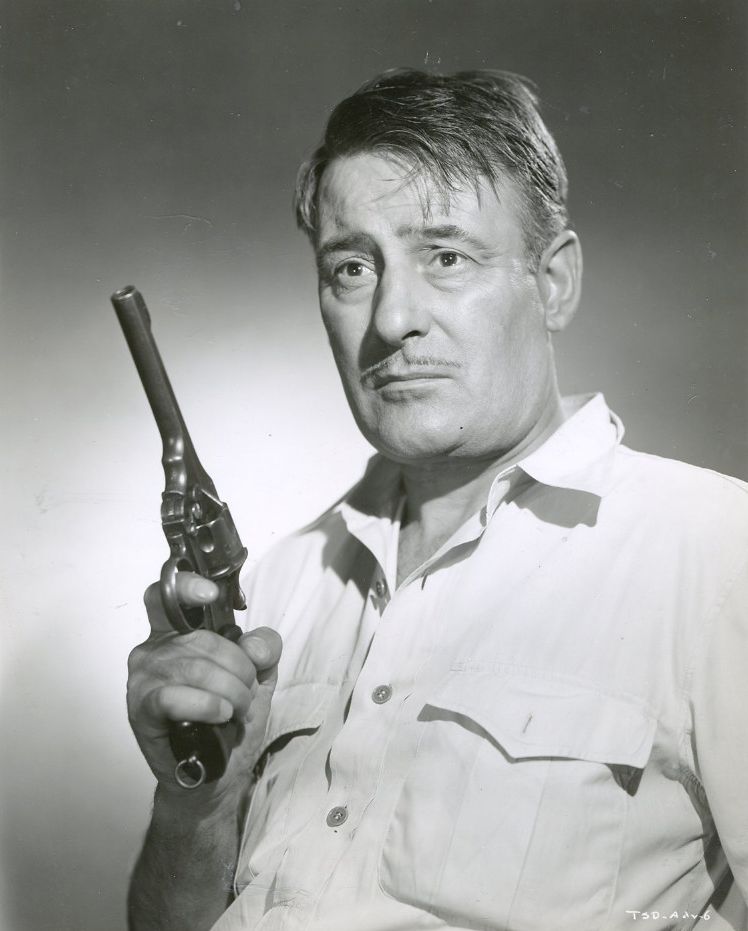
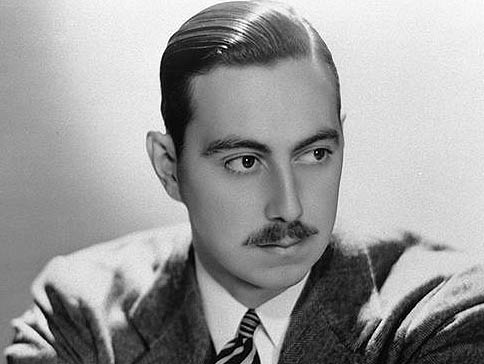
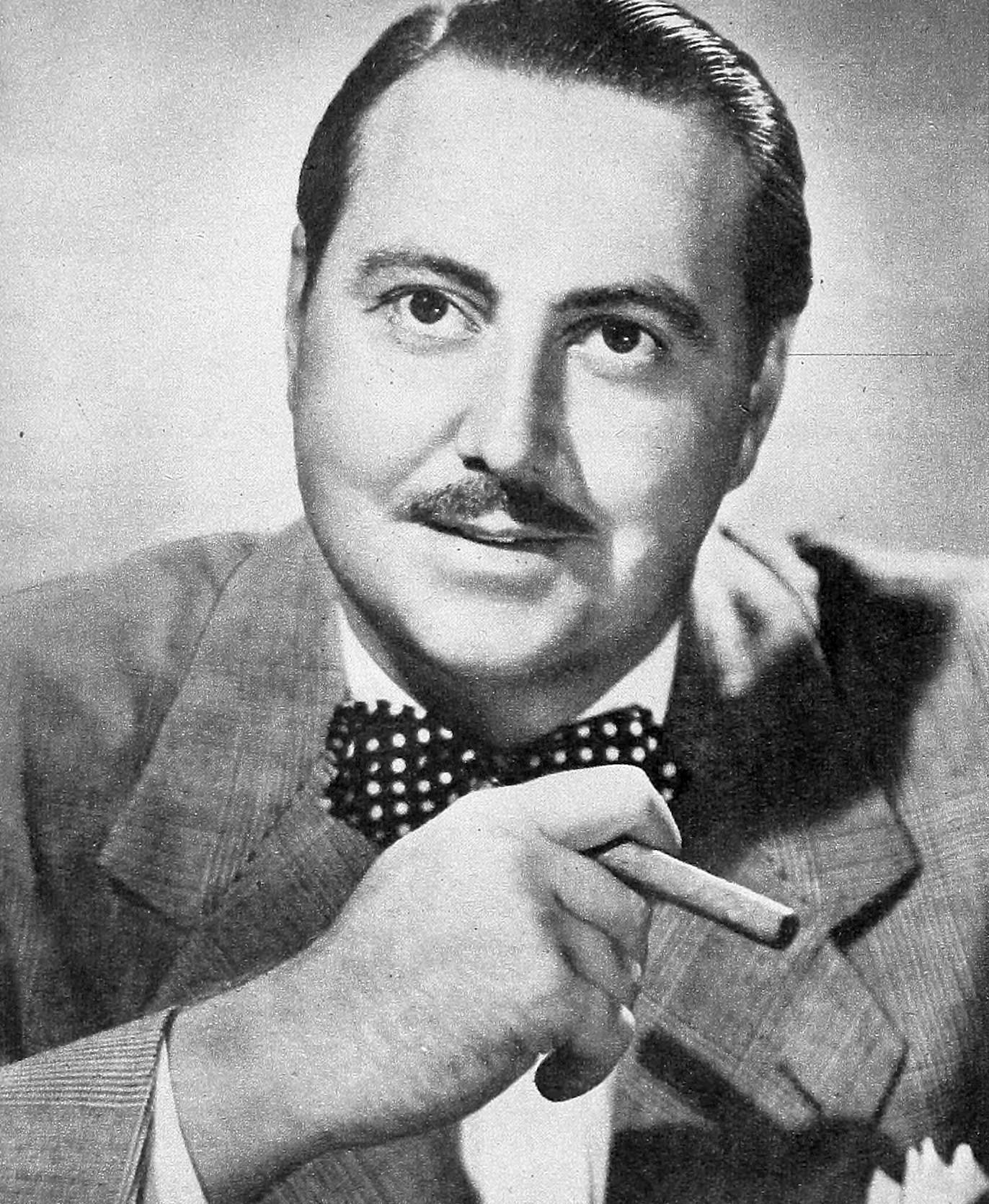
Thomas Charles Sanders was born on this date in 1904 to English parents in St. Petersburg, Russia.  Old-time radio fans, of course, know him as Tom Conway, and know that he played two famous detectives on the airwaves.  He was Arthur Conan Doyle’s titular sleuth in The New Adventures of Sherlock Holmes from 1946 to 1947, and later replaced Vincent Price as Leslie Charteris’ Simon Templar on The Adventures in the Saint in 1951.  Conway just seemed to gravitate toward detective roles; he was also The Falcon on the big screen and Inspector Mark Saber on the small (but, we’ll get to his work in film and on television in a bit).

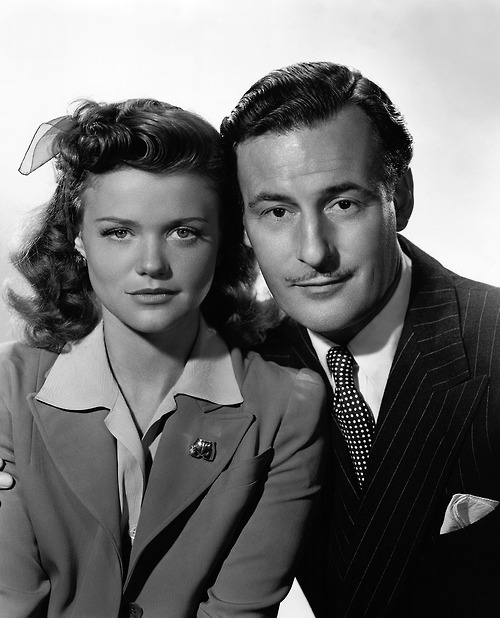
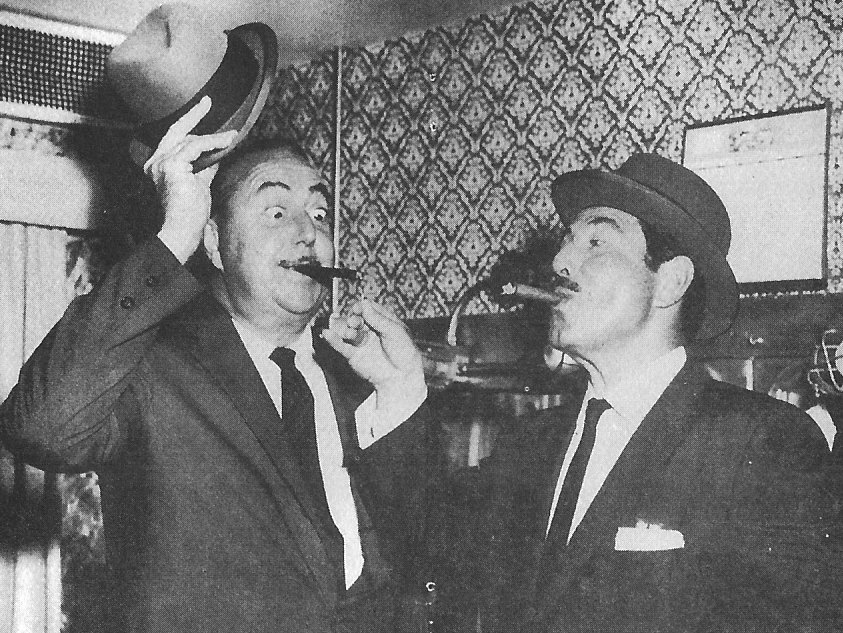
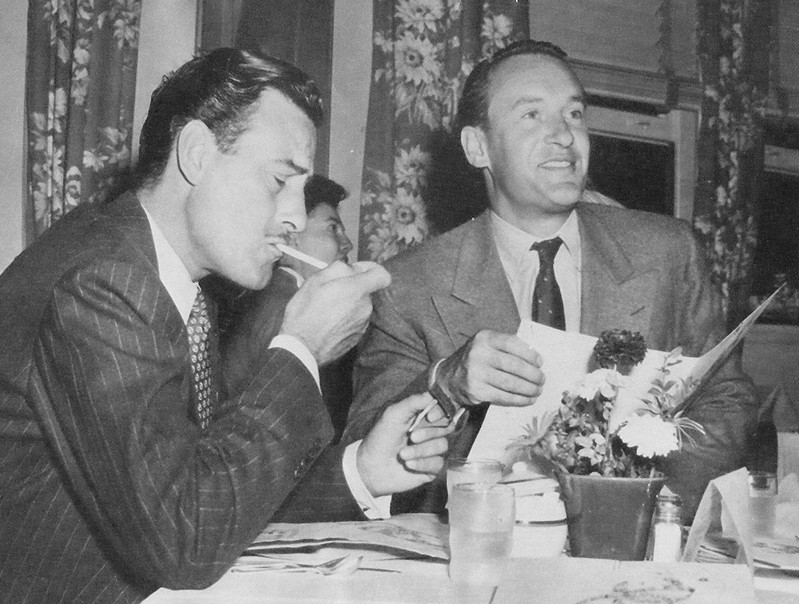
tomgeorgeTom’s family moved back to England at the outbreak of the Russian Revolution in 1917, and he received an education at Bedales School and Brighton College.  A series of odd jobs followed, including time as a ranch hand; Conway didn’t seem to know what he wanted to do in life until his younger brother George had tasted success as an actor.  Tom decided to try his luck in the acting profession and started performing with a Manchester repertory company.  He moved to the United States in 1940, and upon arriving in Hollywood received much support from his sibling, who was under contract to RKO (appearing in a film series in which he played Simon Templar).  In fact, George was already getting rave notices for performances in two Alfred Hitchcock thrillers released that year: Foreign Correspondent and Best Picture Oscar-winner Rebecca.

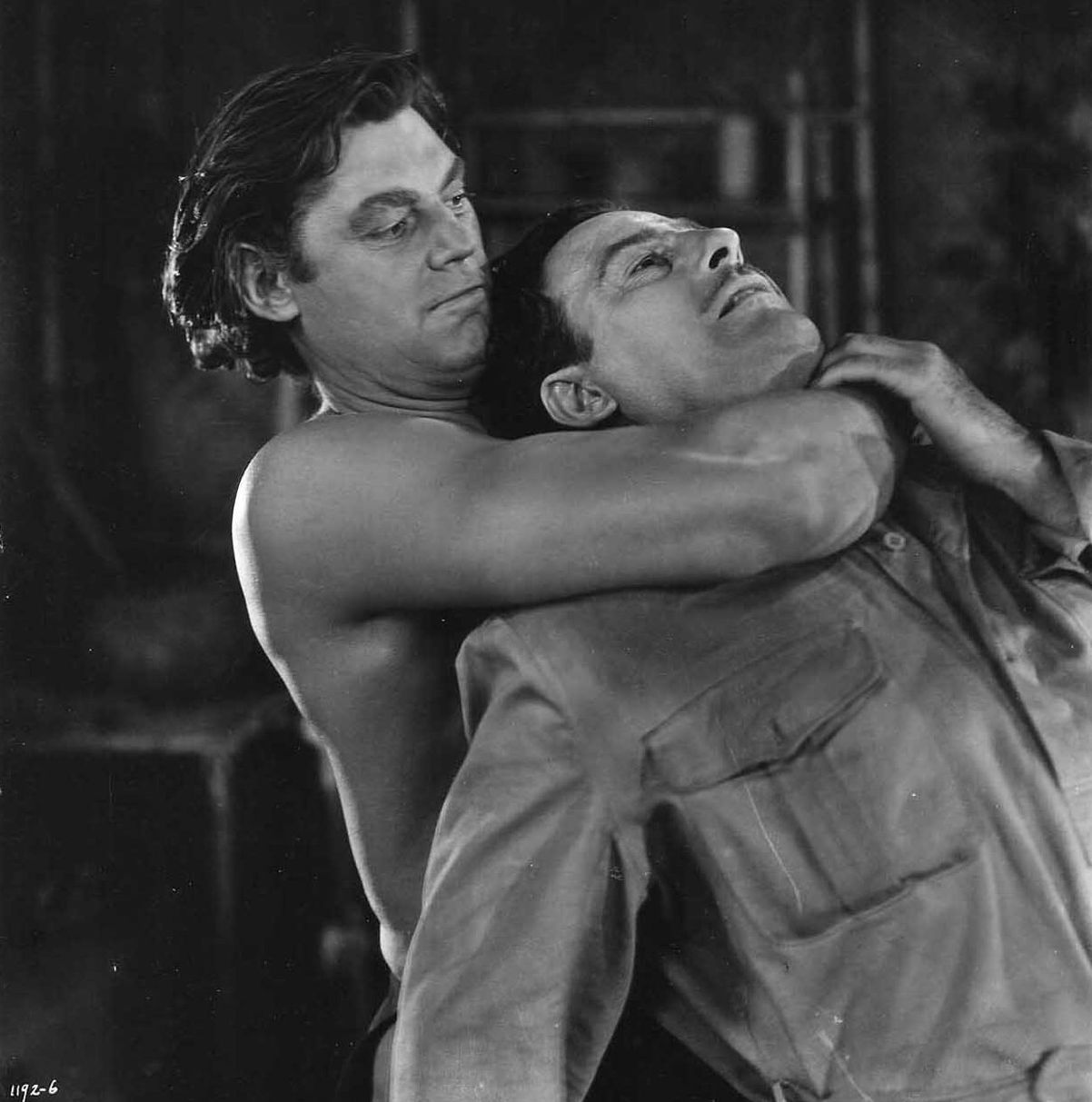
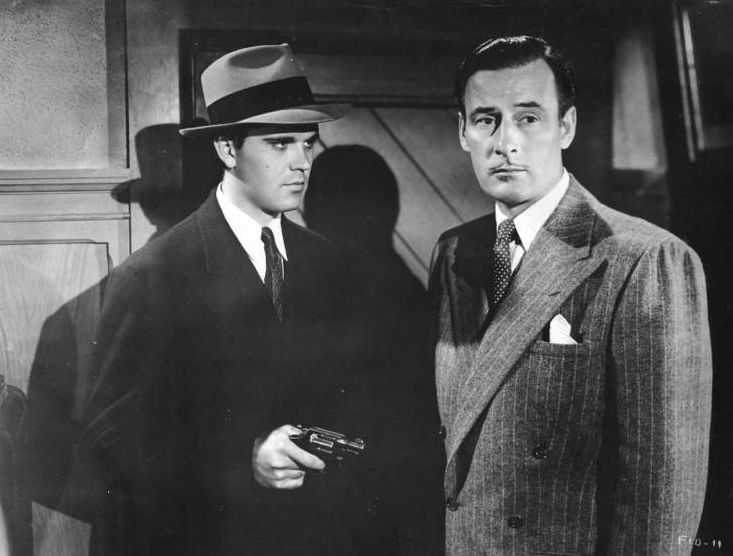
conway15Tom found much work at the MGM studio, appearing in such features as The People vs. Dr. Kildare and Tarzan’s Secret Treasure.  At RKO, brother George had just started starring in another detective film series—this one based on Michael Arlen’s The Falcon.  After George had completed three of these films, he began to tire of playing B-picture leads, so he suggested that his brother Tom take over the role.  The studio arranged for him to do just that in a clever outing entitled The Falcon’s Brother (1942): Sanders’ character of Gay Lawrence finds himself incapacitated in the course of the plot to break up an Axis spy ring, and brother Tom Lawrence (Conway) is brought in to help out.  From that point on, Tom Conway was The Falcon in nine additional entries, ending with The Falcon’s Adventure in 1946.

tomcatpeopleClassic movie fans fondly remember Tom Conway for his Falcon vehicles, but he might have established more vintage film cred for appearing in three of the B-horror films produced by Val Lewton at RKO: Cat People, I Walked with a Zombie and The Seventh Victim.  In People and Victim, Tom is Dr. Louis Judd—a curious thing indeed, considering Dr. Judd draws his rations in the first picture (the speculation has always been that the events in Victim took place before People).  Conway’s career rarely ventured beyond B-pictures, however: his non-Falcon films at that time included A Night of Adventure, Two O’Clock Courage, Lost Honeymoon, Repeat Performance and One Touch of Venus.

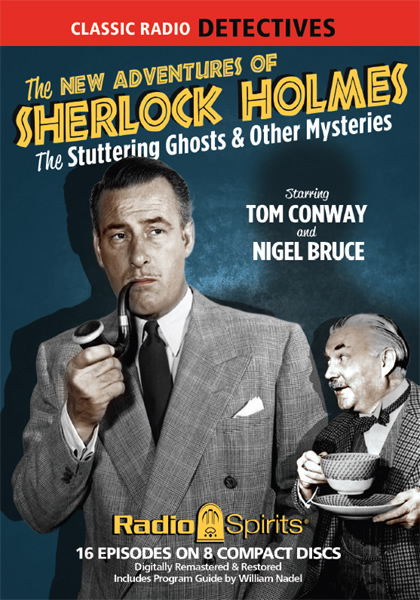
20521Tom Conway’s wonderfully resonant voice and precise diction made him a natural for radio: he had previously guested on such series as The Gulf Screen Guild Theatre and The Old Gold Comedy Theatre, but in the fall of 1946 he took over the role of master detective Sherlock Holmes from Basil Rathbone on ABC’s The New Adventures of Sherlock Holmes.  Rathbone had tired of playing Holmes both on radio and in the movies (the last of the Universal Holmes films was released in 1946), and expressed an interest in returning to the stage.  So, Conway got the nod to play Holmes to Nigel Bruce’s Dr. Watson.  Audiences, however, weren’t particularly receptive to Tom in the role, and in the following season he was replaced by John Shirley.

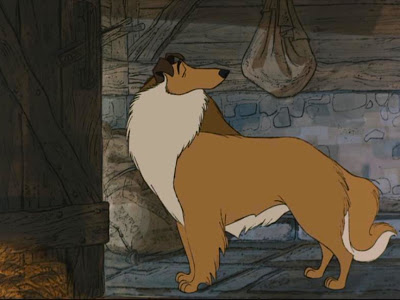
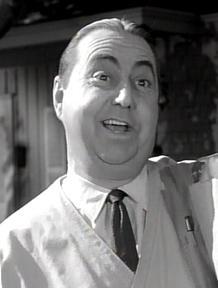
conwaycollieWhen Vincent Price left The Adventures of the Saint in May of 1951, Conway was brought in to replace him until the show’s cancellation in October of that same year.  Working on these two shows put Tom in very good stead as a vocal actor—he went on to narrate Walt Disney’s feature film Peter Pan in 1953, and later voiced the part of a heroic collie in Disney’s 101 Dalmatians in 1961.  But in 1951, Conway was ready to tackle television—and he did in a big way, as the star of ABC-TV’s Inspector Mark Saber: Homicide Squad (a.k.a. Mystery Theater) from October 1951 to June 1954.  The actor was also guest star on such hit shows as Cheyenne, Rawhide, Alfred Hitchcock Presents (the classic “The Glass Eye”), Have Gun – Will Travel and Perry Mason.

conway16Tom Conway’s final feature film appearance was an uncredited part in 1964’s What a Way to Go!  The title seems quite prophetic, because, in the last years of his life, he spent much time in various hospitals; he had a serious problem with alcohol (which caused a rift between him and his brother) and made headlines in 1965 when a reporter found him eking out an existence in a Venice, California flophouse.  His hospitalizations continued, and he finally succumbed to cirrhosis of the liver in April 1967 at the age of 62.  (Sadly, brother George—a major motion picture star and winner of the Best Supporting Actor Oscar for 1950’s All About Eve—would commit suicide five years later.)
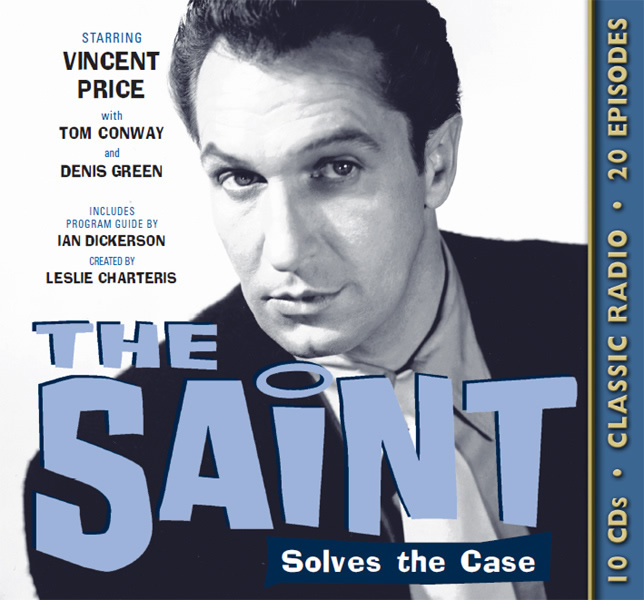
20132Radio Spirits’ CD collection of The Saint Solves the Case contains broadcasts starring Vincent Price as Leslie Charteris’ famous literary creation…and there are a few episodes on the set to represent Tom Conway’s participation as well.  We also recommend you check out The New Adventures of Sherlock Holmes: The Stuttering Ghost & Other Mysteries—an eight-disc set featuring our birthday boy in the role that Basil Rathbone made famous in films and on radio.  We think Tom does a fine job as a credible replacement; after all, he had a lot of experience by that time in the detective game!
The Honeymoon’s Not Over

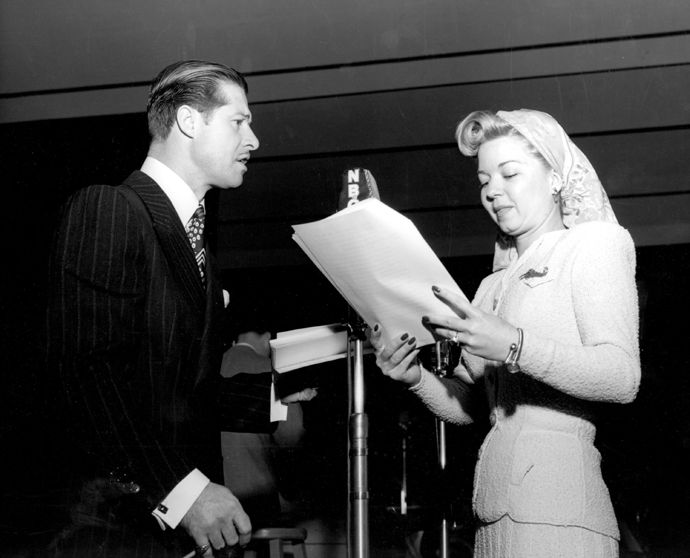
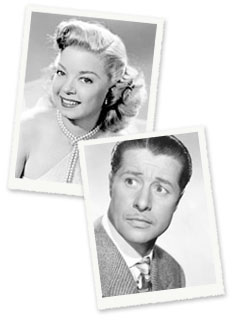
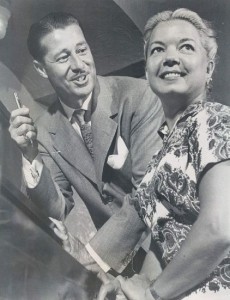
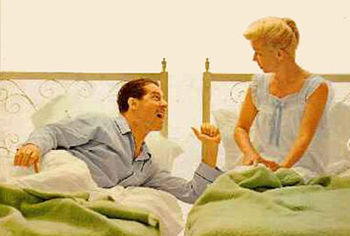
The Bickersons (Radio) 1946-1951Shown from left: Don Ameche, Frances Langford

For a show that had a relatively short life on radio and television, The Bickersons has maintained a dominating presence in American pop culture.  We use the term “Ozzie & Harriet” to describe a wholesome, too-good-to-be-true husband-and-wife coupling; and, a constantly quarreling twosome receives the designation “Bickersons.”  The famed husband-and-wife battlers, who made their radio debut sixty-seven years ago on this date, continue to be referenced in movies (1970’s MASH), TV shows (NewsRadio) and even video games.

bickersons7The characters of John and Blanche Bickerson were created by comedy writer Phil Rapp (who also had a hand in the evolution of Fanny Brice’s alter ego, Baby Snooks), and were inspired by the real-life squabbling that frequently erupted between himself and his wife Mary.  Joel Rapp, Phil’s son, related in Gerald Nachman’s Raised on Radio: “I’ve hidden under a lot of tables in my day…my father would scurry off to the typewriter while the dialogue was still fresh.”  Rapp conceived Mr. and Mrs. B as a remedy for the sweetness and light generated by other spousal happy-ever-afters like the aforementioned Nelsons, and later, Jim and Margaret Anderson of Father Knows Best.

bickersons13The couple who became known as “the battling Bickersons” made their radio debut on a series called Drene Time—a half-hour NBC comedy-variety series heard during the 1946-47 season.  Don Ameche, film star and one-time announcer-straight man to Edgar Bergen & Charlie McCarthy, was the show’s M.C. and the lovely Francis Langford, formerly of The Bob Hope Show, was Drene Time’s resident vocalist.  Drene Time also featured the music of Carmen Dragon and the comedy of young Danny Thomas, who frequently participated in the Bickersons skits as Blanche’s ne’er-do-well brother Amos. (Amos affectionately referred to John as “Jocko,” and John would often advise his brother-in-law to “drop dead.”) At a certain point in the program, Ameche and Langford transformed themselves into John and Blanche Bickerson in a segment that Drene announcer Toby Reed would describe as “The Honeymoon is Over.”

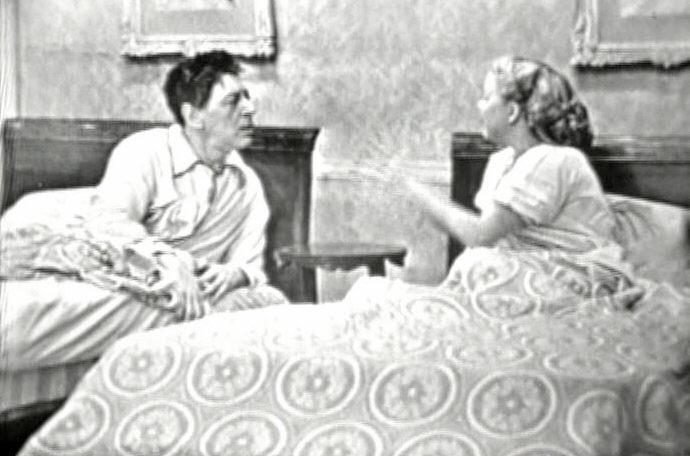
bickersons12The Bickersons sketches always adhered to a simple formula: John, who suffers from a crippling case of “insomnia,” keeps Blanche awake with his snoring—so Blanche returns the favor by robbing him of slumber with her incessant nagging and chattering.  The writing was sharp and funny (Blanche: “Before you married me, you told me you were well off…” John: “I was, but I didn’t know it…”), and paved the way for later disagreeable television couples like the Kramdens and the Bundys.  Though the sketches usually eschewed the happy ending central to The Honeymooners (“Baby…you’re the greatest.”), deep down, listeners knew that the couple really did love one another, and their verbal donnybrooks were just a way of letting off steam.

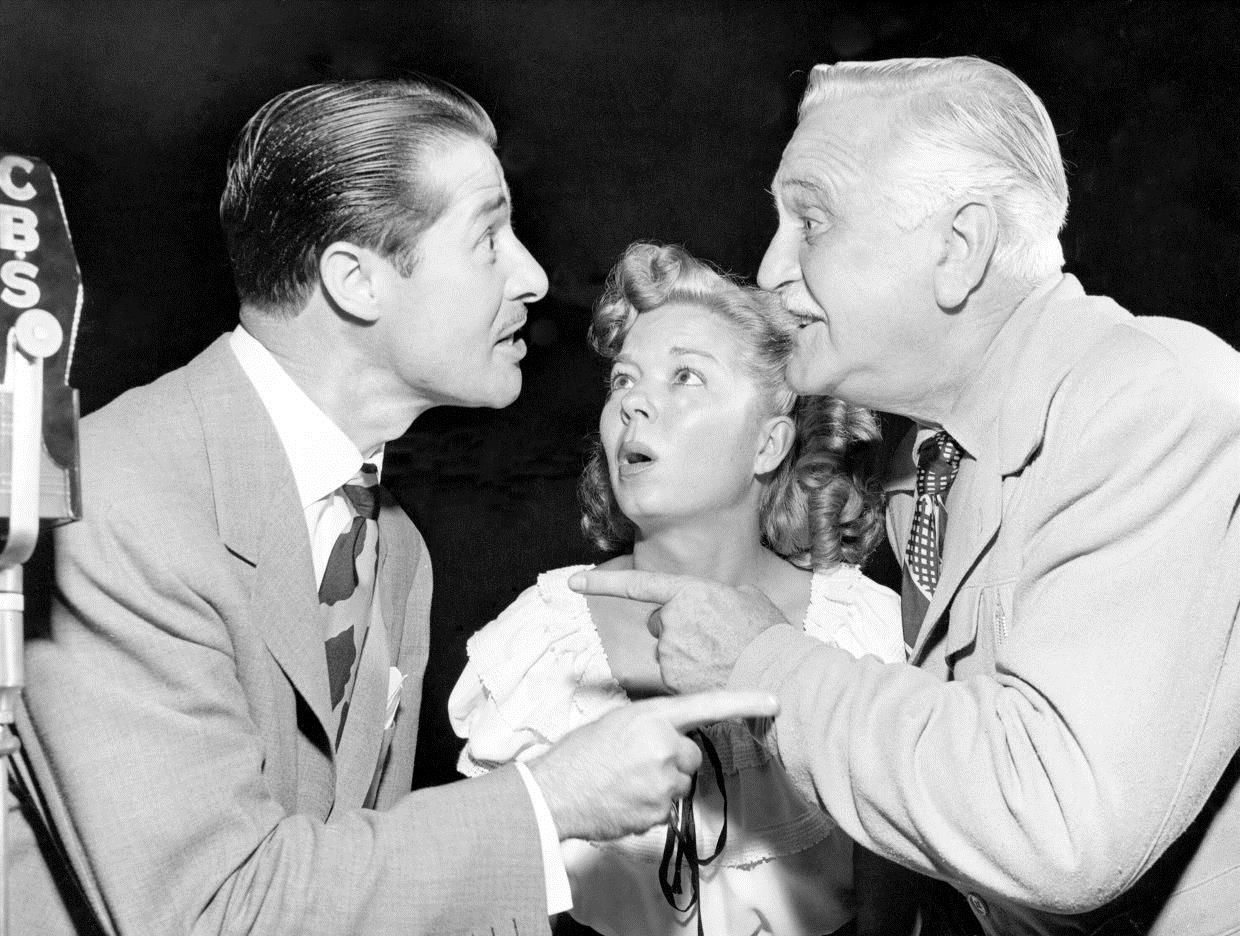
Sep- BickersonsAfter the cancellation of Drene Time, Don Ameche and Francis Langford continued on in the fall of 1947 with The Old Gold Show on CBS Radio.  Carmen Dragon followed the two of them to this new program, and the three of them were joined by announcer Marvin Miller and MGM comic actor Frank Morgan. (Morgan and Phil Rapp were certainly well-acquainted with one another, having both worked on the Good News and Maxwell House Coffee Time programs.) Surviving scripts from The Old Gold Show (showcased in two volumes edited by Ben Ohmart) reveal that the series is one of radio’s true lost treasures—“lost” because most extant broadcasts contain only the Bickersons sketches (the last fifteen minutes of the program).  The weekly Morgan/Ameche encounters are riotously funny (with Langford, Dragon and Miller participating as well) and for reasons unexplained, Rapp never thought to include Frank in the Bickersons pieces—though this might have been a force of habit, since Morgan rarely appeared in the Baby Snooks sketches on Coffee Time.  (Morgan would have made the perfect sponging relative…on Blanche’s side, of course.)

bickersons4In the fall of 1948, The Bickersons became a recurring sketch on Edgar Bergen’s show, with actress Marsha Hunt replacing Francis as Blanche. The Bickersons then took an extended vacation from radio until the summer of 1951, when it became a full-fledged half-hour series (summers on CBS for Phillip Morris); Langford had returned to the fold by that time, but Ameche had been replaced by future That Girl dad Lew Parker.  An attempt to bring the couple to TV also proved futile; though Ameche and Langford performed the character sketches on two programs: Star Time (1950) and The Frances Langford-Don Ameche Show (1951-52—which featured a young Jack Lemmon).

bickersons3John and Blanche’s resurgence in popularity would not come about until the release of three comedy albums from the Columbia label in the 1960s: the first one entitled The Bickersons, with The Bickersons Fight Back and The Bickersons Rematch the successful follow-ups.  (The albums were essentially new recordings of previously-used Phil Rapp scripts.)   Still, the beloved battlers continue to entertain a new generation of listeners today, thanks to son Joel Rapp, who has done an impressive job promoting his father’s timeless comic creation.

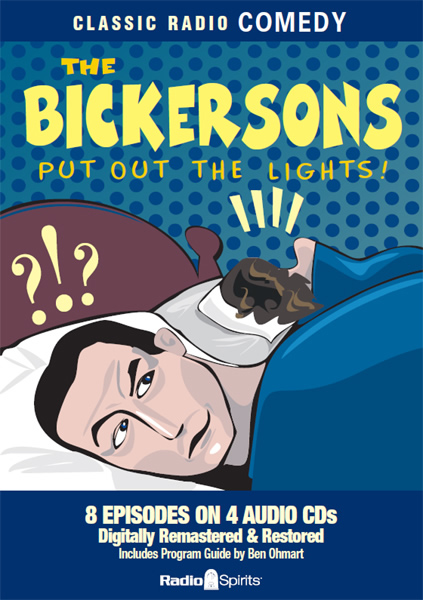
19950Radio Spirits offers Put Out the Lights!—an eight-CD collection containing several Drene Time broadcasts, as well as a few programs from the 1951 incarnation (with Lew Parker) and a December 13, 1948 audition program (which attempted to bring John and Blanche into listeners’ homes on a half-hour basis).  It’s classic radio comedy at its best…on the day of their “anniversary,” the honeymoon continues for one of the medium’s best remembered couples.

Happy Birthday, Willard Waterman!

waterman3

This Saturday, August 31, will mark the 72nd anniversary of one of radio’s most popular and successful sitcoms, The Great Gildersleeve—a program that any old time radio fan worth their salt will tell you was spun-off from Fibber McGee & Molly, allowing show regular Throckmorton P. Gildersleeve to put down stakes in a town far from Wistful Vista where he garnered weekly laughs as devoted uncle (to Marjorie and Leroy Forrester), dutiful water commissioner and eligible bachelor on the prowl.  Today, however, marks what would have been the 99th birthday of the man who was Harold Peary’s successor in the role when Hal was unable to convince Gildersleeve’s sponsor to move with him to CBS.  That man was Willard Lewis Waterman.

waterman5A native of Madison, Wisconsin, Willard Waterman developed an interest in radio and entertaining at a young age; he worked for station WIBA as a member of both a trio and quartet—one of which performed on the air every day at the crack of dawn.  If he thought he would get performing out of his system by the time he attended the University of Wisconsin to study engineering…well, it only took a little time working at the college radio station to dispel that notion.  Waterman spent so much time at the station—announcing, reading poetry, etc.—that it began to interfere with his classes (this author can relate) and so he decided to make broadcasting a full-time career.

waterman13Willard benefitted from the close proximity of Chicago—which at the time he moved there in 1934 was one of the major broadcasting hubs.  His first job was playing a villain in an episode of the radio serial Chandu the Magician…a character that was killed off in the first installment.  Subsequent gigs resulted in subsequent villainous portrayals…and subsequent deaths followed.  But Waterman soon built a solid reputation as a radio actor; he appeared on prestigious dramatic shows like The First Nighter, Grand Hotel and The Chicago Theater of the Air.  His versatility allowed him to emote on soap operas like Today’s Children and kids’ shows like The Tom Mix Ralston Straight Shooters.  (He played both a villain and the hero’s sidekick on that one—clearly Willard wasn’t taking any chances by that point in his career.)

In 1945, Willard landed a plum role on a sitcom called Those Websters—playing the part of the bumbling family patriarch, George Webster.  The show later moved to the West Coast and Waterman moved with it—and he found many more opportunities in radio awaiting him in Los Angeles.  He appeared on programs headlined by Joan Davis and Cass Daley, and series such as The Whistler, The Lux Radio Theater, Screen Director’s Playhouse, The Damon Runyon Theater and Amos ‘n’ Andy.  At the start of 1950, Willard was a regular on Ronald and Benita Hume Colman’s comedy-drama, The Halls of Ivy.

2gildysMeanwhile in Summerfield…Great Gildersleeve star Harold Peary was involved in a dispute with the program’s sponsor, Kraft Foods, over allowing him an ownership stake in the show.  Thinking he might get a little more leverage in the negotiations if he did what other NBC stars had recently done and allow CBS president William S. Paley to sign him to a capital gains deal, Hal jumped ship to the Tiffany network…only to learn that the S.S. Gildersleeve would not be following him.  Kraft elected to keep the show on NBC, and hired Willard to replace Peary as Summerfield’s water commissioner.  (Well, it only made sense to hire a Waterman, doesn’t it?)

waterman7Willard would play the part of Gildersleeve on radio from September 6, 1950 until March 21, 1957—and unless you listened very closely, it was often difficult to tell the difference…though one of the subtle variances was that Waterman refused to use Peary’s trademark “he-he-he-he-he” laugh.  On television—it was a different story.  The program appeared for one season in 1955 as a syndicated production of Hal Roach Studios, and in comparison to Peary playing the role in several films for RKO during the 1940s, Waterman was a little out of his element (he was also a little on the tall side at 6’4”).

waterman9Viewers might have rejected Willard as a TV Gildy, but he was most welcome in other small screen venues: he had recurring roles on The Eve Arden Show and The Real McCoys, and many couch potatoes remember him as friendly neighborhood grocer Otis Quigley on the TV sitcom version of Dennis the Menace.  In addition, Waterman landed a good deal of motion picture work; his movie appearances include Riding High, Louisa, Mystery Street, Rhubarb, It Happens Every Thursday, Hollywood or Bust, Auntie Mame, The Apartment and Get Yourself a College Girl.  His TV and movie appearances tapered off in the 1970s but Willard occasionally turned up in commercials (Alka-Seltzer, Kellogg’s)…and he also enjoyed a good deal of success in stage, appearing in such productions as How to Succeed in Business Without Really Trying, Mame and The Pajama Game.  Until his death in 1995 at the age of 80, Willard Waterman was a frequent attendee at old-time radio conventions, giving old and new generations of fans the opportunity to meet with a true radio great.

20192And here at Radio Spirits…we’re only too pleased to be able to feature some of Mr. Waterman’s work: he can heard as Professor John Merriweather, ally of Dr. William Todhunter “Toddy” Hall and wife Victoria (Ronald and Benita Hume Colman) on The Halls of Ivy, as well as collections of Amos ‘n’ Andy and Our Miss Brooks.  Radio Spirits also offers two DVD collections containing episodes of the short-lived Great Gildersleeve TV venture with Willard…which would be perfect for Saturday to mark the occasion of the show’s 72nd anniversary, along with the CD collections Neighbors, Marjorie’s Wedding and Baby.

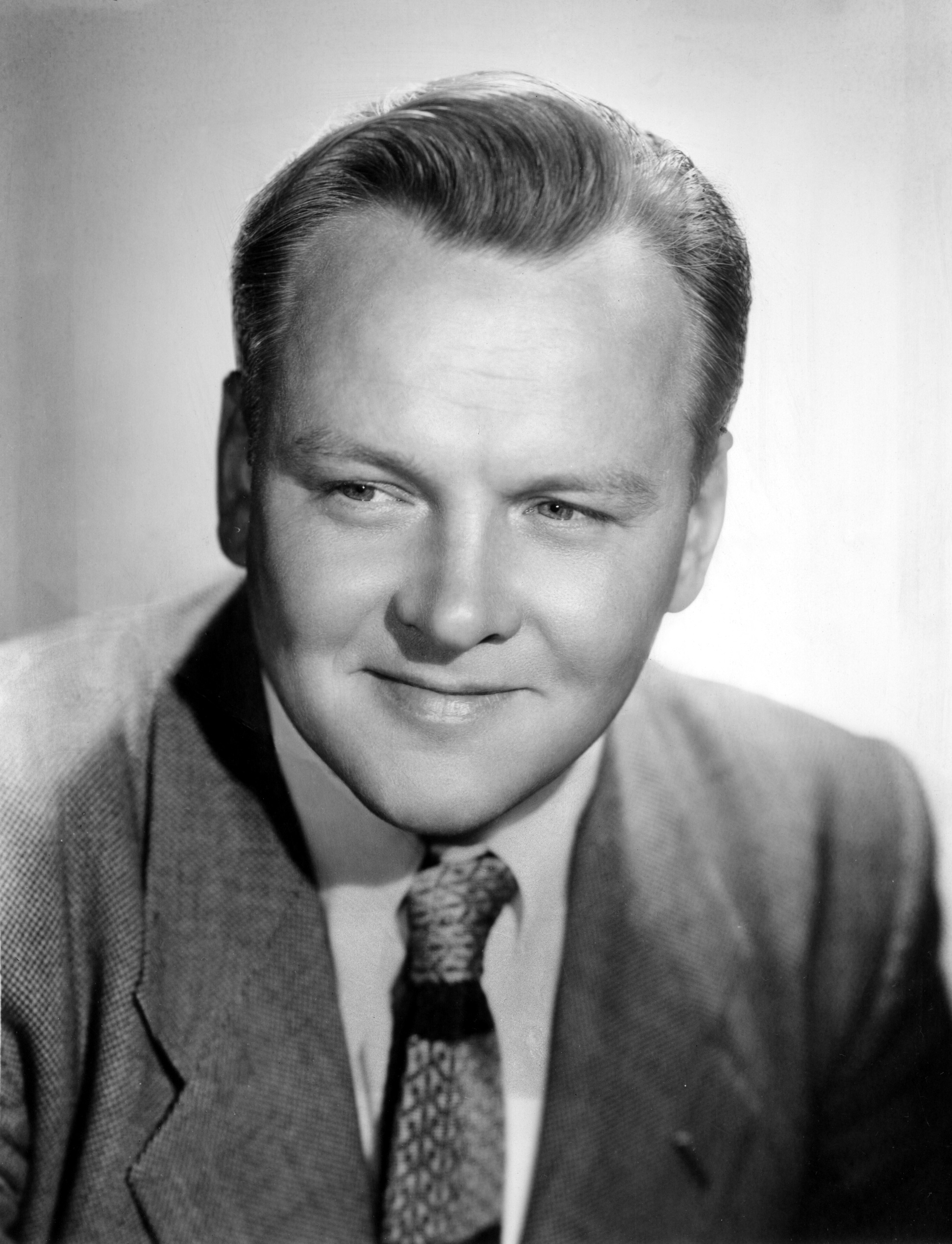
Happy Birthday, Larry Thor!

thor10

Arnleifur Lawrence Thorsteinson was born ninety-seven years ago on this date…in an Icelandic village in Lundar, Manitoba, Canada.  Fortunately for the radio stations and national networks that would eventually hire him as an announcer and actor, he decided to shorten that handle to “Larry Thor.”  Old-time radio fans know his rich, resonant tones well; married at 21, Larry decided on a radio career when he had trouble getting work at a local mine, and worked at various stations in The Great White North beginning in 1937 until he decided to try his luck in Los Angeles in 1946.

thor5In retrospect—it was a good move on the ambitious Thor’s part.  He was employed by the likes of KFAC and later KNX…which, as a CBS Pacific affiliate, got him exposure as an announcer on such shows as Tomorrow Calling and It’s Fun to Be Young.  He soon landed a high-profile gig on Rocky Jordan, a West Coast adventure series on the Tiffany network that starred Jack Moyles as the titular café owner, who often found himself up to his neck in intrigue and at odds with his nemesis on the police force, Lt. Sam Sabaaya (Jay Novello).   Larry also handled announcing chores on such series as Young Love, Pursuit and The Green Lama, and could be heard as a news broadcaster not only on CBS, but ABC and Mutual as well.

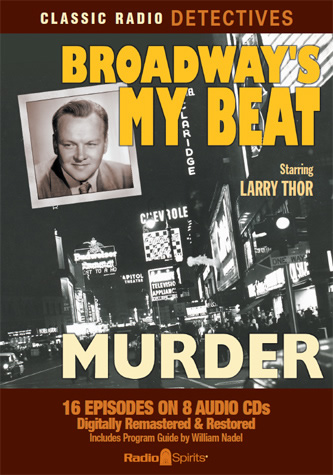
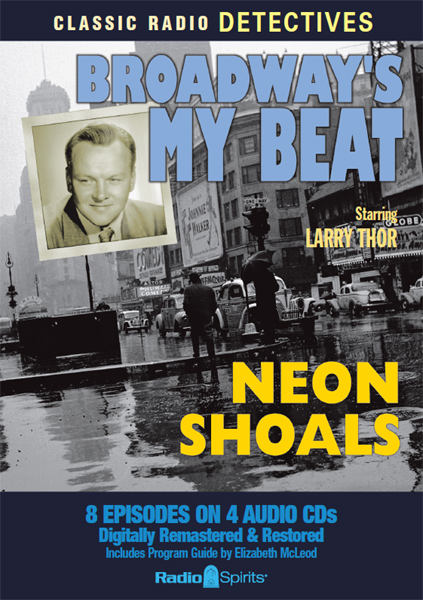
thor1In February of 1949, CBS Radio premiered on its schedule a crime drama entitled Broadway’s My Beat—which featured actor Anthony Ross as Detective Danny Clover, a plainclothes NYPD cop whose bailiwick stretched from Times Square to Columbus Circle—“the gaudiest, the most violent…the lonesomest mile in the world.”  Befitting its background, Broadway was broadcast from New York during its first four months on the air, then moved out to Hollywood beginning in July…and with that move, Larry Thor found himself playing the starring role.  The gritty—and at times lyrical—detective drama would be one of several shows produced at that time by Elliott Lewis, who emphasized the realism of the series through its sound effects, scripts and music.  Thor did outstanding work on the show, alongside regulars Charles Calvert (as Sergeant Gino Tartaglia) and Jack Kruschen (as Sergeant Muggavan)—but the program itself didn’t get much respect from CBS.  During its five-year-run, it bounced around from time slot to time slot; in the network’s defense, they often broadcast Broadway as a sustaining program due to lack of interest from sponsors.

thor6It can be said that Thor found a patron in producer-director Lewis, who used the actor-announcer to good effect on other shows on which he held the reins, like Crime Classics and On Stage.  In addition, Larry would become a familiar voice to fans of “radio’s outstanding theatre of thrills”; he was Suspense’s announcer from August 1951 to October 1956, occasionally acting on that program as well.  Other series on Thor’s resume include The CBS Radio Workshop, Escape, The Hallmark Hall of Fame, The Railroad Hour, Romance, The Whistler and Yours Truly, Johnny Dollar.

thor4Larry decided to broaden his horizons a bit by seeking out film roles beginning in 1952.  Some of his early movie appearances allowed him to stay well within his comfort zone; he played announcers in such vehicles as The Pride of St. Louis, Roar of the Crowd and The Kid from Left Field.  Larger roles soon followed in B-picture classics like The Fast and the Furious and Five Guns West.  Many cult movie fans remember Larry as the Army doctor in the 1957 schlock classic The Amazing Colossal Man, where his death scene is one of the film’s highlights.  Other notable movie appearances include Zero Hour!, Portland Expose, The Hunters and Machine Gun Kelly.

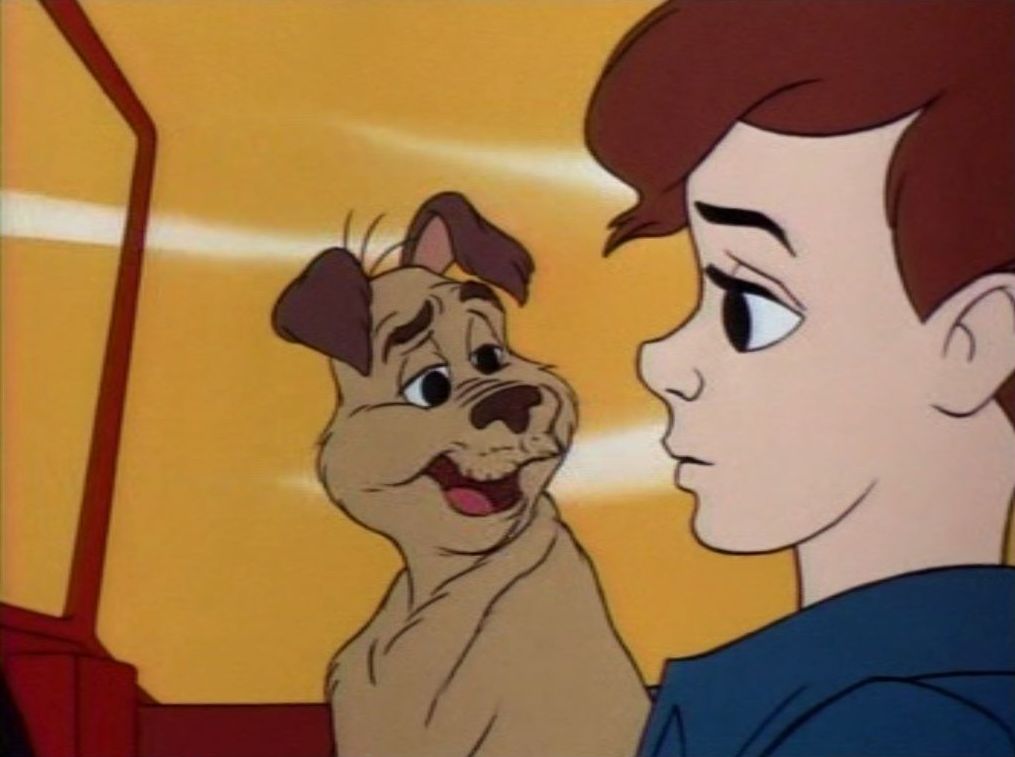
thor9At the same time, Thor made the rounds on TV series such as M Squad, Leave it to Beaver, Rawhide, Perry Mason, The Andy Griffith Show, I Spy and Hazel—he appeared in five episodes (as Jim Hendricks) of the 1963-65 series Mr. Novak, which starred James Franciscus as an idealistic young schoolteacher.  Despite the demise of radio, Thor maintained his skills by narrating a number of documentaries and industrial films for the Canadian National Film Board and American film studios.  He also dabbled as a writer, with several screenplays and novels to his credit.  Larry’s last notable theatrical film role was a bit part as Major General Fredrick L. Martin in 1970’s Tora! Tora! Tora!  That same year, he provided the voice of Tock the Watchdog in the animated feature The Phantom Tollbooth…which featured a number of OTR veterans including Mel Blanc, Daws Butler, Candy Candido, June Foray, Hans Conried, Shepard Menken and Les Tremayne.  (Thor’s bona fides with kids had been established when he recorded a successful album of children’s songs entitled Galloping on My Dinosaur.)  The entertainment world lost a tremendous talent and unforgettable voice when he passed away at the age of 59 on March 15. 1976.

thor2Larry Thor is well represented here at Radio Spirits; you can hear him emote on collections of Crime Classics, Escape and The Whistler—and ply his announcing trade on three CD sets of Suspense: Tales Well Calculated, Omnibus and Around the World.  Of course, you won’t want to miss his signature role as Detective Danny Clover from Broadway’s My Beat—available on the Police and Thieves collection, as well as the Broadway releases Murder and Neon Shoals.

Happy Birthday, Alan Reed!

alanreed1

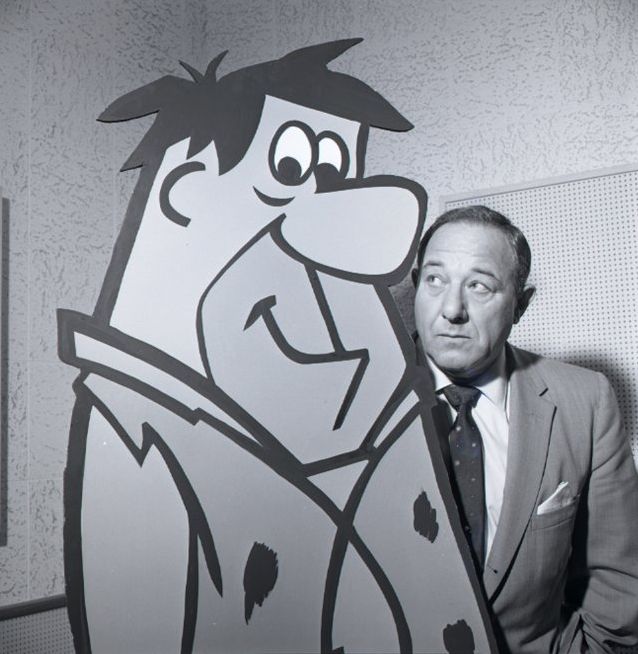
Whether you know him as Teddy Bergman (his birth name) or Alan Reed—an identity he adopted to separate his comedic roles from the dramatic ones (as well as downplay his Jewish heritage)—you certainly know his voice as the head of television’s first prime-time animated sitcom: Fred Flintstone of The Flintstones.  The career of this remarkable performer—born one hundred and six years ago on this date—is “a page right out of history.”

alanreed2Herbert Theodore “Teddy” Bergman had dreams of being an actor ever since playing The Merchant of Venice’s Shylock as a schoolboy…and despite objections from his prominent family, his interest in journalism (he majored in the subject while attending Columbia University) gave way to a flair for the buskin as he found work with various vaudeville and theatrical stock companies.  Reed was fortunate to get into radio in its infancy in 1926; he appeared as both announcer and actor on such early programs as The Eveready Hour, The Collier Hour and True Detective Mysteries.  By the 1930s, Alan (as Teddy Bergman) was already an established performer in the medium, often starring in his own comedy shows (Henry and George, Joe Palooka) as well as soap operas (Big Sister, Myrt and Marge) and crime dramas (he was one of the first actors to play the talkative cabbie Moe “Shreevy” Shrevnitz on The Shadow).  One of his most famous roles at that time was providing the speaking voice of David Rubinoff, the violinist on The Eddie Cantor Program.  Rubinoff suffered from mike fright, so Reed imitated the man in his best Russian dialect, frequently referring to the star as “Eddie Camphor.” 

alanreed11The 1940s would feature Alan at the height of his character actor fame on radio.  He was Solomon Levy on Abie’s Irish Rose, as well as Officer Clancy on Duffy’s Tavern, Carl Stevenson on The Life of Riley and Milton J. Clyde on My Friend Irma.  Other series on which Reed emoted include The Adventures of Ellery Queen, The Adventures of Philip Marlowe, The Adventures of Sam Spade, The Damon Runyon Theatre, December Bride, Escape, The Halls of Ivy, The Jimmy Durante Show, The Magnificent Montague, Richard Diamond, Private Detective and The Six Shooter, to name just a few of the many.

There were two programs on which the actor appeared that remain most prominent for old-time radio fans.  Alan was Falstaff Openshaw, the hammy poet who was one of the denizens of “Allen’s Alley” during the early years of Fred Allen’s program in the 1940s.  (Reed had played utility parts on Fred’s show since the 1930s.)  With his introduction every week, Falstaff would rattle off titles of various poems for which he was responsible—classics like “Make For the Roundhouse, Nellie—The Brakeman Can’t Corner You There” and “She Was a Girl Just Down from Vancouver, He Was a Sailor Bent on Maneuver.”  After being shouted down by Allen, the comedian would ask Falstaff if he had written a poem for tonight’s program, whereupon the poet would reply: “Indubitably.”  When Reed left the show in the mid-1940s, the comedian gave him carte blanche to play Falstaff in other venues; Reed later revived the character on a short-lived children’s program, Falstaff’s Fables, which also featured his son, Alan, Jr.

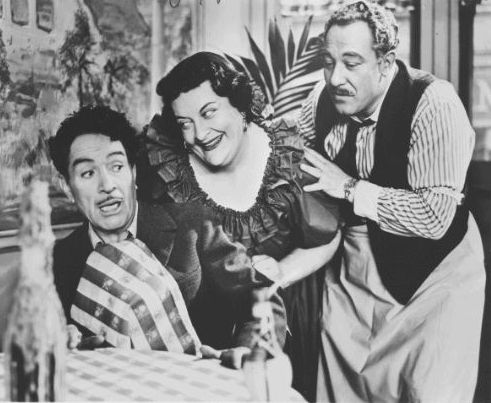
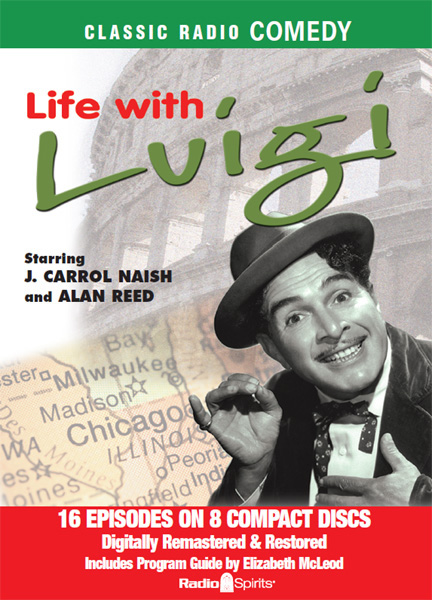
alanreed4Alan Reed’s standout radio role is inarguably Pasquale, the conniving Italian restaurant owner who acted as patron to “the little immigrant” known as Luigi Basco (J. Carrol Naish) on the sitcom Life with Luigi.  Basco, whose antique shop space was rented from Pasquale, had been able to come to the U.S. thanks to the generosity of his friend (who had paid for his passage)…but Pasquale had an ulterior motive.  What he really wanted was for Luigi to marry his daughter Rosa (a squeaky-voiced, 300-pound behemoth played by Jody Gilbert, possessor of radio’s most memorable belly laugh) and take her off his hands.  Pasquale—charitably described by more than one radio historian as an Italian version of Amos ‘n’ Andy’s Kingfish—would often greet Luigi with “’Allo, Luigi, my fren…’allo…’allo…” and when Luigi had been beaten down by the events that had befallen him in that week’s episode, Pasquale had the solution: “Just so happen I’m-a bring-a my little baby with-a me…I’m-a gonna call her over…oh, Roooooosa…Roooooosa…ROSA!!!”  When the show made its brief transition to TV in 1952, both Naish and Reed (as well as a few other actors from the radio version) reprised their roles; the sitcom may not hold up too well today (due to its Italian stereotypes), but it was always a joy to see the master dialecticians at work.

alanreed10In the 1940s, Alan Reed cut back on some of his radio commitments to try his luck on stage (he appeared with Alfred Lunt and Lynn Fontaine in a production of The Pirate) and in feature films.  He had much success with the latter, with classic favorites such as The Postman Always Rings Twice (1946), Viva Zapata (1952—as Pancho Villa!) and The Desperate Hours (1955) on his resume.  His appearance on the TV version of Life with Luigi also led to other small screen gigs—he appeared with his old boss Ed Gardner on a syndicated version of Duffy’s Tavern in 1954 (humorously, Alan played Clifton Finnegan and not Clancy), and made regular appearances on such series as Mr. Adams and Eve, Peter Loves Mary and Mickey.

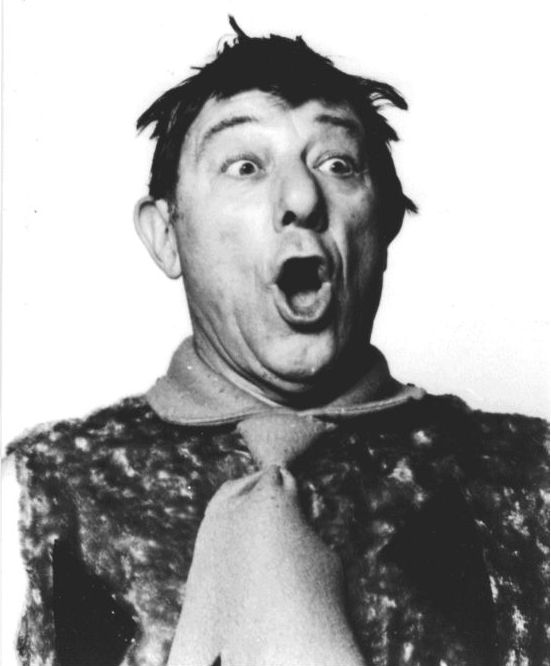
alanreed8It was voicing Fred Flintstone on The Flintstones—a cartoon version of The Honeymooners created by animation giants Bill Hanna and Joe Barbera—that would bring Alan Reed his ultimate fame.  He was fortunate to work with a cast of old radio pros—Mel Blanc (Reed had been a regular on Mel’s 1946-47 radio series), Jean Vander Pyl and Bea Benaderet.  To promote the show, the actor would often make personal appearances clad in Fred’s caveman clothing.  While Fred Flintstone was his bread-and-butter at Hanna-Barbera, Alan also found time to supply the voices of Dum-Dum, the sheepdog sidekick to Touché Turtle (voiced by OTR vet Bill Thompson) and “Mad Dog” Mahoney on Where’s Huddles?  With his death in 1977, Hanna-Barbera was forced to replace Reed with another actor (Henry Corden) as Fred Flintstone…but those of us who grew up with the original could definitely tell the difference.

20466Radio Spirits has a wealth of memorable Alan Reed performances available on CD.  You can hear him as Lt. Walt Levinson (a part he inherited from Arthur Q. Bryan) in several broadcasts from Richard Diamond: Mayhem is My Business…not to mention his signature radio role as Pasquale on the recently released Life with Luigi set.  You can also listen to him cut-up with the likes of Fred Allen and Jimmy Durante, and there’s plenty of Alan on Duffy’s Tavern: Where the Elite Meet to Eat and The Halls of Ivy.  Last—but certainly not least—the actor observes William Bendix getting himself into “revoltin’ developments” in three Life of Riley collections: The Life of Riley, My Head is Made Up! and—what else?—What a Revoltin’ Development!  Happy birthday to one of the true old-time radio greats!

Happy Birthday, Alfred Hitchcock!

hitch4

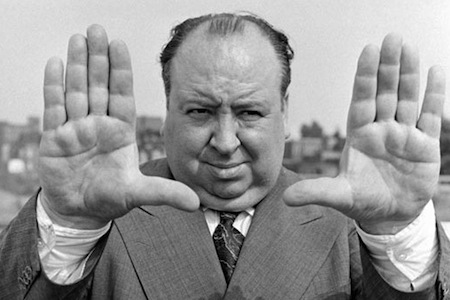
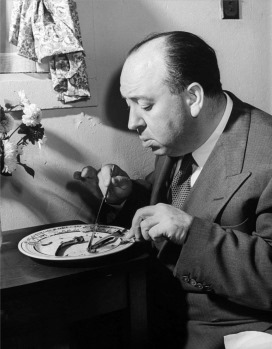
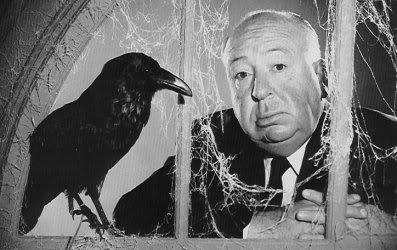
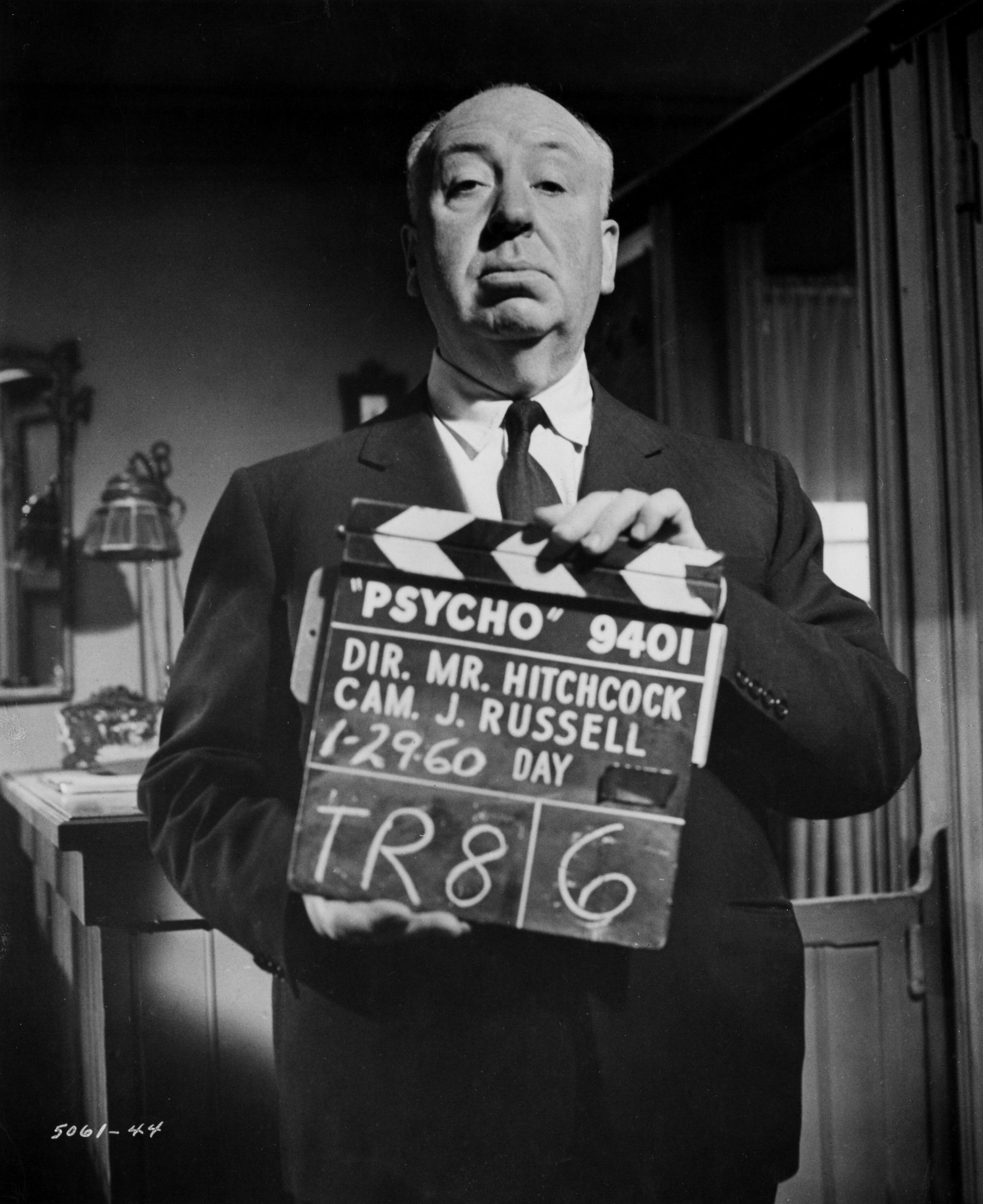
One hundred and fourteen years ago today, Sir Alfred Joseph Hitchcock was born in Leytonstone—part of Essex at the time of his birth, now part of London.  The youngest of three children of greengrocer William Hitchcock and his wife Emma Jane, Alfred would grow up to become one of the most successful filmmakers in the cinema…as well as one of the most recognizable.  Hitch had the same wonderful gift for self-promotion shared by Walt Disney: it started when Sir Alfred began making brief cameos in the pictures he directed (what he liked to call “his signature”) and later blossomed into television (the series he hosted, Alfred Hitchcock Presents and The Alfred Hitchcock Hour, would be staples on the CBS and NBC networks from 1955 to 1965), magazines (his name and likeness was licensed for Alfred Hitchcock’s Mystery Magazine) and books (in addition to anthologies featuring his name, he was also a character in the published series Alfred Hitchcock and the Three Investigators).

After attending both Jesuit and Catholic schools in his youth, Hitchcock attended an engineering school in London.  Upon graduation, he worked for a cable company as a draftsman and advertising designer.  He found a creative outlet in writing short stories—and that, coupled with an interest in photography, led him to seek work as a title designer for the London branch of what was Paramount Pictures.  In 1920, he landed a full-time position in that field at Islington Studios—owned by Famous Players-Lasky and eventually taken over by Gainsborough Pictures.

hitch5Described by producer Michael Balcon as a “plump, young technician whom I promoted from department to department,” Alfred began to move up through the ranks in the British motion picture industry: he worked on several films as an art designer and second unit director (or assistant director)—and even got the opportunity to direct his own film in 1922, a movie with the unfortunate title of Number 13.  (The funding for the film did not come through, and the production was eventually cancelled.)  He directed a 1922 short entitled Always Tell Your Wife without credit, but finally saw his name onscreen three years later with The Pleasure Garden (1925).  With his third effort, The Lodger: A Story of the London Fog (1926), he began to attract the notice and acclaim of film critics.  (The Lodger also played an important role in Hitch’s radio career—which I’ll get to in a bit.)

hitch7Hitchcock continued to work at his craft, creating early classic films such as Blackmail (1929), The Man Who Knew Too Much (1934), The 39 Steps (1935) and The Lady Vanishes (1938).  It was the latter title that attracted the attention of Hollywood.  He was signed by producer David O. Selznick to a contract in March of 1939, and his first film for Selznick wound up winning the Best Picture Oscar: Rebecca (1940).  Sir Alfred helmed a string of successful suspense thrillers throughout the rest of the decade: Suspicion (1941), Shadow of a Doubt (1943), Notorious (1946) and Rope (1948), to name just a few of the many.

hitchradio1His 1940 production of Foreign Correspondent provided the impetus for his participation on a July 22, 1940 broadcast of the CBS radio series Forecast (the audition for radio’s Suspense).  Hitchcock promoted the upcoming film by casting two of the principal actors from that film—Herbert Marshall and Edmund Gwenn—in an on-air dramatization of The Lodger…the movie that had made his British reputation.  Audiences also heard “Hitch” on the program—though it was actually an impersonation by actor Joseph Kearns.  But, it would be the first of several Hitchcock films to be dramatized on radio; the director’s work could be heard on such series as The Lux Radio Theatre and Screen Director’s Playhouse, and Sir Alfred himself guested on the likes of Information Please and The Edgar Bergen-Charlie McCarthy Show.  Hitch even acted as host of an audition show entitled Once upon a Midnight in 1945: it wasn’t picked up as a series, but listening to the surviving broadcast one can’t help but detect a future blueprint in the later success of Alfred Hitchcock Presents.

hitch3Hitch continued to achieve movie successes in the 1950s—a period that many consider to feature some of his best work behind the camera.  Classics like Strangers on a Train (1951), Rear Window (1954), Vertigo (1958) and North by Northwest (1959) entertained audiences and cemented his reputation as “the Master of Suspense.”  He built on that reputation in the 1960s with two of his most popular films, Psycho (1960) and The Birds (1963), and in the 1970s could still wow moviegoers with entries like Frenzy (1972).  His final film was Family Plot in 1976; another project, The Long Night, was ultimately shelved due to his failing health, and he left this world for a better one on April 29, 1980.

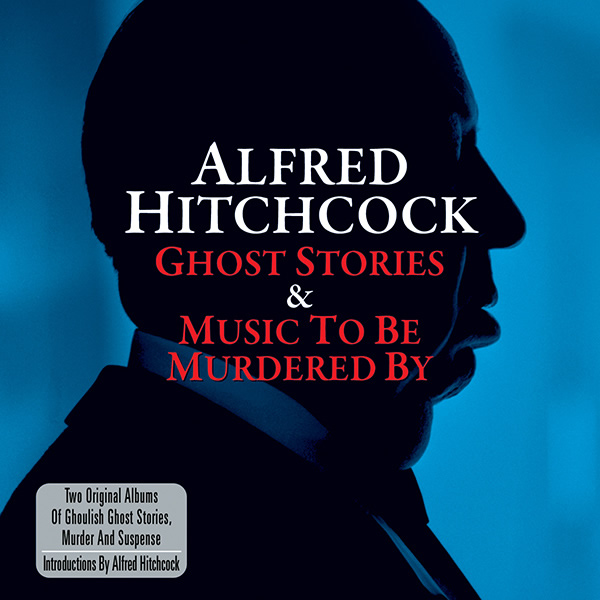
20495His very name—Hitchcock—has become a shortcut to denote cinematic thrills and suspense (the adjective “Hitchcockian” springs to mind) and during his time on this planet, Sir Alfred left classic film fans with a rich legacy of movies, and a TV series that continues to entertain viewers in reruns today.  Radio Spirits wishes “the Master of Suspense” the happiest of birthdays, and we invite you to check out the CD release Ghost Stories & Music to Be Murdered By.  Later this evening, we’re thinking it would be a perfect occasion to watch a Hitchcock movie classic!

Happy Birthday, Raymond Edward Johnson!

Johnson, Raymond Edward

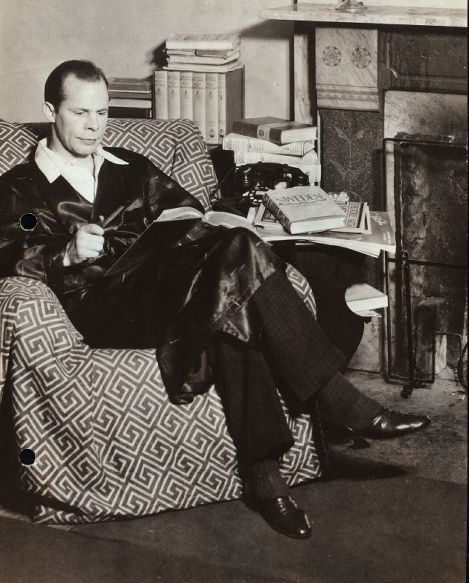
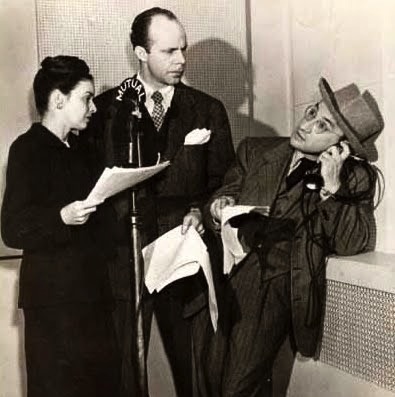
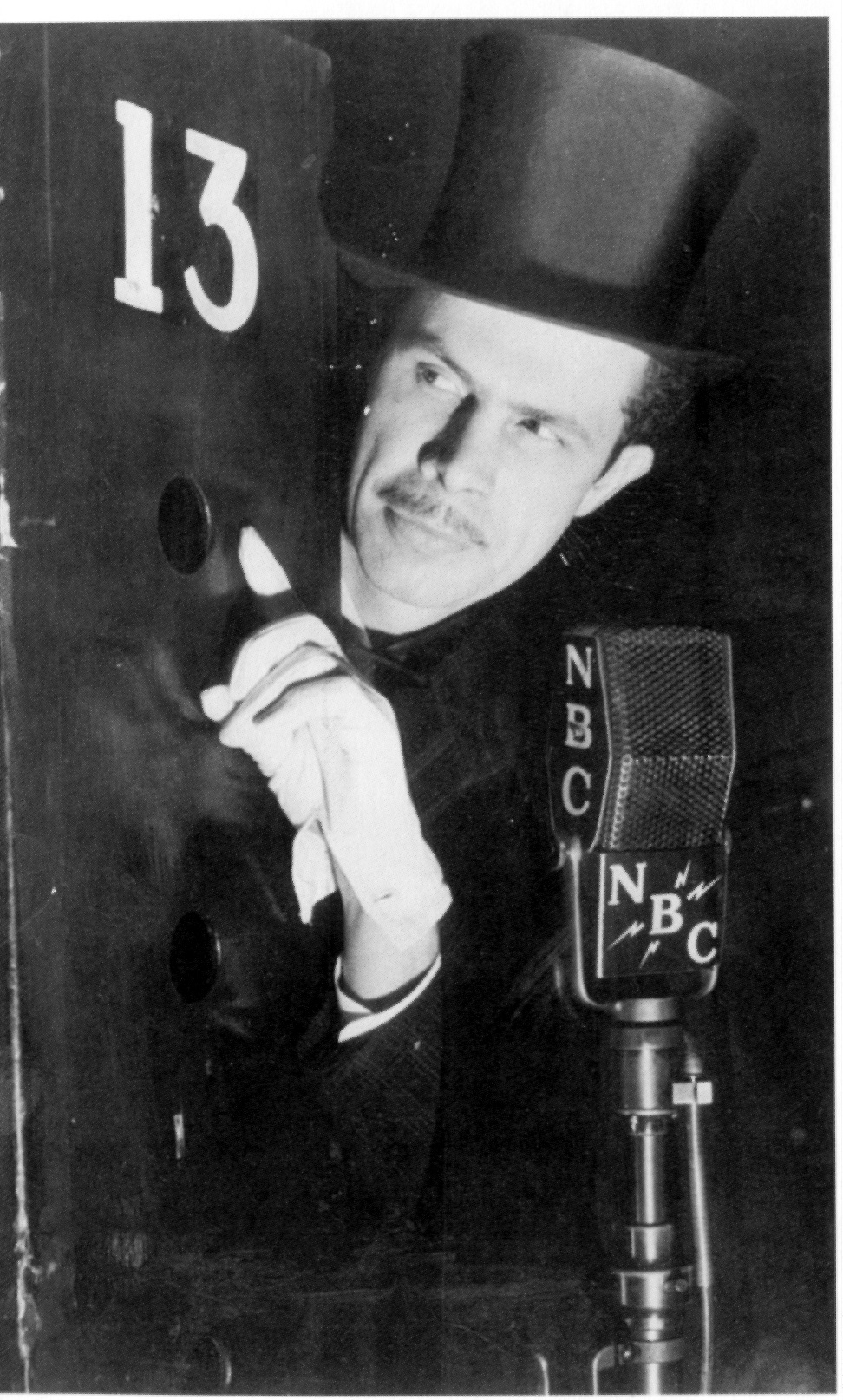
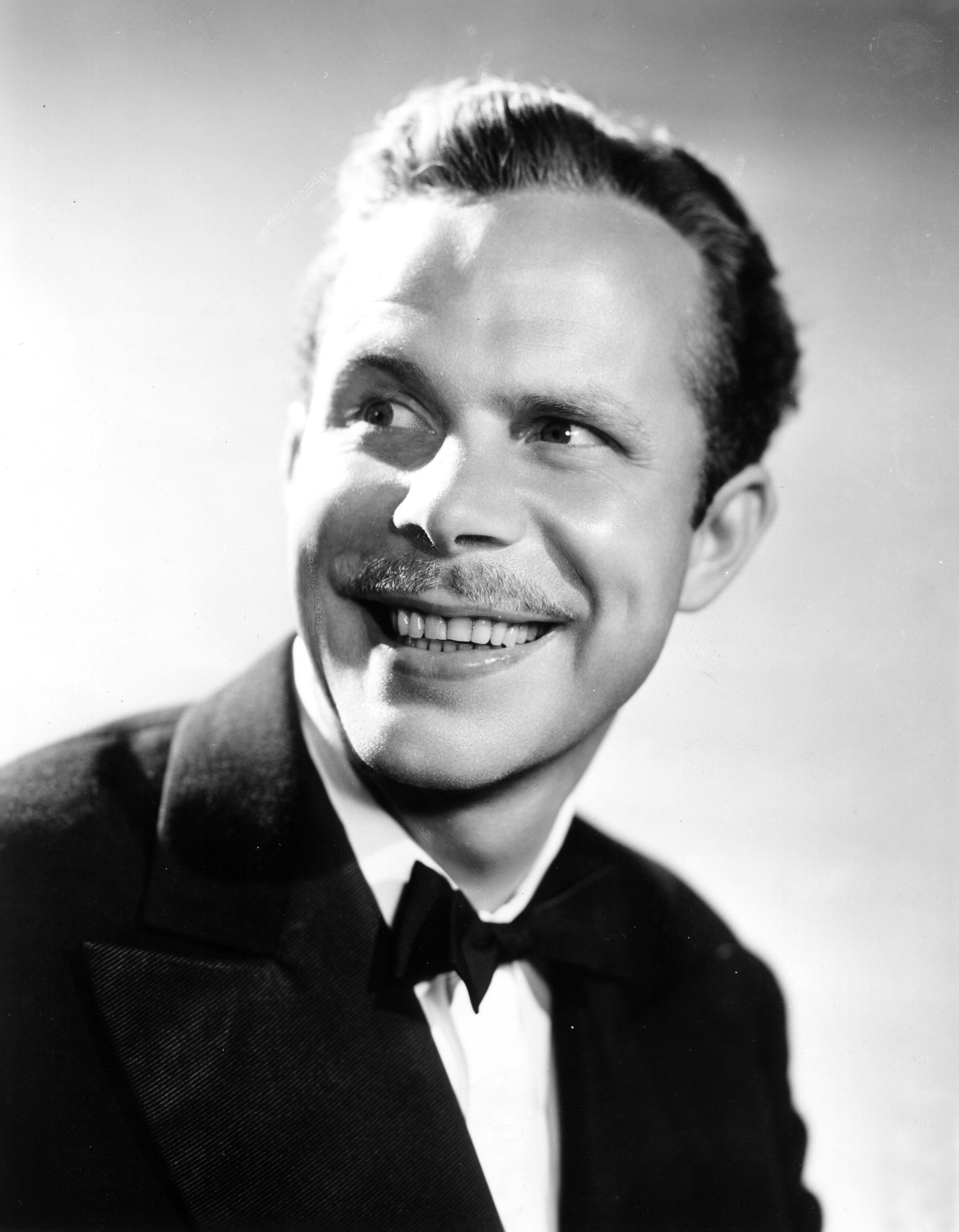
He was a respected Broadway thespian who depended on radio to pay the bills…and for Raymond Edward Johnson, born on this date in 1911, his contributions to the aural medium would make him immortal in the eyes of old-time radio fans.  Of particular interest was an over-the-top horror program known as Inner Sanctum Mysteries, which he would host (identified only as “Raymond”) from 1941 to 1945.

johnson1Born in Kenosha, Wisconsin, Raymond Edward Johnson seemed destined to live out his days working as a bank teller—it was only after studying acting at the Goodman School of Drama in Chicago that he decided to pursue his flair for the buskin as a career.  Johnson soon sought work in the center of radio activity (not radioactivity) at that time.  His earliest gigs found him playing “The Forest Ranger” in the dramatic skits on The National Farm and Home Hour (a role also played at one time by Don Ameche) and “Bill Sutter” on a soap opera entitled Welcome Valley from 1932 to 1937.  Raymond made an excellent living on such programs as The Guiding Light, Brave Tomorrow, Kate Hopkins, Angel of Mercy and Valiant Lady.  (Daytime drama was apparently in the blood of the Johnsons: his sister Dora Johnson-Remington, emoted as “Evey” on the long-running serial Ma Perkins.)

johnson5Later, Raymond made the acquaintance of Arch Oboler, who was directing and writing Lights Out for NBC at that time.  He would go on to appear frequently on that program, and when both men eventually moved to New York.  Johnson worked on the playwright’s Arch Oboler’s Plays series—notably in the productions of “The Ugliest Man in the World” and “This Lonely Heart.”  Relocating to The Big Apple also allowed Raymond to start a stage career: his best known stage role was his starring turn as “Thomas Jefferson” in The Patriots, the acclaimed play written by Dead End’s Sidney Kingsley and produced in 1943 (he would appear in the play at the same time that he was appearing on Inner Sanctum).

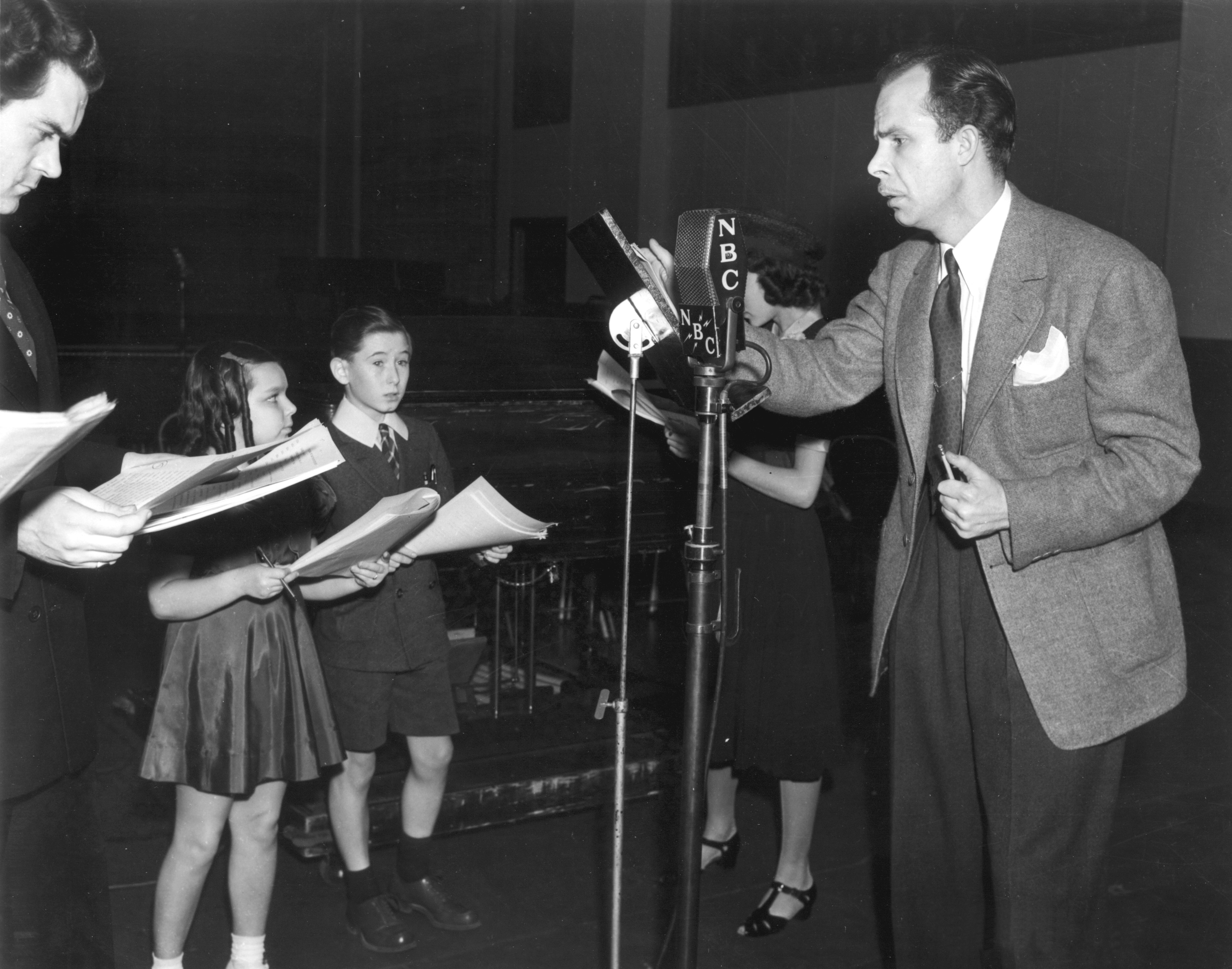
RaymondJohnson was hired to be the host of Inner Sanctum Mysteries, a series created by director-producer Himan Brown (Flash Gordon, Terry and the Pirates) and loosely based on the popular series of pulp novels published by Simon and Schuster.  The half-hour program dramatized tales of horror and featured a creaking door that would soon become—with the exception of Fibber McGee’s closet—radio’s best-known sound effect.  As “Raymond,” Johnson would sardonically invite listeners to each broadcast, often cracking macabre jokes and puns during his introductory remarks and his exchanges with “Mary the Tea Lady” when the series was sponsored by Lipton Tea.  As the proceedings came to a close, Raymond would bid his fans a fare-thee-well with “Pleasant dreeeeaams…hmmmmm?”  (The same sign-off would later be used by host E.G. Marshall on The CBS Radio Mystery Theater—the old-time radio drama revival also produced by Sanctum’s Brown.)

Johnson, Raymond Edward 2Johnson would host Inner Sanctum until May 15, 1945, when he left to serve a hitch in the U.S. Army.  He would be replaced on the program by Berry Kroeger and Paul McGrath; Raymond wasn’t re-hired once he was discharged because according to Brown the actor “wanted too much money” (newspaper accounts at the time also reported that Raymond feared being typecast)—but there is also evidence to support the thesis that Johnson’s struggles with multiple sclerosis was beginning at about this time; he lost out on a movie role because he was too dependent on a cane, unable to hide a noticeable limp.  Raymond’s radio career didn’t completely come to a halt—he would later serve as the host (as “The Librarian”) on the anthology series Crime Club, and also narrated Tales of Tomorrow, the radio version of the science fiction TV series.  The many radio shows on Johnson’s resume include Cavalcade of America, Cloak and Dagger, Dimension X, Don Winslow of the Navy, Famous Jury Trials, Gangbusters, Mandrake the Magician, Mr. District Attorney, X-Minus One and You are There.

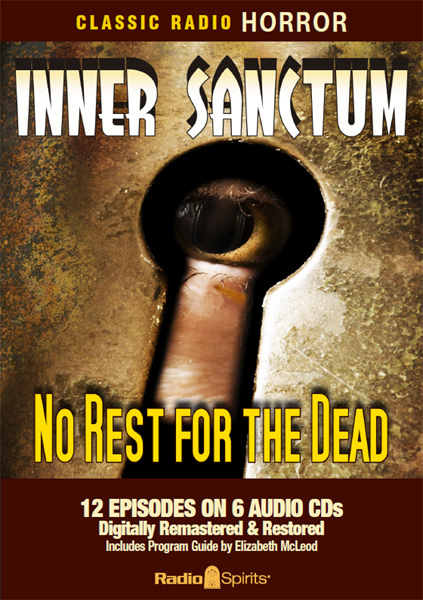
20252In later years, before his death in 2001, Raymond Edward Johnson would appear as a guest at old-time radio conventions…though his medical condition often dictated that he give his performances from a portable bed or wheelchair.  He remains the most popular of the Inner Sanctum hosts, and you can listen to surviving broadcasts featuring his puckishly ghoulish humor on such Radio Spirits collections as Inner Sanctum: Romance Gone Wrong and No Rest for the Dead.  Other sets featuring the birthday boy include Arch Oboler: Retrospective (“The Ugliest Man in the World”), Gangbusters: Crime Wave (“The Case of Robert Lee Robertson”), Suspense: Final Curtain (“Heads You Lose”) and Police and Thieves: Radio Crime Drama (“The Case of the Unfaithful Wife”).